Separable Portions Explained for Club Boards
A separable portion is a part of the works that the construction contract treats as its own completion event. Each portion has its own date for practical completion, usually its own liquidated damages rate and security, and under AS4000 its own defects liability period. For a club, separable portions are the contractual tool that lets the board take back a finished gaming room, bistro or function space and trade in it while the builder carries on next door.
Boards often agree a staging plan with the builder and assume the contract follows it. It only does if the stages are written into the contract as separable portions. This guide explains how they work under the Australian Standard contracts most clubs use, and where the drafting goes wrong.
General information, not legal advice
Clause references are to the unamended AS 4000-1997 and AS 4902-2000 general conditions. Special conditions frequently change how separable portions operate, so have a construction lawyer review your contract before the club signs.
What is a separable portion?
AS4000 and AS4902 both define a separable portion as a portion of the works identified as a separable portion in the contract, or directed as one by the superintendent under clause 4. In practice it is a discrete part of the site with its own access date, its own date for practical completion, or both. The same concept appears in the older AS2124 (clause 35.4).
Separable portions arise in two ways.
- Written into the contract before signing. The Annexure has a separate page for each portion, setting its description, its date for practical completion, its security, and its liquidated damages rate. The AS4902 Annexure notes that any balance of the works should also be made a separable portion, so nothing falls between the cracks.
- Directed by the superintendent later. Under clause 4, the superintendent may direct separable portions, identifying the portion of the works, its date for practical completion, and its share of security and damages. Those amounts are calculated pro-rata, by the superintendent's valuation of the portion against the contract sum.
Separable portions are not the same as stages
A staging plan, a programme with milestones, or a scope split into "Stage 1" and "Stage 2" is not a separable portion unless the contract makes it one. In Parkview Constructions Pty Ltd v Futuroscop Enterprises Pty Ltd [2023] NSWSC 178, a dispute on an AS4902 contract for a hotel and car park, the court confirmed that without separable portions the superintendent has no authority to certify practical completion for part of the works, and that there is no power to issue a "conditional" certificate of practical completion unless the contract gives one. The dispute involved liquidated damages and the release of security. The lesson from that case is simple: if the building will open in stages, set those stages out as separable portions in the contract, or have them formally directed.
Why clubs use separable portions to keep trading
Most NSW clubs cannot close for a full rebuild because gaming, food and beverage and functions pay for the project. Staged construction keeps the doors open. We cover the operational side in keep trading during club staged construction. Separable portions are what make that staging enforceable:
- The club can take over a finished area formally. Practical completion of that portion is certified, the defects clock starts, and the builder hands it over.
- Delay costs the builder portion by portion. A late gaming room can carry its own damages rate, rather than waiting for the whole project to finish.
- Security steps down as areas are completed, instead of the full amount being held until the end.
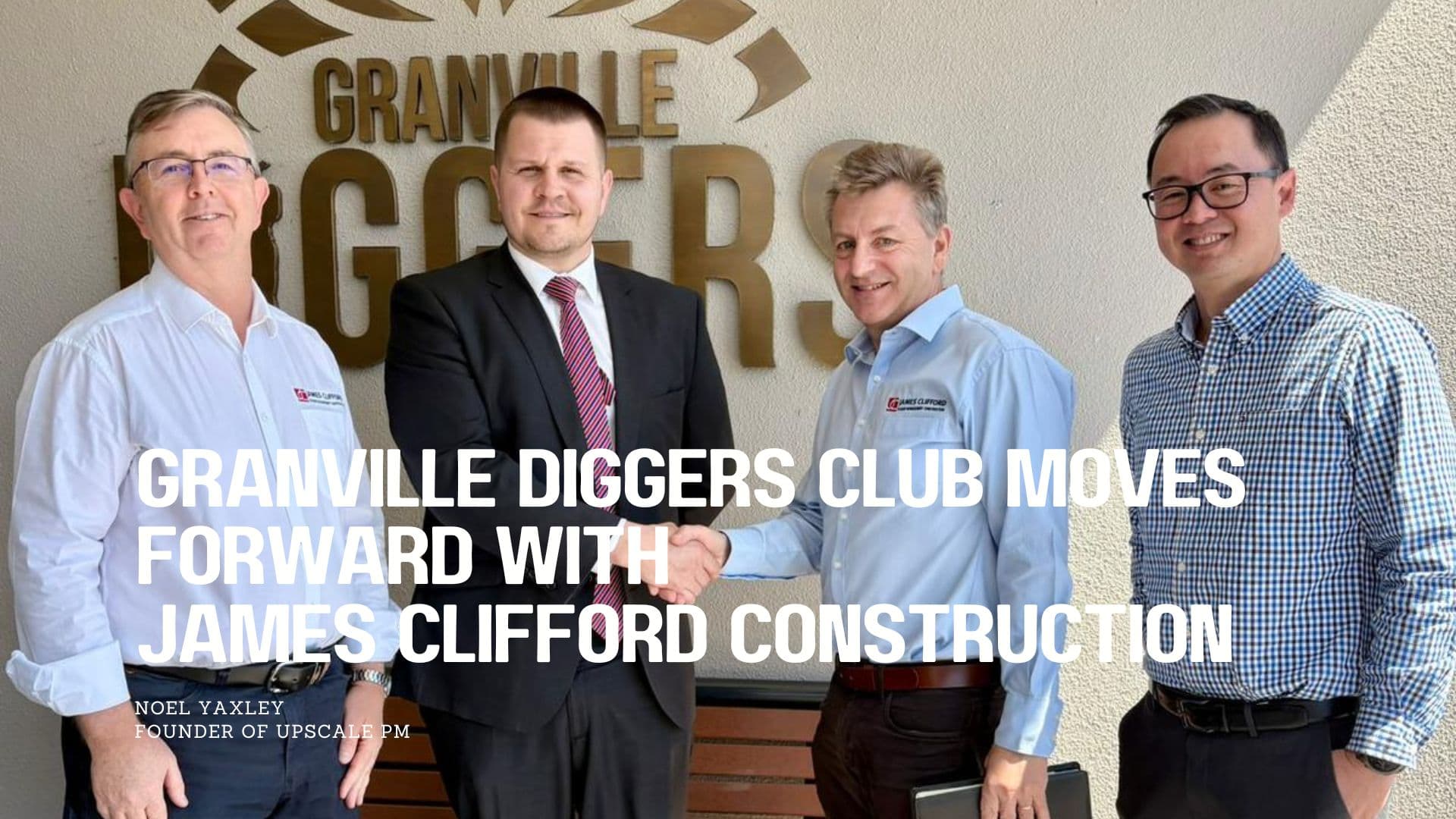
Separable portions do not have to be physical areas. On Granville Diggers, where UpScale PM is the club's client-side project manager, the AS4902 design and construct contract with James Clifford Construction was split into two separable portions. The first covered completing the design and the consultant work needed for the Construction Certificate. The second covers construction and the Stage One fit-out. That let design and certification requirements be coordinated before the construction scope progressed, in a heritage-sensitive building with ongoing club operations. The structure is set out on the Granville Diggers AS4902 and separable portions page.
How each mechanism runs per portion
Practical completion
Each portion has its own date for practical completion in the Annexure and is certified separately. Practical completion under the standard forms means the work is complete except for minor defects that do not stop it being used for its stated purpose, required tests have been passed, and essential use, operation and maintenance documents have been supplied. Under the unamended forms the builder gives at least 14 days' notice of the date it expects to reach practical completion, and the superintendent has 14 days after the builder's request to issue a certificate or give reasons.
The contract's practical completion is not the same as permission to occupy. In NSW you need an occupation certificate to use a new building, and a partial occupation certificate can be issued for staged building works so the completed part can be occupied. List the certificates each portion needs before the club can trade in it as part of that portion's completion requirements.
Liquidated damages
Liquidated damages are usually expressed per separable portion, each with its own daily rate. The builder pays for each day a portion runs past its date for practical completion, until that portion is completed.
Rates set by pro-rata valuation, which is what happens when the superintendent directs portions after signing, may not match a club's real loss. A modest-value gaming room fit-out can carry far more of the club's trading exposure than a large back-of-house package. Setting each portion's rate before signing, from an honest estimate of the club's loss for that area, is more defensible than a percentage split. The AS4902 vs AS4000 guide covers how liquidated damages work more generally.
Security and retention
Each portion can carry its own security. Under the AS4902 separable portion pages, if nothing is stated, the builder's security is 5% of the value of that portion (where it takes the form of retention, 10% is deducted from each progress certificate up to that limit), and the security reduces by half at practical completion of the portion.
The catch is the balance. Under the unamended forms, the remaining security is only released after the final certificate, and there is one final certificate, issued after the last defects liability period on the project expires. The balance of security for an early portion can therefore be held until the whole project closes out. Builders can be expected to allow for that in their price, so decide it deliberately rather than by default.
Defects liability periods
The defects liability period starts at practical completion, so under AS4000 each separable portion has its own defects liability period, and potentially its own security. An early portion's period can finish before the last portion is even complete.
Many principals align every portion's defects period to expire at the same time, usually tied to completion of the last portion. That simplifies close-out, but it means the defects period for earlier portions can run longer than 12 months, and the builder's security stays unreleased until the last period ends. Negotiate this openly at tender.
Care of the works and insurance
Under the standard forms, responsibility for care of the works passes to the principal at 4 pm on the date of practical completion. When a portion is handed over, the club should expect to take responsibility for that area while construction continues next to it. Confirm with the club's insurer, and against the builder's contract works policy, how completed portions are covered before the first handover.
Drafting pitfalls to avoid
- Stages in the programme, not portions in the contract. If the staging plan is not reflected in the Annexure as separable portions, you are relying on one certificate of practical completion for the whole job.
- Leaving a balance of works undefined. Make every part of the works belong to a portion, including external works and the final making good.
- Portions that cannot operate on their own. A completed area that relies on plant, services, egress or amenities inside a later portion cannot really be handed over. Test each portion's boundaries against the services and fire engineering strategy.
- Access dates that do not match the trading plan. Separable portions can have different access dates as well as completion dates. The contract should say when the builder gets each area, so the club can plan relocations around it.
- Pro-rata damages and security by default. If portions are only directed after signing, the numbers are calculated by value, not by the club's actual exposure.
- Completion criteria that ignore occupation. Tie each portion's completion requirements to what the club needs to open that area, including the partial occupation certificate and fire safety documentation.
- Design-only portions without clear completion criteria. The standard definition of practical completion was written with physical works in mind. If a portion covers design or certification, spell out what completion of that portion means.
- Defects periods and security release left to default. Decide whether defects periods run separately or together, and when each portion's security comes back.
A separable portion structure is only as good as the staging strategy behind it. That work sits in the feasibility, design and procurement stages, well before the builder starts on site.
Frequently Asked Questions
What is a separable portion in a construction contract?
A separable portion is a part of the works that the contract treats as its own completion event, with its own date for practical completion and usually its own liquidated damages and security. Under AS4000 and AS4902 it is a portion identified as such in the contract, or directed by the superintendent under clause 4.
Are separable portions the same as stages or milestones?
No. A stage in a programme is not a separable portion unless the contract makes it one. In a 2023 NSW Supreme Court case on an AS4902 contract, the court confirmed that without separable portions the superintendent could not certify practical completion for part of the works.
Do liquidated damages apply separately to each separable portion?
Usually yes. Each portion normally has its own daily rate and date for practical completion. If the superintendent directs portions after the contract is signed, the damages are calculated pro-rata by the value of each portion, which may not reflect the club's real loss for that area.
When is security released for a separable portion?
Under the unamended Australian Standard forms, security for a portion reduces at that portion's practical completion by the percentage in the Annexure. The balance is released after the final certificate, which follows the last defects liability period on the project, unless the contract is amended.
Does each separable portion have its own defects liability period?
Under AS4000, yes. The defects liability period starts at practical completion, so each portion's period starts when that portion is completed. Many principals amend the contract so all periods end together, which can make earlier periods longer than 12 months.
Can the superintendent create separable portions after the contract is signed?
Yes. Clause 4 of AS4000 and AS4902 allows the superintendent to direct separable portions, identifying the portion, its date for practical completion, and pro-rata amounts for security and damages. Setting portions in the contract before signing gives the club more control over the numbers.
Sources
All sources accessed 25 September 2026. We have paraphrased the Standards rather than reproducing their text.
- Standards Australia, AS 4000-1997 General conditions of contract and AS 4902-2000 General conditions of contract for design and construct (incorporating Amendment No. 1), clauses 1, 4, 5, 14, 34, 35 and 37 and Annexure Part A.
- Turtons, What is a separable portion?, 31 August 2018.
- Turtons, Practical completion under AS 4000, 3 August 2018.
- HWL Ebsworth Lawyers, Separable or staged: there is a difference!, 18 July 2023, discussing Parkview Constructions Pty Ltd v Futuroscop Enterprises Pty Ltd [2023] NSWSC 178.
- Mastt, What is a separable portion in Australian construction contracts?, 25 November 2024.
- Service NSW, Apply for an occupation certificate.
UpScale Project Management provides independent client-side project management for club redevelopments across NSW. Book a free 30-minute project discussion about staging your club's project.

Director, UpScale Project Management
Registered architect (NSW) and client-side project manager with more than 15 years across architecture practices, client-side project management consultancies and government agencies. Noel founded UpScale PM to provide independent, client-side project management for NSW club boards navigating major redevelopments.
Related insights
AS4902 vs AS4000 for Club Redevelopments
AS4000 is construct-only, AS4902 is design and construct. What each form means for a club board: design risk, novation, time, variations, security and payment.
Keep Trading During Club Staged Construction NSW
How NSW clubs keep trading through staged construction — phase gaming and F&B early, cost temporary works, and protect member revenue with a board-owned staging plan.
DA Approval Process for Club Redevelopment NSW
NSW DA process for registered club redevelopments — Planning Portal lodgement, club-specific risks (gaming, heritage, trading), member approvals, and client-side coordination.
Club Redevelopment Lessons: North Cronulla SLSC Quarterly Update
North Cronulla SLSC's $25M rebuild stalled after builder abandonment. Five governance lessons from the March 2026 Council quarterly update for NSW club boards.