Club Redevelopment Lessons: North Cronulla SLSC Quarterly Update
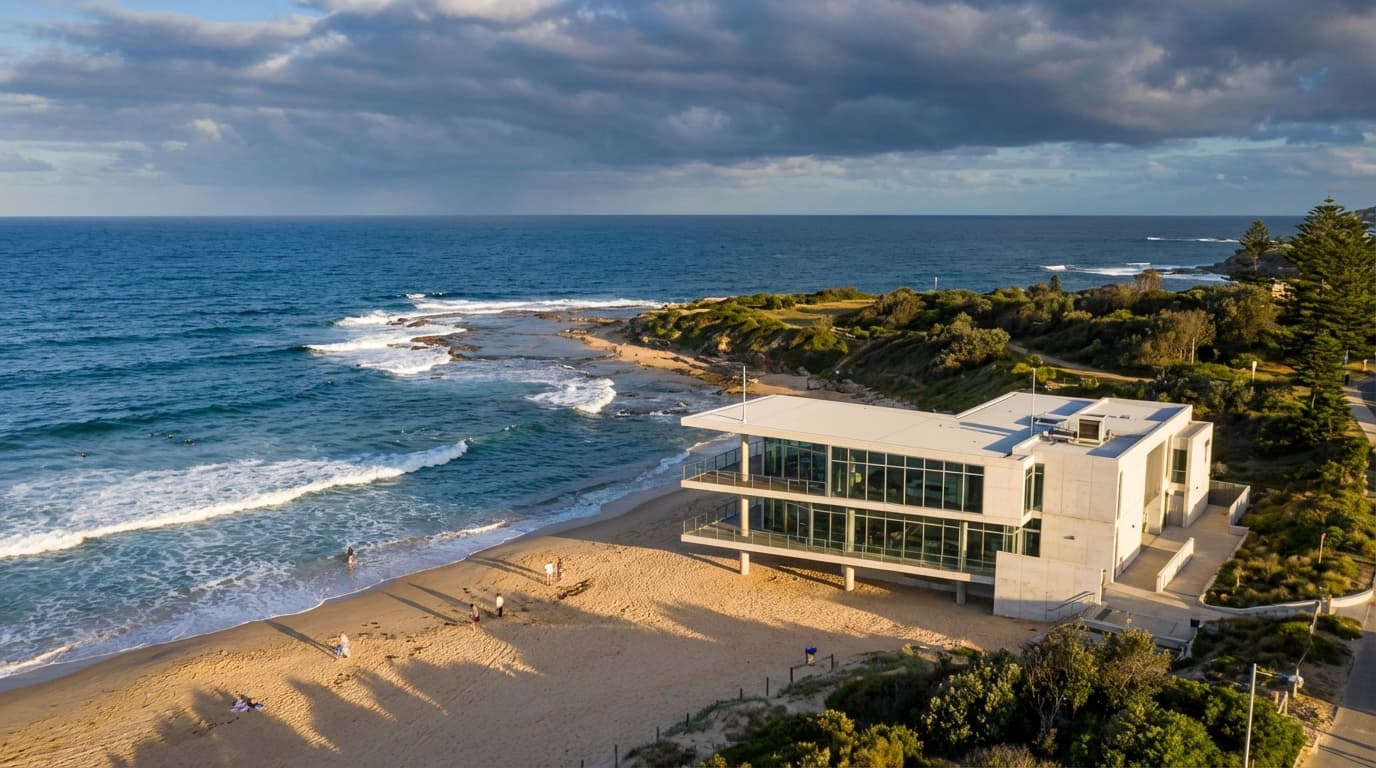
TL;DR: The North Cronulla SLSC redevelopment, a $25M coastal project, stalled after the builder abandoned the site in January 2024. Council assumed control in December 2024, and the first quarterly rebuild update (March 2026) outlines a governance-led recovery: heritage delisting, demolition-first staging, and structured Council reporting. For any NSW club board facing a complex or troubled redevelopment, the five lessons below apply directly.
NSW clubs face increasing pressure to modernise ageing facilities while keeping members and communities onside. ClubsNSW reports more than 1,200 clubs contributing $6.5 billion annually to the economy, yet many club assets need upgrades to meet changing patron expectations, compliance requirements, and resilience needs. For surf clubs in particular, complex planning pathways, coastal conditions, and public visibility amplify delivery risk when governance and reporting are not watertight.
The North Cronulla SLSC redevelopment in Cronulla, within Sutherland Shire, has become a case study in what happens when a project hits major construction and governance disruption. The original builder left the site in January 2024. Council assumed control in December 2024 to investigate structural deficiencies. The club's first formal quarterly rebuild update (Council item CCL009-26, presented 23 March 2026) now sets out a structured path: heritage delisting steps, demolition planning, and funding pursuit, under ongoing Council reporting.
For boards and GMs, this update is less about drawings and more about controls.
1. Quarterly reporting as a recovery tool
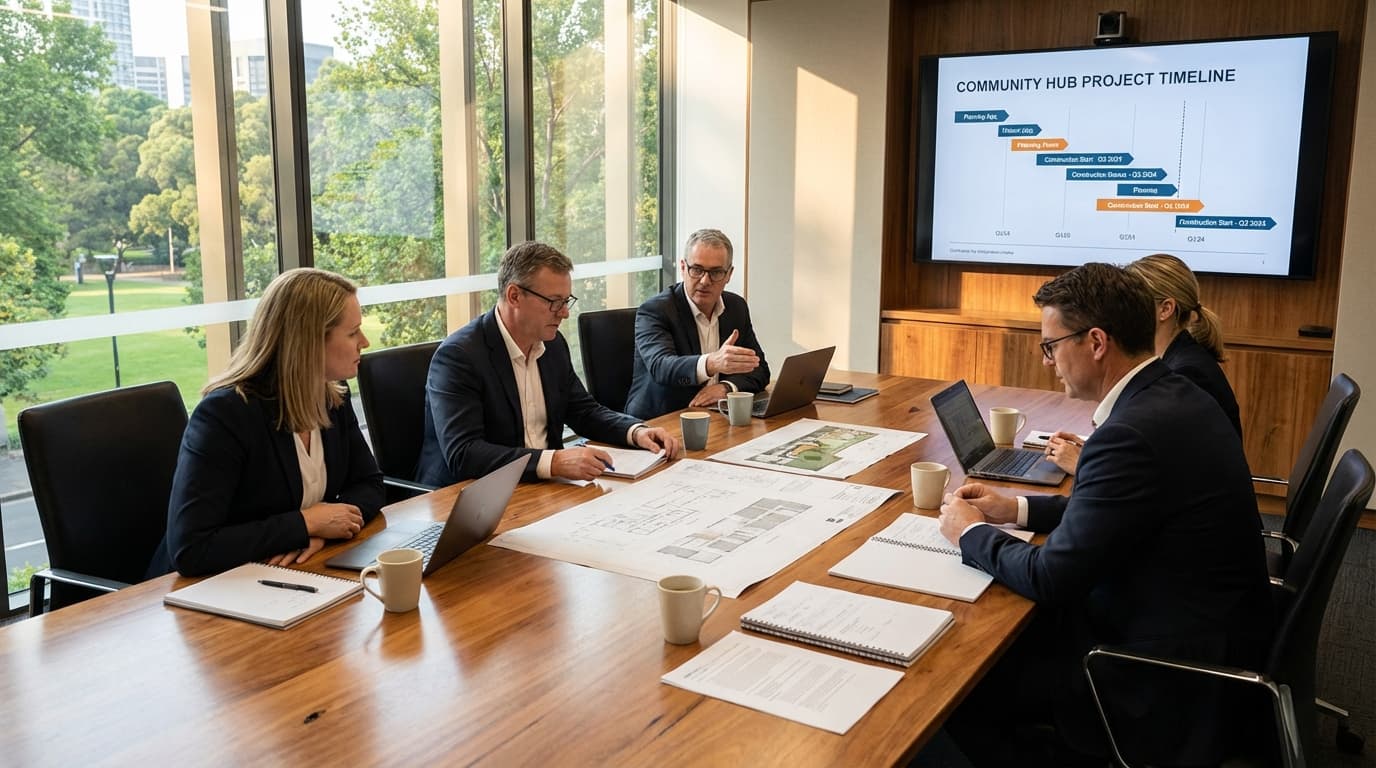
Quarterly reporting can feel like administration for its own sake, until a project stalls, defects surface, and the club needs a transparent way to regain trust. North Cronulla's first quarterly update (tabled at Council on 23 March 2026) works as a reset mechanism. It records the current status (pre-demolition planning), documents decisions being sought, and sets expectations that the rebuild will be governed in public view via Council meetings in June, September, and December.
A surf club rebuild is not just a building project. It is a community asset with public scrutiny. With a reported $25 million construction value included in Council's Draft 2025-2029 Delivery Program, governance needs to match the spend and the risk. Quarterly Council reporting forces discipline around scope, approvals, and procurement. It creates a "single source of truth" when stakeholder sentiment is fragile.
"Council is providing a Quarterly Project Update -- North Cronulla Surf Life Saving Club Redevelopment and the first update was provided at the Council meeting on Monday 23rd March 2026." -- North Cronulla SLSC Board of Directors
Takeaway: If your club redevelopment carries heightened risk (heritage, coastal conditions, public funding, or prior defects), mandate a formal reporting rhythm, monthly internally and quarterly at governance level, with decisions, budget position, and next approvals clearly minuted.
2. What happens when a builder abandons a club site?
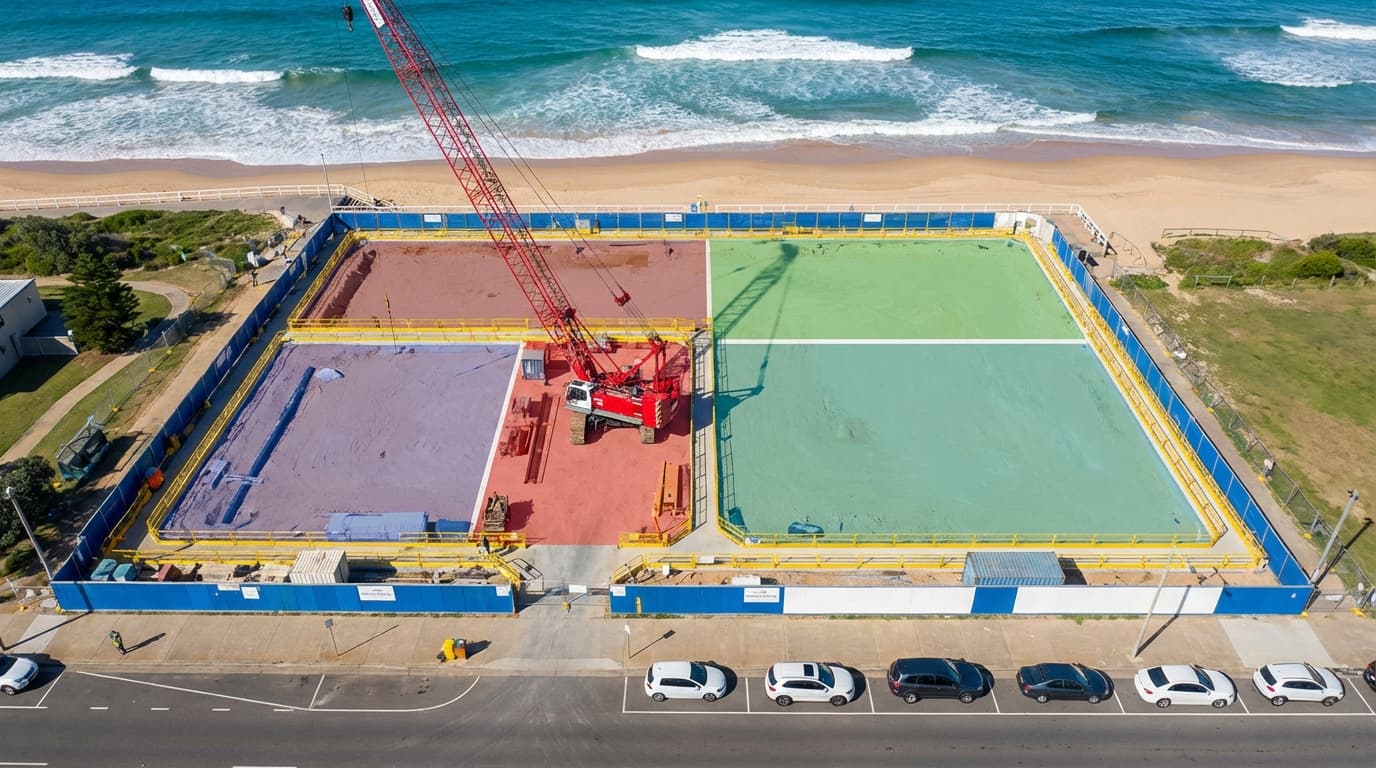
North Cronulla's reset started with a hard reality: the builder abandoned the site in January 2024. By December 2024, Council had assumed control to investigate structural deficiencies in both new works and heritage structures. That sequence is the nightmare scenario for any club board. It creates overlapping problems: incomplete works, safety and liability exposure, unresolved defects, and uncertainty around who directs next steps.
The March 2026 update signals a recovery approach that NSW clubs can learn from: stabilise governance first, then procure the next package with credible support. Council's decision to involve NSW Public Works for demolition planning and procurement is pragmatic. Demolition is high-risk work. An experienced government delivery body standardises processes, ensures probity, and reduces the chance of a second procurement failure.
In our experience managing complex NSW club works, including staged delivery under AS4902 D&C on the Granville Diggers Club redevelopment, projects only regain momentum when roles are explicit. Who is the Principal? Who directs consultants? Who holds the risk register? What gateways must be passed before money is committed?
"The report was endorsed by all Councillors in attendance at the meeting." -- Sutherland Shire Council Meeting Minute, CCL009-26
Takeaway: After a major disruption, don't rush back into "business as usual." Formalise governance and authority first (who directs, who approves, who reports), then re-procure in clear packages, often demolition and safety first, rebuild second.
3. Should your club pursue heritage delisting?
A defining constraint in North Cronulla's redevelopment is heritage. The update outlines Council's intent to pursue an amendment to the Sutherland Shire LEP 2015 to remove the heritage listing (item 1044) via a section 3.22 planning proposal pathway. This is not a side issue. It is a critical path item that affects demolition approvals, design options, timing, and cost.
Heritage constraints can force clubs into expensive redesign cycles, lengthy approvals, and partial retention solutions that don't work once structural issues are confirmed. In this case, engineering and heritage assessments identified inadequate foundations and non-compliant construction. That shifts the conversation from "preserve vs replace" to "what's safe, compliant, and fundable."
For NSW club decision-makers, the practical point is this: heritage strategy must be set early and aligned with procurement staging. If heritage status is likely to change (or must change to unlock a viable build), treat the planning pathway as a workstream with its own programme, risk owner, budget, and stakeholder plan, not an afterthought delegated to a consultant.
"Council requests the Department of Planning, Housing and Infrastructure to amend the Sutherland Shire Local Environmental Plan 2015... to remove the heritage listing." -- Council Report Recommendation (CCL009-26)
Takeaway: Make heritage an explicit governance workstream. If an LEP amendment is required, resource it early and link procurement gates to planning certainty, or risk 12-18 months of preventable delay.
4. Why demolition-first staging works for stalled projects
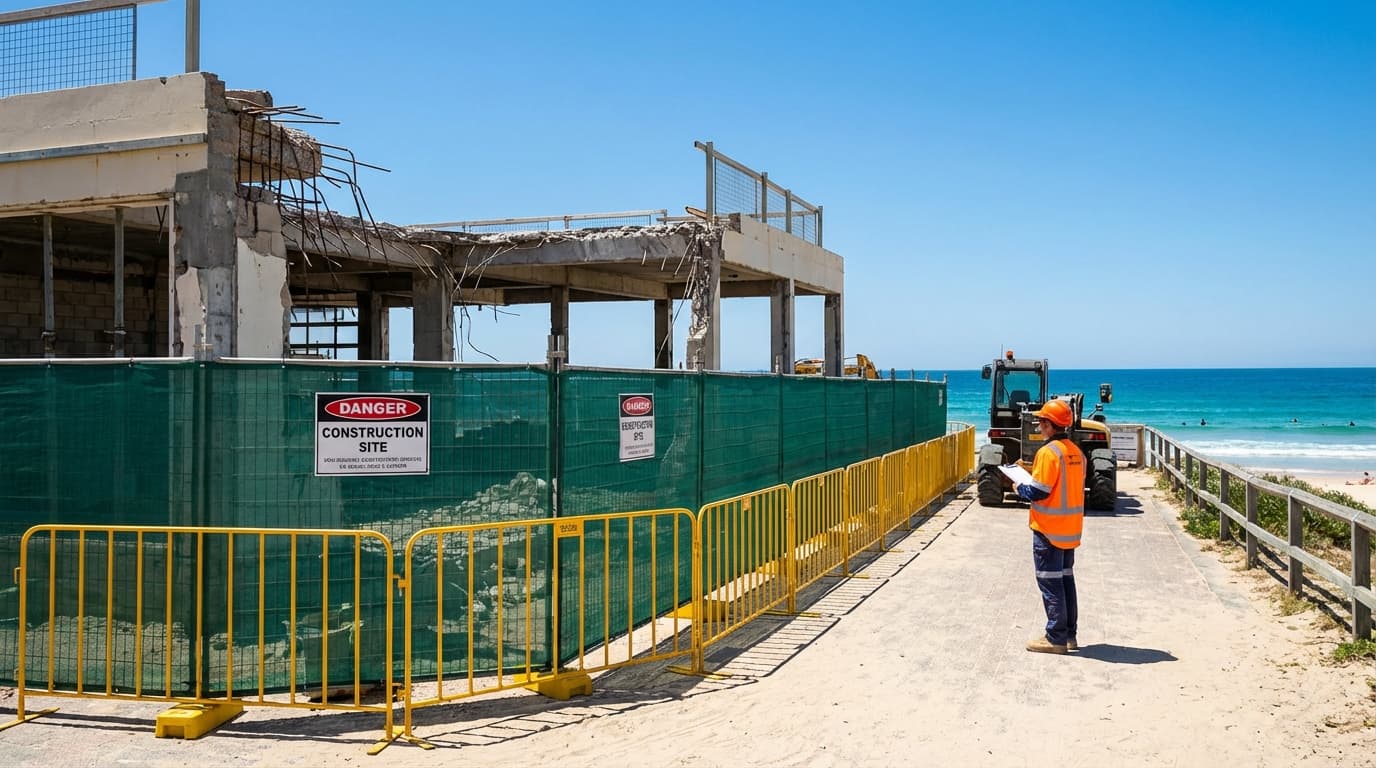
When a site is stalled and defects are confirmed, "just restart construction" is rarely the right move. The March 2026 update points toward demolition planning (with NSW Public Works assistance) as a near-term action, before a full rebuild programme is re-established. That sequencing makes sense. Demolition-first staging reduces safety risk, simplifies site conditions, and creates a clean platform for a credible design-and-construct procurement later.
Coastal projects amplify this. Surf club rebuilds face geotechnical variability: sand substrates, water ingress, corrosion, exposure. Those conditions punish weak early-stage investigation and quality control. North Cronulla's findings around foundations and non-compliant work underline why clubs should avoid releasing full construction scope without robust "hold points" and independent verification.
This is where staged delivery disciplines matter. Separable portions, milestone-based approvals, and independent certification protect clubs from paying for progress that can't be proven. North Cronulla's approach, quarterly governance plus a demolition-first path, effectively creates a controlled restart.
"A Members Information Session will be arranged after Aussies and Easter break to review and discuss the report recommendations." -- North Cronulla SLSC Board of Directors
Takeaway: In a recovery scenario, stage for certainty: stabilise and make safe, demolish where required, then re-procure rebuild works with independent certification and milestone-linked payments.
5. How should clubs communicate during a troubled rebuild?
The North Cronulla SLSC redevelopment is being managed in a fishbowl: Council reporting on one side, club members on the other. Quarterly Council updates provide public accountability. But they don't replace the need for member communication that is timely, clear, and specific about what decisions are being made and why.
North Cronulla's plan for a members' information session after Easter is a practical engagement move, especially when hard topics are on the table (heritage delisting, demolition, and a revised pathway). Stakeholder engagement here is not PR. It is risk management. When a project involves public funding, planning changes, and a $25 million budget line, stakeholder confidence directly influences decision speed, political backing, and the club's operational resilience.
Is your club keeping members informed with the same rigour you apply to Council reporting? If not, that gap will become a governance risk.
Boards should also note the broader context: NSW clubs contribute $6.5B annually to the economy. Governments and communities increasingly expect transparency when major capital works are in play. Council reporting and stakeholder engagement are now delivery requirements, not optional extras, particularly for community-facing assets like surf clubs and RSL venues.
Takeaway: Build a two-track communications plan: (1) formal reporting for Council and governance, and (2) plain-English member updates tied to the decision calendar, so stakeholders know what's happening, what's next, and what they can influence.
Conclusion
The North Cronulla SLSC quarterly update answers the question many boards ask when a rebuild goes off the rails: how do we restart without repeating the same mistakes? The answer is governance-led recovery: Council-controlled reporting, a demolition-first approach, and a planning pathway that confronts heritage constraints directly. It is not fast, but it is structured, auditable, and more likely to restore confidence than ad-hoc announcements or optimistic programme promises.
For club boards planning a surf club rebuild (or any NSW club redevelopment), delivery success is often decided before the first new slab is poured: by the clarity of authority, the staging strategy, and the discipline of reporting and stakeholder engagement.
- Treat reporting as a delivery control: quarterly governance updates should drive decisions, not just "note" progress.
- Stage for certainty: stabilise, investigate, demolish where required, then re-procure with independent hold points.
- Engage two audiences: meet Council transparency expectations and keep members informed with a clear decision timeline.
If your project is heading into complex procurement, staging, or approvals, this is where client-side project management pays for itself.
UpScale PM specialises in club redevelopment, from initial feasibility through staged construction delivery. We are currently delivering the Granville Diggers Club redevelopment and bring hands-on experience in heritage-sensitive club renovation, AS4902 contract administration, and keeping clubs operational during construction. Let's talk about your club's next chapter.

Director, UpScale Project Management
Registered architect (NSW) and client-side project manager with more than 15 years across architecture practices, client-side project management consultancies and government agencies. Noel founded UpScale PM to provide independent, client-side project management for NSW club boards navigating major redevelopments.
Related insights
AS4902 vs AS4000 for Club Redevelopments
AS4000 is construct-only, AS4902 is design and construct. What each form means for a club board: design risk, novation, time, variations, security and payment.
Separable Portions Explained for Club Boards
Separable portions let a club take back and trade in finished areas while building continues. How they work, and the drafting traps boards should avoid.
NSW club redevelopment: Campbelltown Golf revenue lift
NSW club redevelopment insights from Campbelltown Golf: TrackMan, dining and staging that drove record revenue. Get board-ready ROI guidance.
Mortdale RSL club redevelopment: SSDA tower lessons NSW
Mortdale RSL redevelopment SSDA: learn mixed-use tower lessons, affordable housing impacts and approval risks. Get board-ready guidance—talk to UpScale PM.