Sydney Hotel Development Feasibility: Brand Deal Shifts
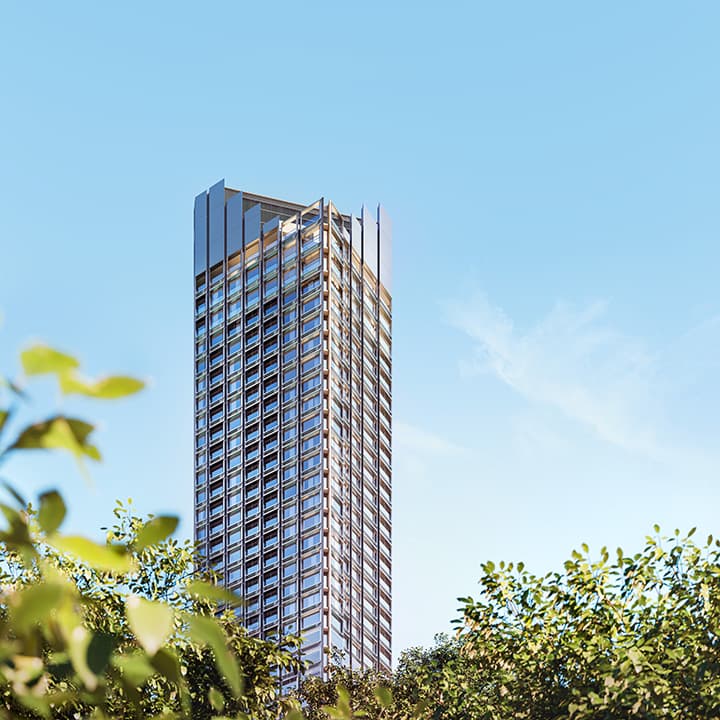
Stress-testing Sydney hotel deals: what AC by Marriott tells us about brand-led feasibility
Sydney's hotel pipeline is running hot, but the numbers are getting harder to make work.
CBD vacancy is sitting around 2.5% (JLL H2 2025), which sounds great until you look at the supply side: 5,000+ rooms in the pipeline to 2027 (Colliers H2 2025), with roughly ~2,500 keys landing in 2026 alone. Borrowing costs have not budged: the RBA cash rate is still at 4.35%, and construction costs are up ~8% year-on-year (HIA 2025).
So the feasibility bar for new hotel product keeps climbing. And increasingly, developers are leaning on brand partnerships to get deals across the line, using global operators to underwrite demand, shore up ADR assumptions, and give funders the confidence to back the project.
That is exactly what Deicorp has done by teaming up with Trilogy Hotels and Marriott International to deliver Sydney's first AC by Marriott. The public details are still limited (no site address, DA pathway, or project value disclosed yet), but the announcement tells you where the market is heading: brand partnerships are now a core lever in hotel feasibilities, not a nice-to-have.
Here is what we are seeing in practice.
1. The deal comes before the design
This is probably the biggest shift in how hotel feasibilities work now. It used to be: buy the site, sketch a concept, then figure out who is going to operate it. Branded hotels flip that sequence entirely.
When you are partnering with a flag like Marriott, the operator agreement shapes everything upstream: room mix, BOH ratios, service model, technology stack, FF&E spec. All of that feeds directly into your capex and opex assumptions. If you wait until DD to lock those terms in, you will end up value-engineering the wrong things later when the numbers don't stack up.
The AC by Marriott structure (Deicorp as developer, Trilogy as operator, Marriott as brand) is a classic three-party model. That structure typically means brand-mandated scope hits the feasibility early: lobby standards, F&B requirements, room fit-out benchmarks. You need those numbers baked into your base case before you "freeze" the concept.
With construction costs running at ~8% YoY increases and rates holding at 4.35%, even small shifts in capex assumptions can decide whether a project clears hurdle returns or gets shelved.
Bottom line: Get your operator agreement terms (fees, FF&E cycle, performance tests) locked into the feasibility model before design development kicks off. Otherwise you will spend six months designing something that does not commercially stack up.
2. Brand standards lift your top line, but they reset your FF&E capex
The revenue upside of branding is real. Industry benchmarks point to a 15-20% pricing uplift for branded product (Hotel Developer Summit insights), and CBRE reports a ~18% RevPAR premium for branded hotels over independents (CBRE Australasia Hotels Report Q1 2026). In a market running at 2.5% CBD vacancy, that uplift can be the difference between a bankable deal and one that sits on the shelf.
But here is where developers get caught out: the cost side.
Upscale hotel fit-outs can land around $15,000-25,000/sqm for FF&E (Master Builders NSW Q4 2025 benchmarks), sitting on top of base build costs of $8,500-12,000/sqm (HIA Sydney hotels 2025). That is a serious number. And it is not just the initial fit-out. Brands have replacement cycles, PIP-like upgrade requirements, mock-up approvals, and procurement compliance that all add cost over the asset's life.
The trap we see time and again: a developer budgets an initial FF&E figure, gets comfortable with the ADR projections, and then does not model the full lifecycle, refresh timing, escalation, and funding for the next brand-mandated upgrade. By year five or six, the FF&E reserve is short and the owner is wearing it out of pocket.
Bottom line: Treat FF&E as a lifecycle program, not a line item. Model replacement timing, escalation, and carry at least a 15% FF&E contingency while brand standards are still being negotiated.
 Brand-mandated F&B spaces drive both guest experience and fit-out cost. Get the spec locked in early.
3. Operator agreements: the fine print that quietly kills your IRR
Most feasibilities obsess over construction cost and revenue forecasts. In branded hotels, the quiet killer is the operator agreement mechanics: base fee, incentive fee, marketing contributions, system fees, and brand-mandated operating policies that inflate your cost-to-serve year after year.
Branded models commonly carry 10-15% in total brand fees and charges across the fee stack. And it is not unusual to see escalators that get more painful after stabilisation. The non-obvious risk? Structures that embed "support" (things like key money or owner contributions) that look like a sweetener in year one but actually mask 5-7% hidden opex escalators kicking in from year three onwards.
Your feasibility might look healthy at PC + 12 months, then steadily degrade as the agreement's later-year mechanics start to bite.
Performance thresholds matter here too. Viability benchmarks typically sit at ~65-70% occupancy, with branded projects targeting ~8-10% IRR versus ~6-8% for independents (CBRE 2025). If your agreement weakens owner control through restrictive brand policies, you can hit those occupancy levels and still miss return hurdles because the fee stack is eating the margin.
Bottom line: Stress-test the operator agreement the same way you would stress-test a funding model. Run a downside case where occupancy plateaus below 70%, and treat fee stacks and escalators as return-critical assumptions, not just legal detail for the lawyers to sort out later.
4. Planning approvals: the brand helps the story, but councils still want proof
A brand badge strengthens the strategic narrative (tourism uplift, employment, service standards, global distribution network), but it is not a shortcut through the planning system. Not in Sydney.
In NSW, hotel projects of scale often trigger State Significant Development (SSD) pathways, particularly where capital investment pushes above the >$30m threshold. A credible operator model supports the planning case, but assessment panels will still interrogate built form, access, loading, acoustics, and precinct impacts just the same.
The common mistake is treating "brand = auto-approval." In practice, councils scrutinise the operational fundamentals: servicing movements, waste management, guest transport patterns, how the building actually functions day-to-day. With Sydney apartment medians sitting around $1.2m (CoreLogic, Feb 2026) and ongoing mixed-use development pressure across the CBD fringe, hotel schemes compete for planning attention and community tolerance alongside residential projects.
This is where your feasibility and DA strategy need to be joined at the hip. If your numbers rely on branded premiums (that 15-20% uplift) to carry the deal, you need to protect GFA efficiency and avoid late planning-driven redesigns that break the operating model you have already committed to.
Bottom line: Build the planning case around operational evidence (servicing, access, transport, impacts) from day one. Brand credibility helps the narrative, but only if the scheme actually performs under assessment scrutiny.
 Planning assessors evaluate lobby and reception areas for operational efficiency, not just visual impact.
5. Our take: model three scenarios and manage procurement like a risk register
The real question in Sydney hotel development right now is not "Should we go branded?" It is "What version of branded, and what is our fallback if the deal terms shift?"
With 5,000+ rooms hitting the market by 2027, feasibility resilience matters just as much as peak-case returns. You cannot anchor everything to a single branded outcome and hope the market holds.
For projects like AC by Marriott Sydney, the headline brand gives funders confidence, but delivery success still comes down to project controls: procurement sequencing, mock-up approvals, long-lead item management, and aligning brand sign-off timeframes with the construction program. Supply chain pressure is still real, and if brand-directed FF&E packages get procured late, the project takes both price escalation and program delay at the exact moment your finance costs are most sensitive.
We recommend modelling three feasibility scenarios from day one:
- Branded base case: target agreement terms, full brand standards, conservative ramp-up
- Independent fallback: if agreement terms shift or operator appetite changes mid-project
- Hybrid / soft brand: alternate operator structure that preserves some brand upside with more owner flexibility
Then stress-test all three at 4.5% rates with a realistic FF&E contingency and conservative occupancy ramp-up assumptions.
Bottom line: Don't anchor your feasibility to a single branded outcome. Run three scenarios, build in program float for brand approvals and procurement, and track them as first-order project risks, not afterthoughts.
Wrapping up
Brand partnerships are reshaping hotel feasibility in Sydney because they change both sides of the equation: stronger revenue assumptions (15-20% pricing uplift, ~18% RevPAR premium) paired with more complex cost and control structures around brand standards, operator agreements, and FF&E capex.
Deicorp's AC by Marriott Sydney is a useful signal of where the market is heading. A global flag can sharpen the investment proposition in a tight market, but only if the project team has a proper handle on the fine print and manages delivery to the brand's operating model.
If you are running the numbers on a Sydney hotel or mixed-use scheme right now:
- Model three cases (branded, independent, hybrid) and fund the downside, not the pitch deck
- Treat FF&E as a lifecycle commitment, not just a PC line item
- Negotiate operator agreement mechanics as hard as you negotiate construction rates
UpScale PM specialises in project feasibility, DA strategy, and premium project delivery. Let's build something iconic, together. Call us on 02 9090 4480 to chat through your site opportunity.
Director, UpScale Project Management
Registered architect (NSW) and client-side project manager with more than 15 years across architecture practices, client-side project management consultancies and government agencies. Noel founded UpScale PM to provide independent, client-side project management for NSW club boards navigating major redevelopments.
Related insights
Boutique Residential Development: Lessons from The Rushcutters, Sydney
Explore how boutique residential developments like The Rushcutters succeed, navigating Sydney's unit retention rules with design-first strategy and market insight.
Corrimal Coke Works: 850 Homes and the Remediation Reality
Corrimal Coke Works shows how TOD uplift, brownfield remediation and SSD staging shape feasibility risk. UpScale PM breaks down the delivery lessons.
Passion for Delivering Projects
Boutique project management firm delivering client-side expertise from feasibility to handover. Upscale PM helps developers deliver projects with confidence.
Waverley Redevelopment Approvals: Uniting Estate Lessons
Waverley redevelopment approvals: SSDA strategy, staging a live hospital, heritage + neighbours. Key lessons for developers — contact UpScale PM.