Seven Hills RSL: A $30M Redevelopment Done in Stages
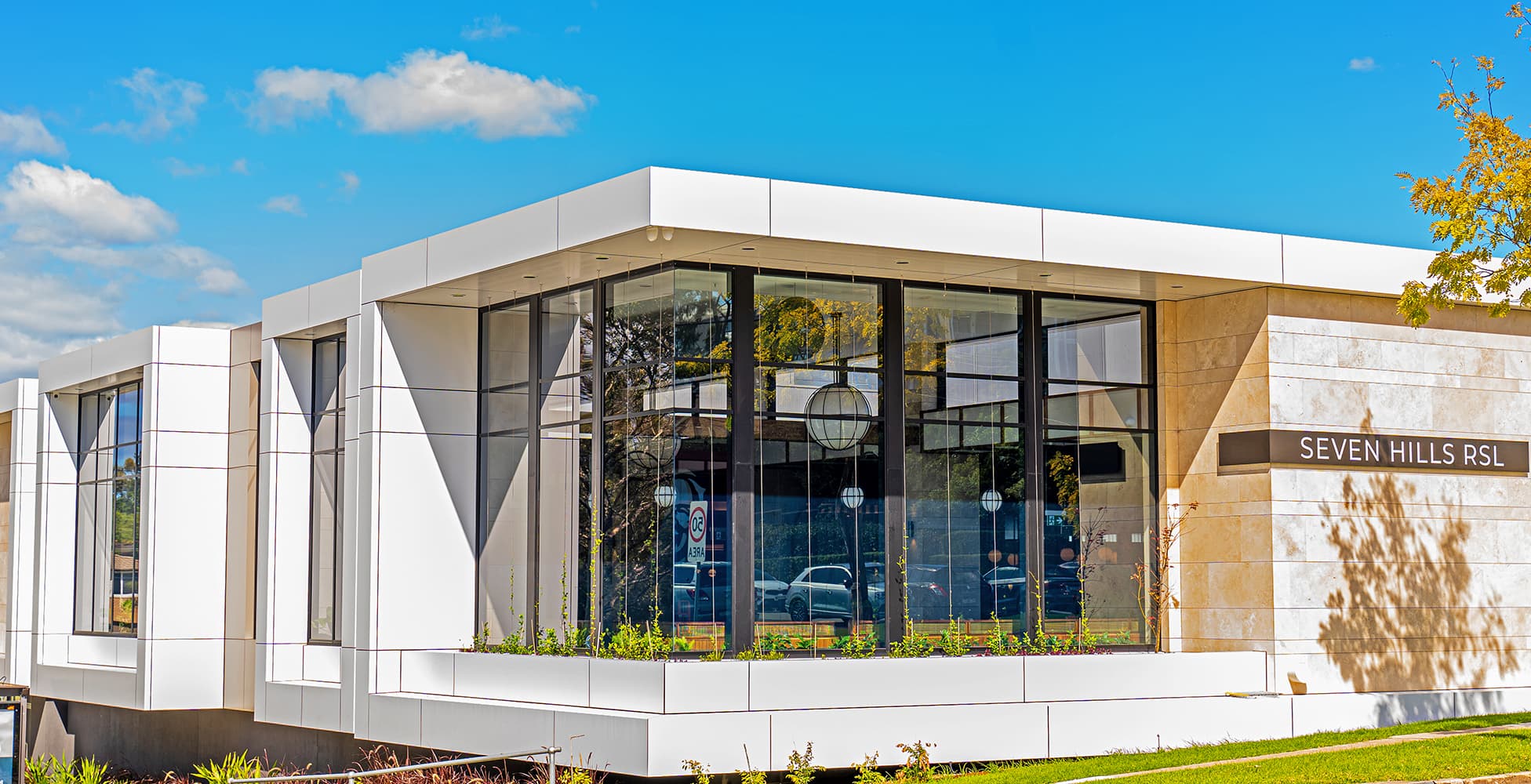
Seven Hills RSL has been part of Western Sydney since 1958. For most of its life, it did what RSL clubs do: provided a place for returned servicemen and the local community to gather, eat, drink, and play the pokies. But by the late 2010s, the board and management team could see the writing on the wall. The club's facilities were dated. Competition from newer venues was growing. Members had more choices than ever, and their expectations were changing fast.
The answer was a $30 million staged redevelopment that would eventually transform over 6,000 square metres of the club: new dining precincts, bars, kitchens, a kids' play area, and a 600-space multi-level carpark, all delivered while the club remained open for trade.
The vision
Seven Hills RSL isn't a standalone venue. It's part of the Seven Hills RSL Group, which also includes Penrith Golf Club, Fox Hills Golf Club, and Pennant Hills Bowling Club. That broader portfolio gives the group scale, but the flagship Seven Hills venue needed to carry its weight as the anchor of the group.
General Manager Joe Bayssari and the board — led by President Barry Wilson — wanted more than a cosmetic refresh. The brief to their architect was to reposition the club as a genuine dining and social destination. Not a place you end up by default, but somewhere you actively choose to go on a Friday night.
That meant rethinking the food and beverage offer from the ground up, creating distinct dining and bar experiences, and building an environment that felt more like a quality restaurant precinct than a traditional RSL.
The project team
| Role | Firm / Individual |
|---|---|
| Architect & Interior Design | Altis Architecture |
| Builder / Construction Manager | Integrated Projects |
| Structural & Civil Engineer | Sparks & Partners |
| Lighting Design | Haron Robson / Lightmatters |
| General Manager | Joe Bayssari |
| Board President | Barry Wilson |
Altis Architecture is one of the most active firms in the club sector, with a portfolio that includes Central Coast Leagues Club, Mounties, and Cabra-Vale Diggers among others. Their involvement from master planning through to interior design gave the project a consistent design language across all stages.
Integrated Projects served as both builder and construction manager. They'd already delivered the club's multi-level carpark extension (an additional 212 spaces, valued at $4.5 million) back in 2019, so they understood the site and the client's expectations.
Master planning and staging
One of the smartest decisions made early was to stage the work. A $30 million renovation done in a single hit would have meant closing the club for an extended period, which would have killed revenue and member loyalty. Instead, the project was master planned into three stages, each designed to be self-contained so the club could keep trading throughout.
Stage 1 — Gaming and Lounge (completed 2021): The first stage tackled the gaming floor along with new indoor and alfresco lounges and a bar. This was the revenue engine — getting the gaming right early meant cash flow remained strong while the more ambitious dining stages followed.
Stage 2 — Dining Quarter and Fitzroy Lane: The centrepiece of the redevelopment. This stage delivered the new dining precinct known as Fitzroy Lane, featuring multiple distinct areas: The Glass House (a light-filled, weather-protected terrace surrounded by landscaping), The Atrium (a serene outdoor courtyard with a fireplace), a new bistro, and a food bar with a live cooking station. New kitchens were built to support the expanded food offer.
Stage 3 — Wilson's Sports Bar and Carpark: The final stage added Wilson's Sports Bar — a dedicated sports viewing space with multiple large screens and an outdoor terrace — plus the expanded 600-space multi-level carpark to handle the increased patronage.
The official opening of the completed venue took place on 14 April 2023.
Design: what makes it work
Walk into Seven Hills RSL today and the first thing you notice is the light. Altis Architecture leaned heavily into natural light and materiality. Recycled timber beams, recycled bricks (sourced from the nearby Brickpit), stone, and generous glazing create warmth without feeling heavy.
The design strategy was to create a series of distinct "rooms" within the club, each with its own character, rather than one vast open-plan space. This is a lesson many clubs are still learning: members want variety. A couple on a date night, a family with young kids, and a group watching the footy on a Saturday afternoon all have different needs. The best club designs give each of those groups a place that feels like it was designed for them.
The Atrium is probably the standout space. That arched glass canopy, the mature plantings, and the outdoor bar create something that feels genuinely different from the standard club courtyard. It's the kind of space that makes people pull out their phones and post on Instagram, which in 2026 is a legitimate marketing strategy for any hospitality venue.
Fitzroy Lane uses curved timber joinery, fluted glass, green tiles, and brass accents to create a dining environment that competes with standalone restaurants, not just other clubs. The craft beer taps and curated wine list signal that this isn't your grandfather's RSL bistro.
Sustainability
The club also incorporated sustainability measures into the redevelopment, with 300 solar panels (100kW capacity) planned as part of the works. Recycled materials were used throughout. The timber beams in the dining terrace and recycled bricks from Brickpit in the dining courtyard are both functional and a nod to the club's connection to its local area.
What boards can learn
Seven Hills RSL's redevelopment offers several takeaways for any club board considering a major project:
-
Stage it. The three-stage approach kept the club trading and gave the board flexibility. If market conditions had changed mid-project, they could have paused without being left with a half-finished building.
-
Invest in the carpark early. The 2019 carpark extension (before the main renovation even started) was a strategic move. Nothing kills a new venue like members not being able to find a park. By the time the dining precinct opened, parking capacity was already there.
-
Create distinct experiences, not one big room. Fitzroy Lane, The Glass House, The Atrium, and Wilson's Sports Bar each serve different occasions. This variety drives repeat visits and broadens the club's appeal beyond its traditional base.
-
Pick a team that knows clubs. Altis Architecture and Integrated Projects both have deep experience in the club sector. That matters. Club redevelopments come with operational constraints that residential or commercial projects don't: staged construction, noise management, maintaining gaming revenue.
-
Don't skimp on food and beverage infrastructure. New kitchens and a rethought food offer were central to this project. A beautiful dining room means nothing if the kitchen behind it can't deliver.
The bigger picture
Seven Hills RSL's $30 million transformation is part of a broader trend across the NSW club industry. Boards are recognising that the clubs which thrive over the next decade will be the ones that invest in their venues now — not just maintaining what they have, but reimagining what a club can be.
The clubs that get left behind will be the ones that keep patching and repainting, hoping that loyalty alone will keep members coming through the door. It won't.
At UpScale, we work with club boards and management teams navigating major redevelopment projects. We're currently working with Granville Diggers on their own transformation. If your club is considering a redevelopment and you want independent project management advice from someone who understands the sector, get in touch.

Director, UpScale Project Management
Architect-turned-project manager with experience across government infrastructure, commercial, and hospitality sectors. Noel founded UpScale PM to provide independent, client-side advisory for club boards navigating major redevelopment projects across NSW.