Roseville Development Approval: Aqualand's DA Strategy Shift
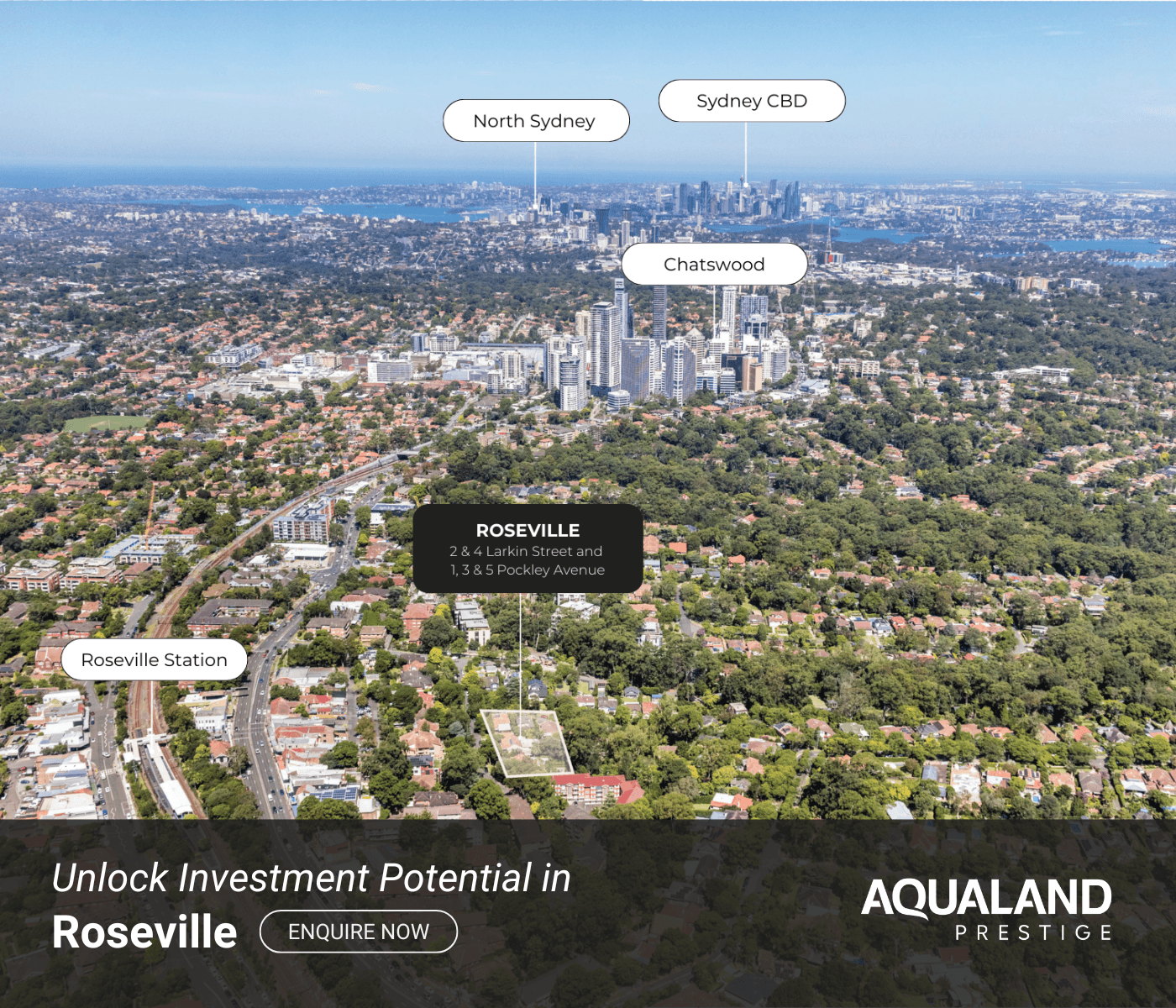
Roseville development approval: what Aqualand's Larkin Street win means for your DA strategy
Image: Aqualand Prestige
Sydney's planning system is shifting from "whether" to "how fast," especially around rail. Under NSW Transport Oriented Development (TOD) settings, precincts within 400 metres of stations are being repositioned to absorb more housing, while councils try to hold the line on local scale controls. In Ku-ring-gai alone, the revised TOD pipeline targets 24,728 homes by end-2025. State-led density outcomes are now baked into the system.
Aqualand Prestige's Larkin Street Roseville proposal (SSD 77829461) is a sharp case study of what that shift looks like in practice. The state approved a $93.4 million development at 2-4 Larkin Street and 1-5 Pockley Avenue, Roseville, overriding Ku-ring-gai Council's objections on height and scale. The project replaces five detached houses on a 3,552 sqm sloping site with two 9-10 storey buildings delivering 111 apartments, including 30 affordable units managed by Bridge Housing.
What does it mean for your next DA strategy, especially if council refusal risk is on your critical path?
State override changed the risk profile
The standout feature of Roseville is not the built form. It is the pathway. By going through as a State Significant Development (SSD), Aqualand shifted the decision away from local politics and into a state framework built to prioritise housing supply. Ku-ring-gai Council objected to height and scale. The proposal was approved anyway, under ministerial delegation by the Department's Deputy Secretary.
That is not a loophole. It is the NSW planning system working as designed when state priorities, housing delivery and TOD, outweigh local refusal positions.
What developers should pay attention to is timing. The approval leaned on alignment with TOD and state housing priorities, and it benefited from being lodged while controls were still shifting. If your site sits in an emerging station precinct, your DA strategy cannot afford to wait until "everything settles." Roseville reinforces that the state will back outcomes consistent with supply targets, provided your documentation stacks up.
"The Department found the proposal 'consistent with state housing priorities and in the public interest.'" -- NSW Department of Planning (assessment finding)
Takeaway: If council refusal is likely, assess SSD eligibility early and build a decision pathway that matches state housing and TOD objectives, not just local controls.
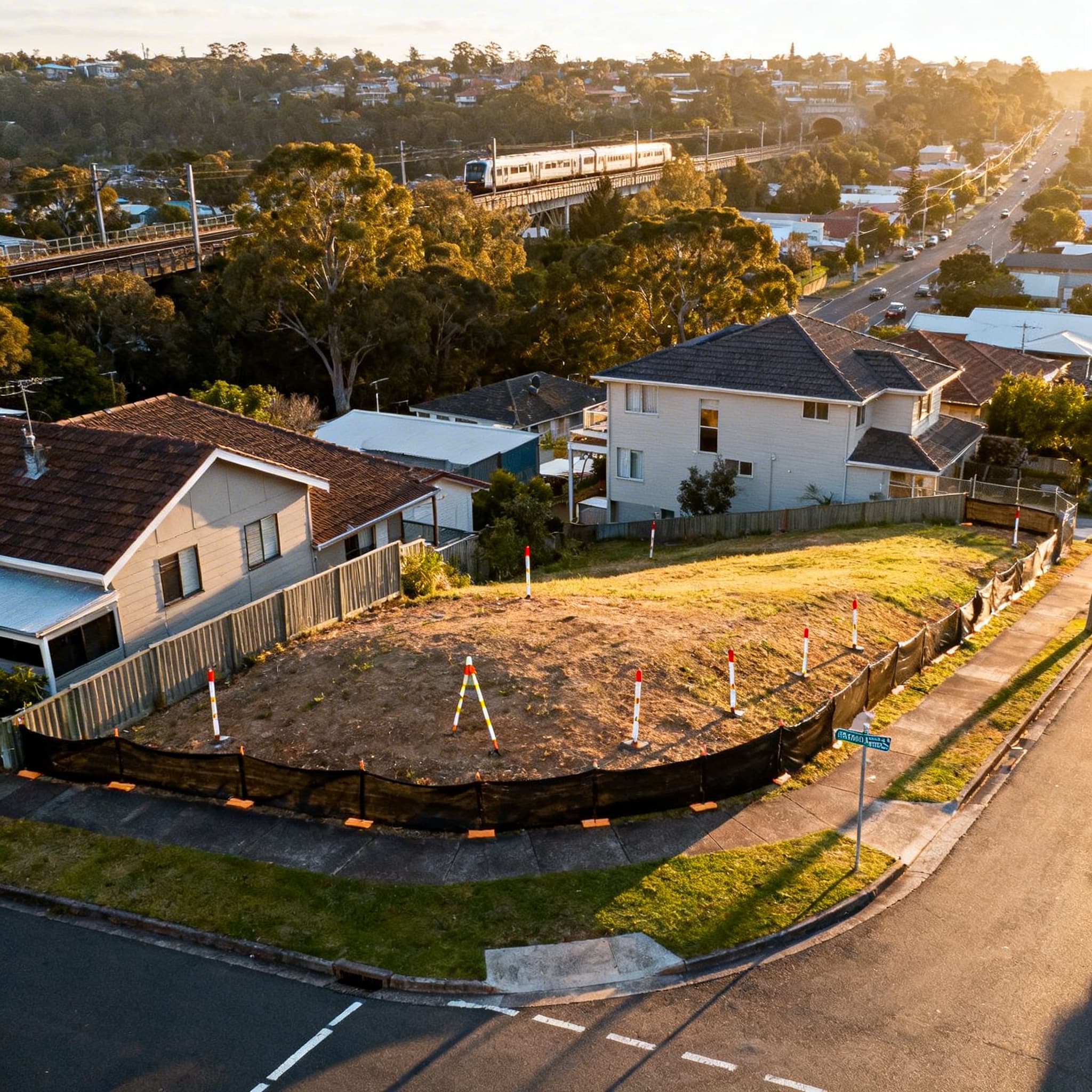
TOD proximity is the real planning leverage
 Image: Aqualand Prestige / Woods Bagot
Roseville's planning logic starts with a single fact: the site sits within 400 metres of Roseville Station. That proximity triggers TOD intensification and, increasingly, the justification for defending height, yield and reduced car dependency. On the Upper North Shore, station adjacency is now a planning asset you can quantify and argue, particularly when the broader pipeline is explicit (24,728 homes flagged in Ku-ring-gai's TOD plan).
This changes how you frame the planning narrative. The core argument is not "this building is reasonable." It is "this site is strategically located to absorb density with managed impacts." In Roseville, traffic and access impacts were considered acceptable with conditions, including a Green Travel Plan, signalling that state agencies expect mode-shift commitments, not just more parking.
When we advise clients on station-precinct sites, we treat transport planning as a first-order approval driver. If your traffic, pedestrian and cycling strategy is buried in an appendix rather than leading the narrative, you are leaving leverage on the table and inviting late-stage conditions that bite during delivery.
Takeaway: In TOD catchments, lead with station proximity, mode-shift commitments and precinct outcomes. Defend built form as the logical consequence.
The numbers matter: feasibility and the affordable housing lever
Approvals follow numbers as much as drawings. Roseville proposes 111 apartments across two mid-rise buildings, with 30 affordable units, a 27% affordable housing component, managed by Bridge Housing. That ratio does two things: it strengthens the state-interest case and it helps neutralise objections that would otherwise focus on "overdevelopment."
On feasibility, the benchmark is sobering. Using the HIA Q4 2025 Sydney guide, mid-rise residential construction sits around $6,000-$6,500/sqm. This typology lands at roughly $6,200/sqm. Against a $93.4 million project, any post-approval condition that adds complexity (retaining trees, staging constraints, services upgrades, premium facade adjustments) can meaningfully shift the bottom line.
Aqualand also reduced funding pressure through a joint-venture equity partnership with Phoenix Property Investors. That matters in a higher-rate market where the RBA cash rate sits at 4.35% and pre-sales are harder to underwrite. This is exactly where project management intersects planning: the "right" approval is the one that stays feasible after conditions are applied, not just on lodgement day.
"Securing our first end-to-end equity investment under the Aqualand Prestige brand is a major milestone... allowing us to deliver smaller scale residential projects with the same level of design excellence." -- Jin Lin, Managing Director, Aqualand Group
Takeaway: Model planning conditions into feasibility from day one, especially where affordable housing commitments, interest rates and construction costs tighten your margin for error.
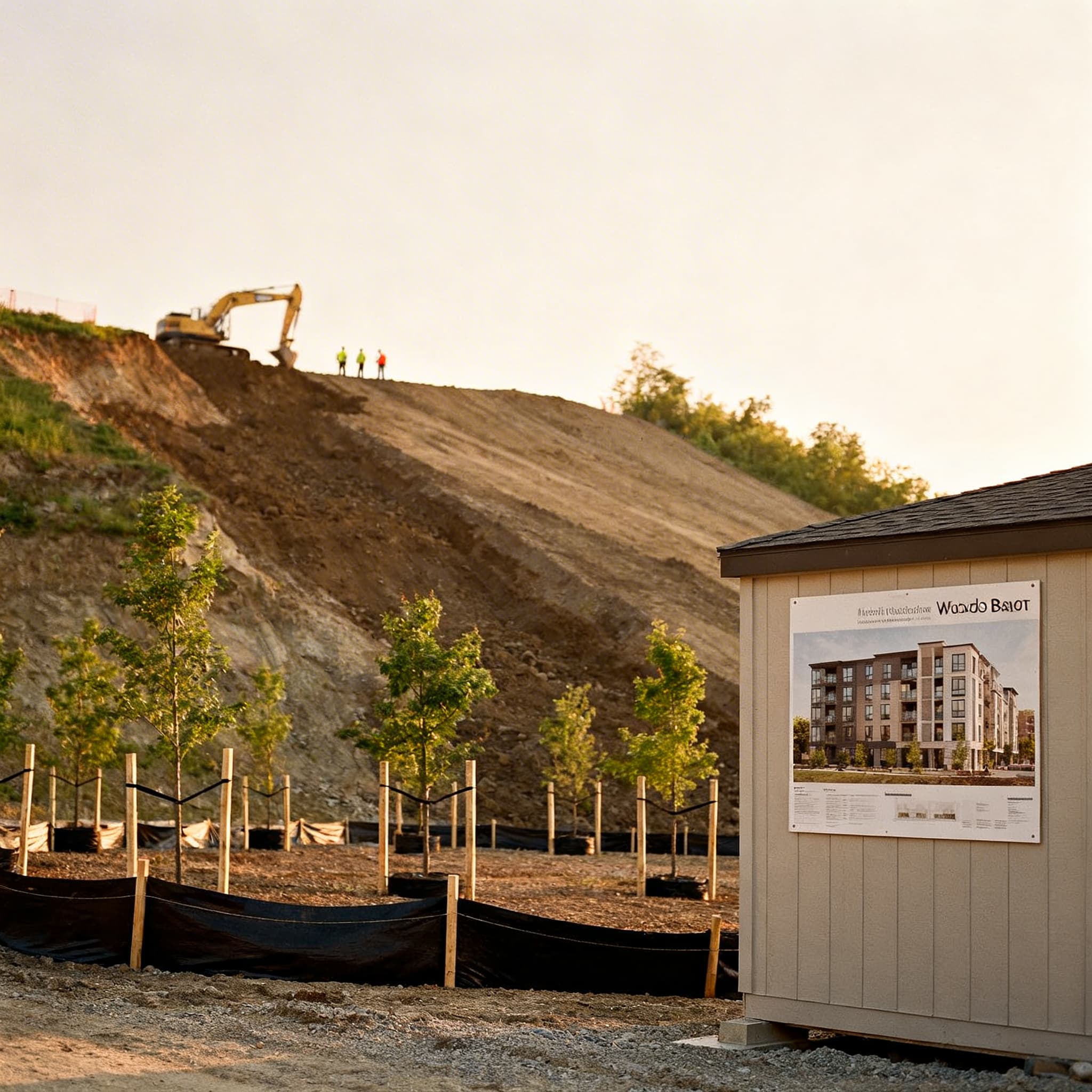
DA strategy in the NSW planning system: timing plus evidence
 Image: Aqualand / Woods Bagot
Roseville points to a clear playbook: timing, alignment, and evidence. The application's timing, relative to council's evolving TOD controls, mattered. But timing alone does not get an SSD over the line. The approval relied on comprehensive technical work: traffic modelling (Varga), wind assessment (Windtech), overshadowing analysis, stormwater design and compliance against the Apartment Design Guide (with only minor variances).
This is where many projects come unstuck. They aim to "win the argument" with council rather than "prove the outcome" to the state. SSD assessment is less about debating preferences and more about demonstrating that impacts are understood, mitigated and conditioned.
Roseville's conditions, including the Green Travel Plan and controls around stormwater and tree removal, carry a warning: if you have not pre-modelled delivery constraints, your cost plan can blow out after approval. On the Upper North Shore, conditions that lock down tree removal or construction methodology can add 5-10% to project management and delivery costs when you are forced into bespoke retention zones or redesign during detailed documentation.
"Aqualand's depth of experience, vertically integrated delivery model and strong record of delivering complex, high-quality residential developments made them a natural partner." -- Trent Winduss, Partner and Head of Australia, Phoenix Property Investors
Takeaway: Treat SSD like a proof exercise. Front-load technical evidence and cost the conditions before they cost you.
What Roseville signals for the Upper North Shore
The bigger message is directional: state intervention is becoming a practical delivery tool for projects that meet strategic housing objectives, even in politically sensitive suburbs. With a documented housing shortfall (Urbis flagged 20,000+ dwellings in 2025) and a low-vacancy market (around 1.5% on the North Shore), the NSW Government has strong incentive to keep supply moving.
For landowners and developers in Ku-ring-gai, a council refusal is no longer the end of the story if you have: (1) TOD proximity, (2) a credible affordability component, and (3) an SSD-ready technical package.
Roseville also highlights delivery sequencing risk. The project is expected to be built in one stage, which reduces holding costs but amplifies cashflow pressure if pre-sales timing slips (sales are anticipated later in 2026). This is why we view state significant development not just as a planning strategy, but as a project strategy. It shapes programme, funding structure, procurement approach, and even how you message the project to community and stakeholders.
Takeaway: Use SSD to manage refusal risk, but only if your commercial plan (funding, staging, pre-sales) is designed to survive the conditions and the timetable.
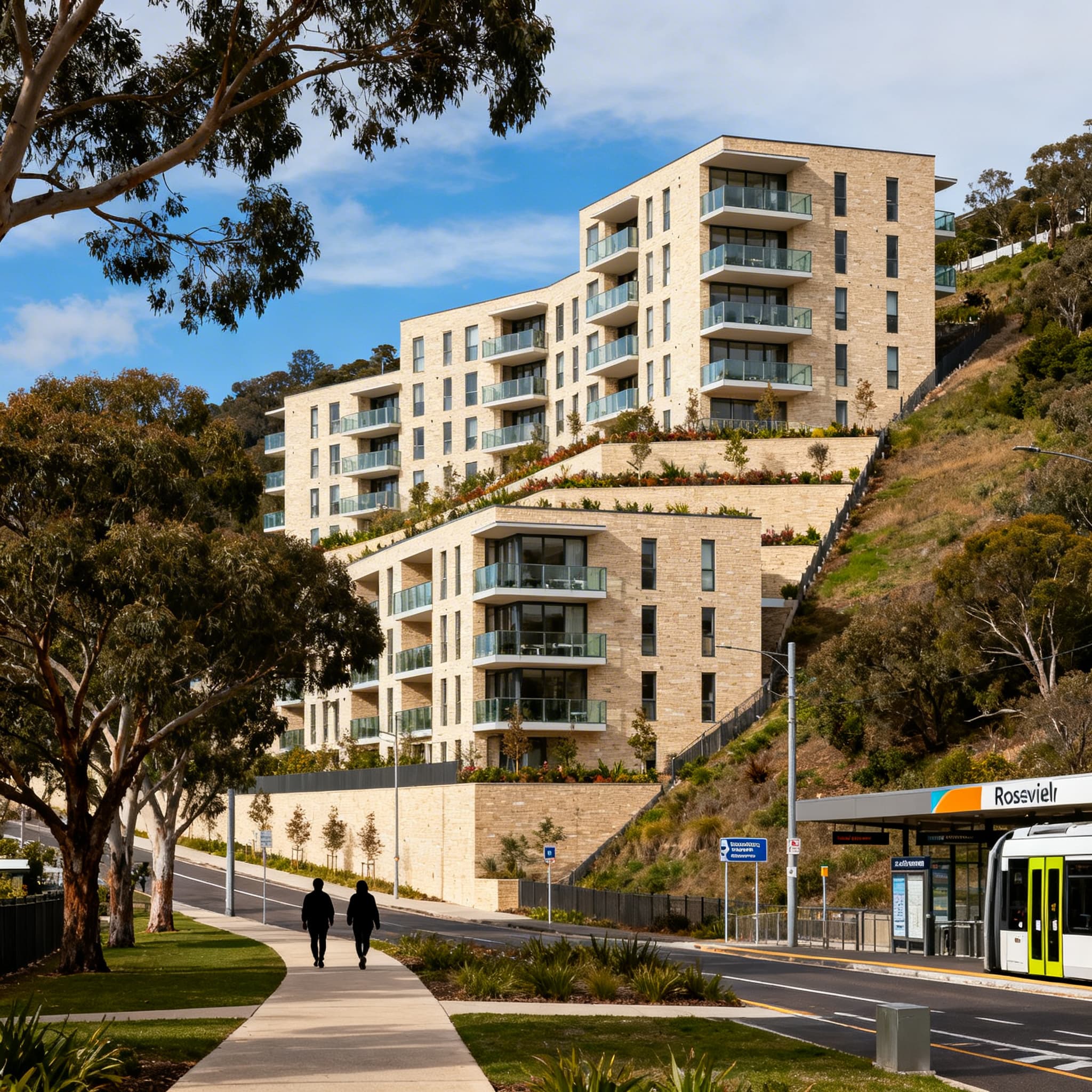
What to take into your next DA strategy
Aqualand's Roseville outcome answers the central question: yes, the state can and will approve projects over local objection, but only where the proposal clearly advances TOD and housing priorities with rigorous evidence behind it.
Three things to act on:
- Pick the right pathway early. If refusal risk is high, test SSD viability before you lock in design, consultants and programme.
- Build a TOD-first narrative. Station proximity and mode shift (Green Travel Plans, cycling infrastructure) are now core approval logic.
- Cost the conditions upfront. Post-approval constraints erode feasibility fast, especially at ~$6,200/sqm mid-rise benchmarks.
If your site sits near rail on the Upper North Shore, the window is open. But it rewards speed, planning discipline, and delivery realism.
Weighing up a council-led DA versus an SSD pathway? UpScale PM can help you set the strategy before you burn time and fees. We specialise in project feasibility, DA strategy, and premium project delivery.
Call us on 02 9090 4480 to chat through your site opportunity.

Director, UpScale Project Management
Registered architect (NSW) and client-side project manager with more than 15 years across architecture practices, client-side project management consultancies and government agencies. Noel founded UpScale PM to provide independent, client-side project management for NSW club boards navigating major redevelopments.
Related insights
AS4902 vs AS4000 for Club Redevelopments
AS4000 is construct-only, AS4902 is design and construct. What each form means for a club board: design risk, novation, time, variations, security and payment.
Separable Portions Explained for Club Boards
Separable portions let a club take back and trade in finished areas while building continues. How they work, and the drafting traps boards should avoid.
Bay West Precinct & DAs: 8,500 Homes, NSW Planning Shift
Bays West Precinct brings 8,500 homes and state-led precinct planning to Sydney's Inner West. Here's what it means for development approvals, feasibility, and anyone with skin in the game.
Blackwattle Bay redevelopment: delivery risks & staging
Blackwattle Bay redevelopment risks: precinct staging, interfaces & programme controls. Learn what to lock in early—talk to UpScale PM today.