Penrith RSL's $30M Redevelopment: A Western Sydney Club Transformed
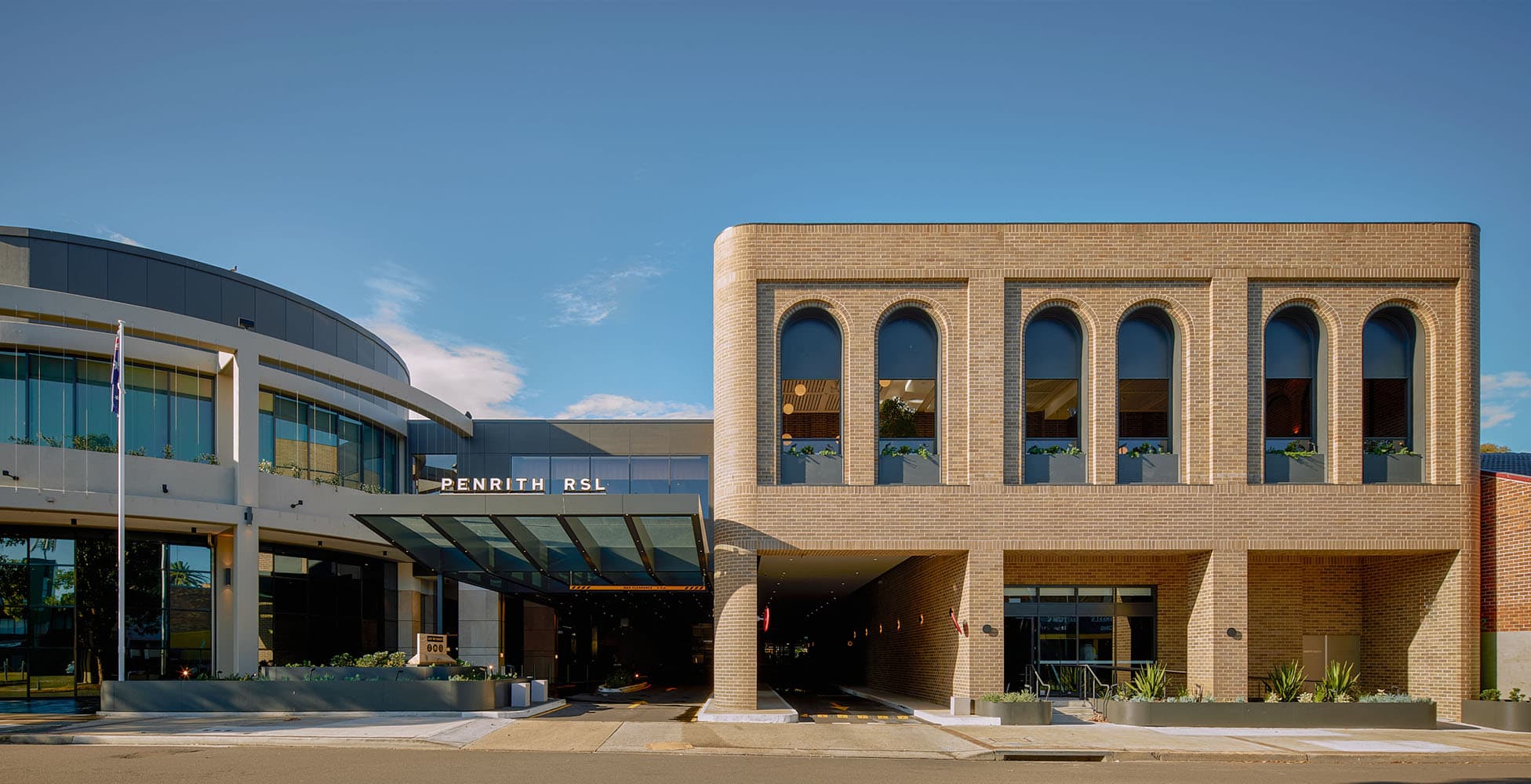
Penrith RSL has been part of Western Sydney since the early 1960s. Sitting on a 13,500 square metre site at the corner of Lethbridge, Castlereagh and Tindale streets, right in the heart of Penrith CBD and 500 metres from the train station, it's one of those clubs that generations of locals have grown up with.
But by the early 2020s, the board and CEO Neel Chand recognised that the ageing facilities weren't keeping pace with what members and the broader community expected. The club needed more than cosmetic touch-ups. It needed a significant expansion and a complete rethink of what it could offer Penrith.
What followed was a $30 million redevelopment, designed by Altis Architecture, that added almost 3,500 square metres of new trading floor across a two-storey extension, delivered a full interior transformation, and introduced commercial tenancies along the club's street frontages. All while the club stayed open for business.
The vision: expansion, not just renovation
This wasn't a project about refreshing carpet and paint. The board wanted to expand the club's capacity and diversify its offer. Penrith RSL wanted to become a real events and entertainment destination for Western Sydney, a place that could host weddings, concerts, exhibitions, expos, and conferences alongside the everyday dining and social experiences members expected.
CEO Neel Chand was clear about the brief. The club needed a large-format function space that could flex across different event types, a premium restaurant that could compete with the growing food scene in Penrith's CBD, and commercial tenancies that would activate the Tindale Street frontage and bring foot traffic into the precinct.
The existing buffet, an institution among the membership, would remain largely the same. That's a smart instinct. Knowing what to protect is just as important as knowing what to change.
What was delivered
The development application, submitted in late 2022 and approved by Penrith City Council in April 2023, covered a substantial scope:
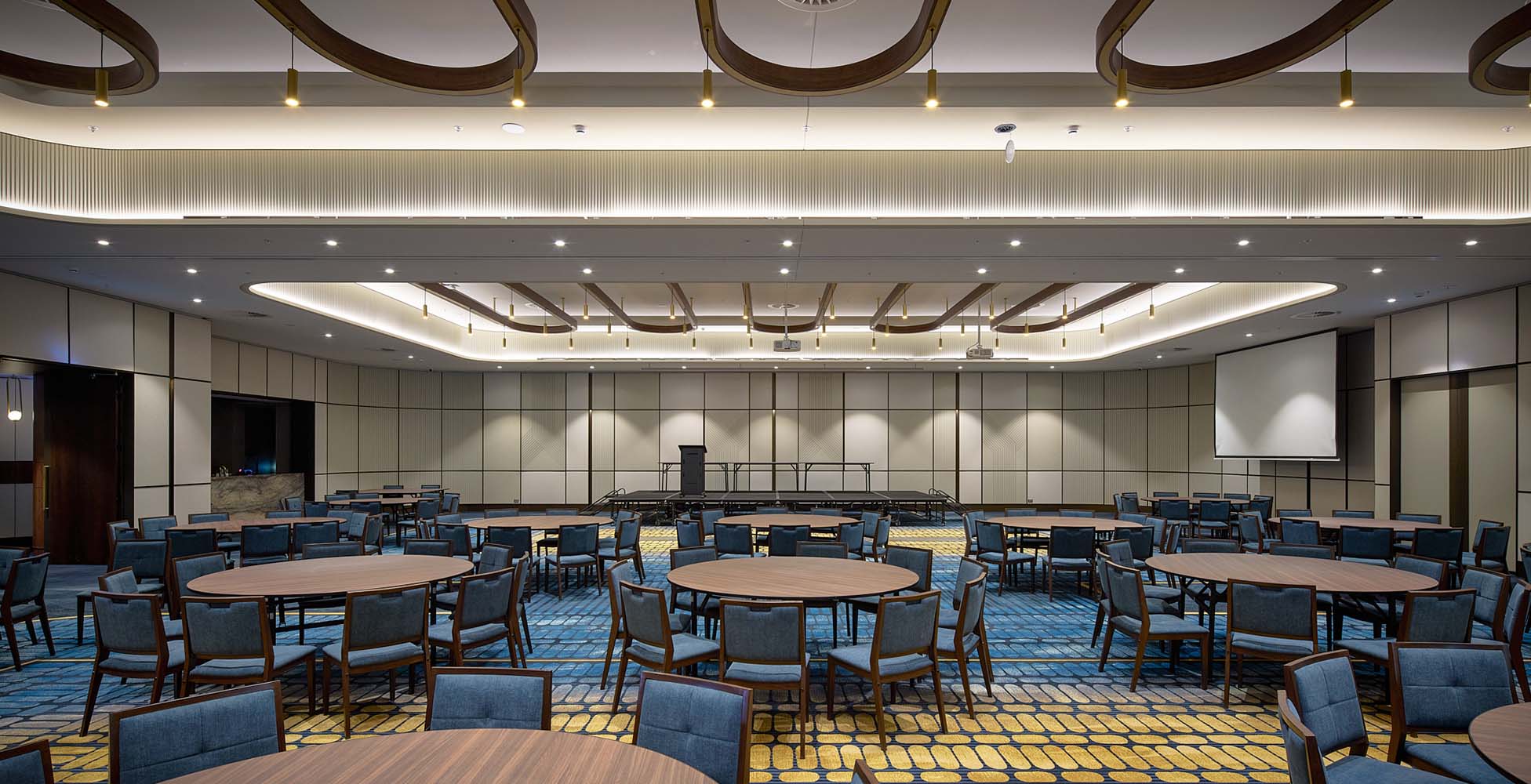
500-seat auditorium -- a new multi-purpose function space that can be subdivided into three separate sections with operable walls. It accommodates everything from 500-seat concerts to 150-person conferences. The space has full AV infrastructure, a stage, and dedicated back-of-house areas.
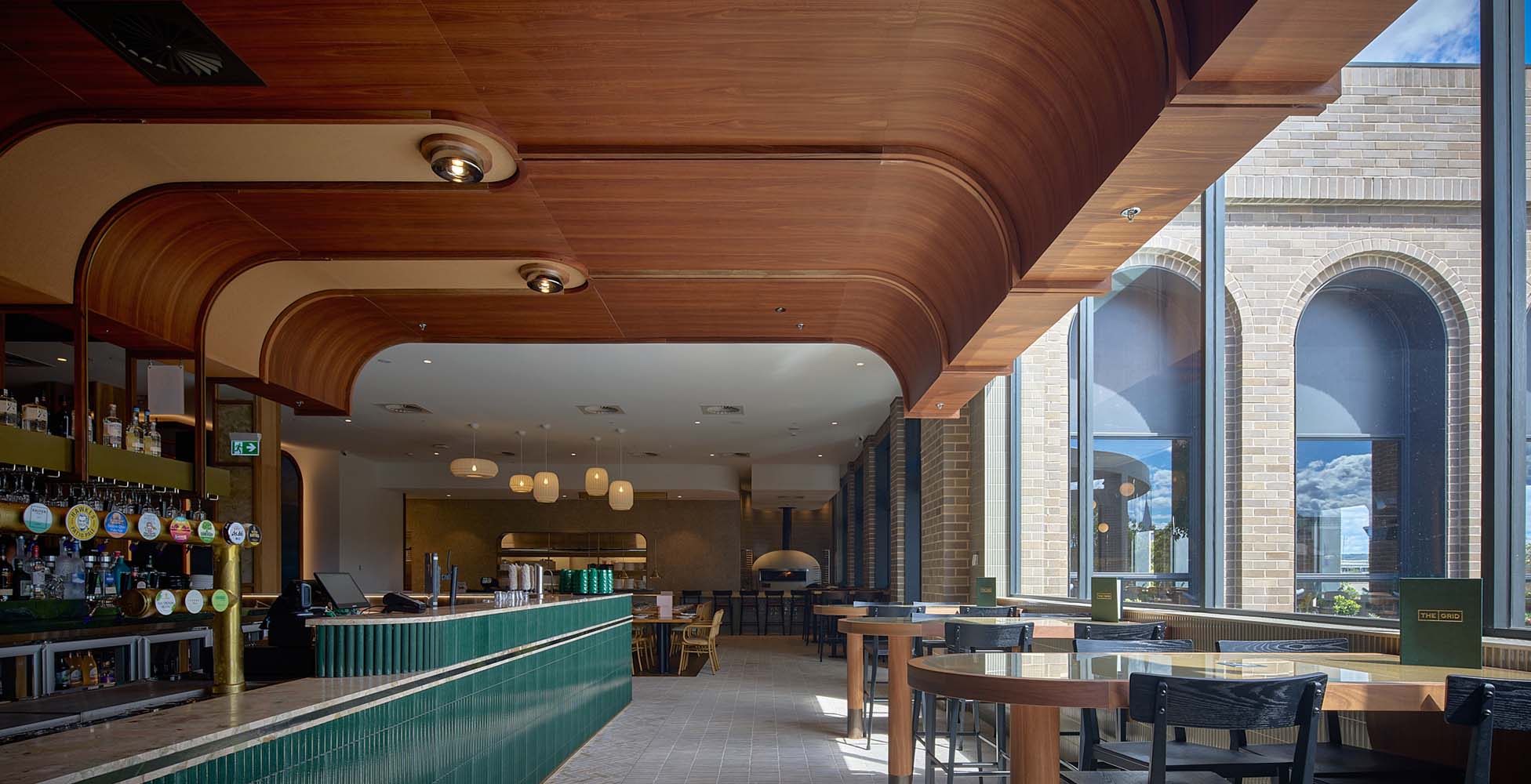
470-seat restaurant and sports lounge -- on the upper level of the new extension, with a bar featuring 46 taps and a cocktail offering, plus an adjoining terrace for alfresco dining overlooking the precinct. It's a pub-in-club concept aimed at attracting a broader demographic.
New entry and foyer -- a redesigned reception and arrival via Tindale Street, including a new driveway with drop-off bay and a renovated foyer that sets the tone for the rest of the club.
Commercial tenancies -- six new retail or commercial spaces across the ground floor: three at the Tindale Street frontage, two within the modified foyer, and one at the western extent. These include a 180 square metre tenancy and a larger 500 square metre commercial space.
RSL museum and renovated hairdresser -- acknowledging the club's RSL heritage and its role as a community hub, not just a hospitality venue.
Interior refurbishment -- the existing club received a full internal overhaul including walls, floors, ceilings, and a reconfiguration of indoor and outdoor gaming facilities to allow for more spacing between machines.
The design: brick, arches, and warmth
Altis Architecture's design for the extension is immediately recognisable. The new two-storey facade is clad in warm blonde brick with a series of tall arched windows. It gives the building a sense of permanence and civic presence that most club extensions simply don't achieve.
It's a design that respects the scale and character of Penrith's CBD while signalling that this is a building with ambition. The arched motif carries through into the interior, where it appears in wall detailing, mirrors, and joinery throughout the new spaces.
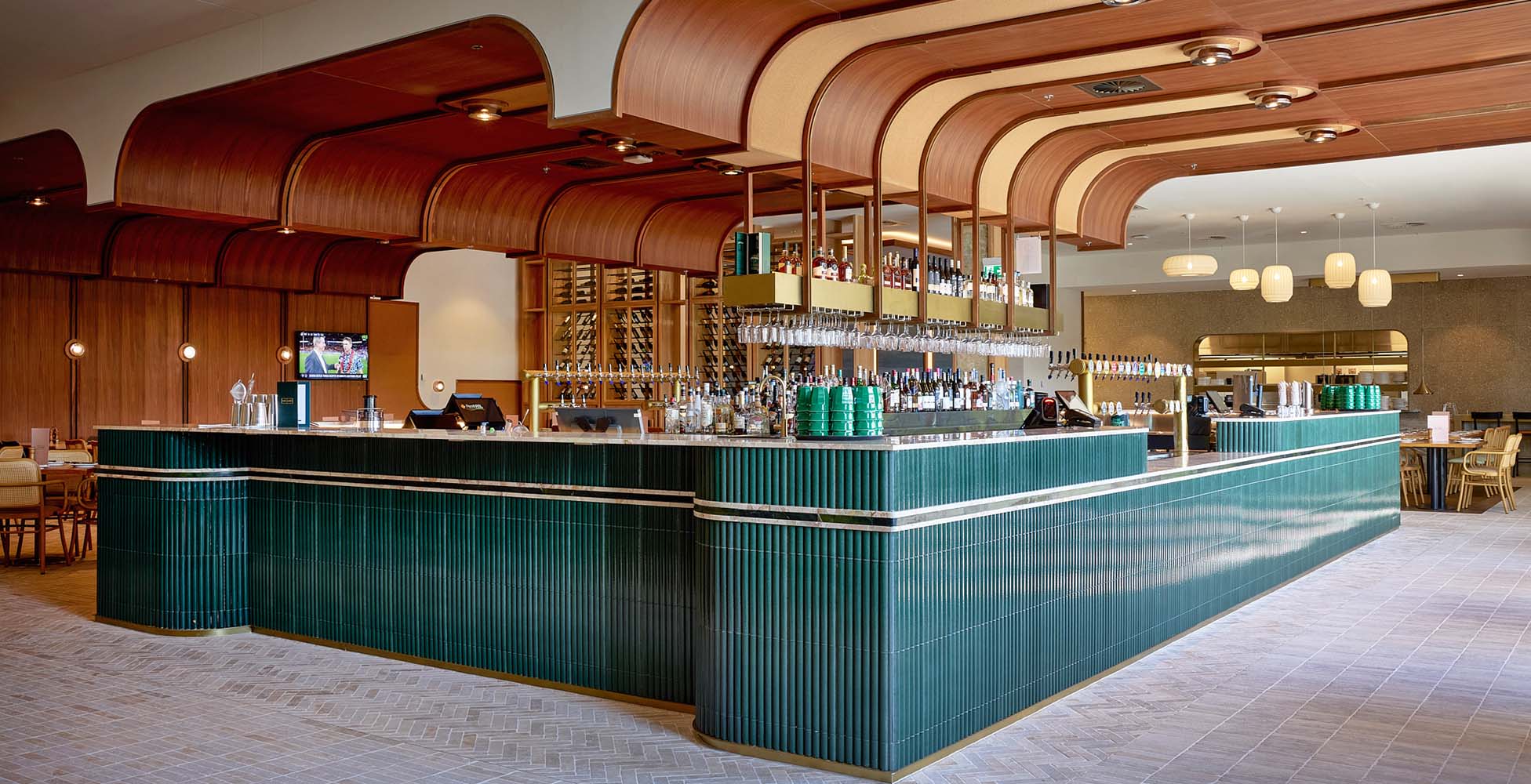
Inside, the material palette is rich and considered. Deep green fluted tiles front the main bars, contrasted against sweeping timber batten ceilings that curve through the upper-level dining spaces. The effect is warm, layered, and distinctly more sophisticated than a typical club interior. There's marble and stone on the kitchen pass and bar counters, brass and gold accents on pendant lighting, and a variety of seating — from velvet lounges to banquettes to high tables — that creates distinct zones within the open floor plan.
The function space on the ground floor takes a different approach: restrained ceiling treatments with timber battens and acoustic panels, patterned carpet, and flexible lighting that can shift the mood between a corporate conference and a gala dinner. It's practical without being bland.
Even the amenities received attention. The bathrooms feature travertine wall cladding, stone vanities, and black steel-framed mirrors. These are the details that members notice, even if they can't always articulate why the building feels different.
Planning and approvals
The site sits in the B4 Mixed Use zone under the Penrith Local Environmental Plan, with the proposal defined as a "registered club" and "commercial premises" — both permissible uses. The DA was submitted in late 2022 and approved in April 2023.
One useful planning detail: because an RSL club doesn't satisfy the definitions of "commercial office use" or "retail use" under the local contributions plan, Penrith City Council applied a different contributions rate. The club paid $612,590 in local infrastructure contributions, working out to $179 per square metre across the 3,406 square metres of additional floor space. That's a figure any board budgeting a similar project in Western Sydney should note.
The approval process was relatively smooth, likely helped by the fact that the club is an established use on the site with strong community support. An auspicious turning-of-the-soil ceremony was held with CEO Neel Chand joined by then Penrith Mayor Tricia Hitchen and State Member for Penrith Karen McKeown.
Staging: open throughout
Construction commenced in September 2023, with initial demolition of some external sections including portions of the existing car parking and walkways to make way for the two-storey extension.
The club remained fully operational throughout the build, a non-negotiable for a venue of this size with its membership base. That's roughly 18 months of construction activity happening alongside daily club operations: members dining, gaming, drinking, and attending events while a major building project progressed behind hoardings on the other side of the wall.
By early 2025, the new driveway and club entry via Tindale Street had opened to members. The club's autumn 2025 newsletter reported that the project had approximately four months remaining to full completion, putting the final handover around mid-2025, about 20 months from construction start. That's a reasonable timeframe for a project of this complexity, particularly one delivered on a live site.
The removal of 45 car parking spaces was identified during the DA process, but traffic surveys confirmed substantial spare capacity in the surrounding area. For clubs in CBD locations with access to public transport, this trade-off between car parking and built floor area is increasingly common and usually defensible.
The project team
| Role | Firm |
|---|---|
| Architect | Altis Architecture |
| Client | Penrith RSL Club |
| CEO | Neel Chand |
| Site | 137-147 Lethbridge Street, Penrith |
| Project Value | $30 million |
| Completion | Mid-2025 (estimated) |
The bigger picture for Penrith RSL
The redevelopment comes at an interesting time for the club. Penrith RSL's autumn 2025 newsletter also announced that an amalgamation with Kemps Creek Sporting and Bowling Club was nearing completion, with members of both clubs voting overwhelmingly in favour. These mergers are increasingly common in the NSW club sector as boards look for scale, operational efficiency, and expanded geographic reach.
A $30 million capital investment, paired with an amalgamation, suggests a board and executive team thinking strategically about the next decade — not just the next refurbishment cycle. The new function space alone positions Penrith RSL as one of the few venues in Western Sydney with the capacity and flexibility to host large-format events, which opens up entirely new revenue streams beyond gaming and food and beverage.
What boards can take away
Penrith RSL's redevelopment offers several lessons for club boards considering their own projects:
-
Build new capacity, not just new finishes. The 3,500 square metres of additional floor area — including the auditorium and upper-level restaurant — fundamentally changes what the club can do. This isn't a cosmetic exercise. It's an expansion of the business model.
-
Activate your street frontages. The six commercial tenancies along Tindale Street turn dead frontage into income-generating space and bring foot traffic into the precinct. Too many clubs turn their backs on the street.
-
Keep the doors open. Closing a club for 18 months during construction kills revenue and risks losing members to competitors. Penrith RSL's approach — staging the work to maintain operations — is harder to manage but financially critical.
-
Protect what members love. Keeping the buffet largely unchanged while transforming everything around it is a small but significant detail. Redevelopments that disrespect existing member loyalty tend to generate opposition.
-
Budget for contributions and planning costs. The $612,590 in local infrastructure contributions was an additional cost beyond the construction budget. Boards need to account for these costs — along with consultant fees, authority charges, and temporary works — when setting their overall project budget.
At UpScale, we're currently managing the delivery of the Granville Diggers Club redevelopment, a project that shares many of these same challenges: maintaining operations during construction, managing staged delivery, and keeping the board informed with independent oversight throughout.
If your club is considering a refurbishment or redevelopment, get in touch. We help boards navigate the process from concept through to completion.

Director, UpScale Project Management
Architect-turned-project manager with experience across government infrastructure, commercial, and hospitality sectors. Noel founded UpScale PM to provide independent, client-side advisory for club boards navigating major redevelopment projects across NSW.