Mortdale RSL club redevelopment: SSDA tower lessons NSW
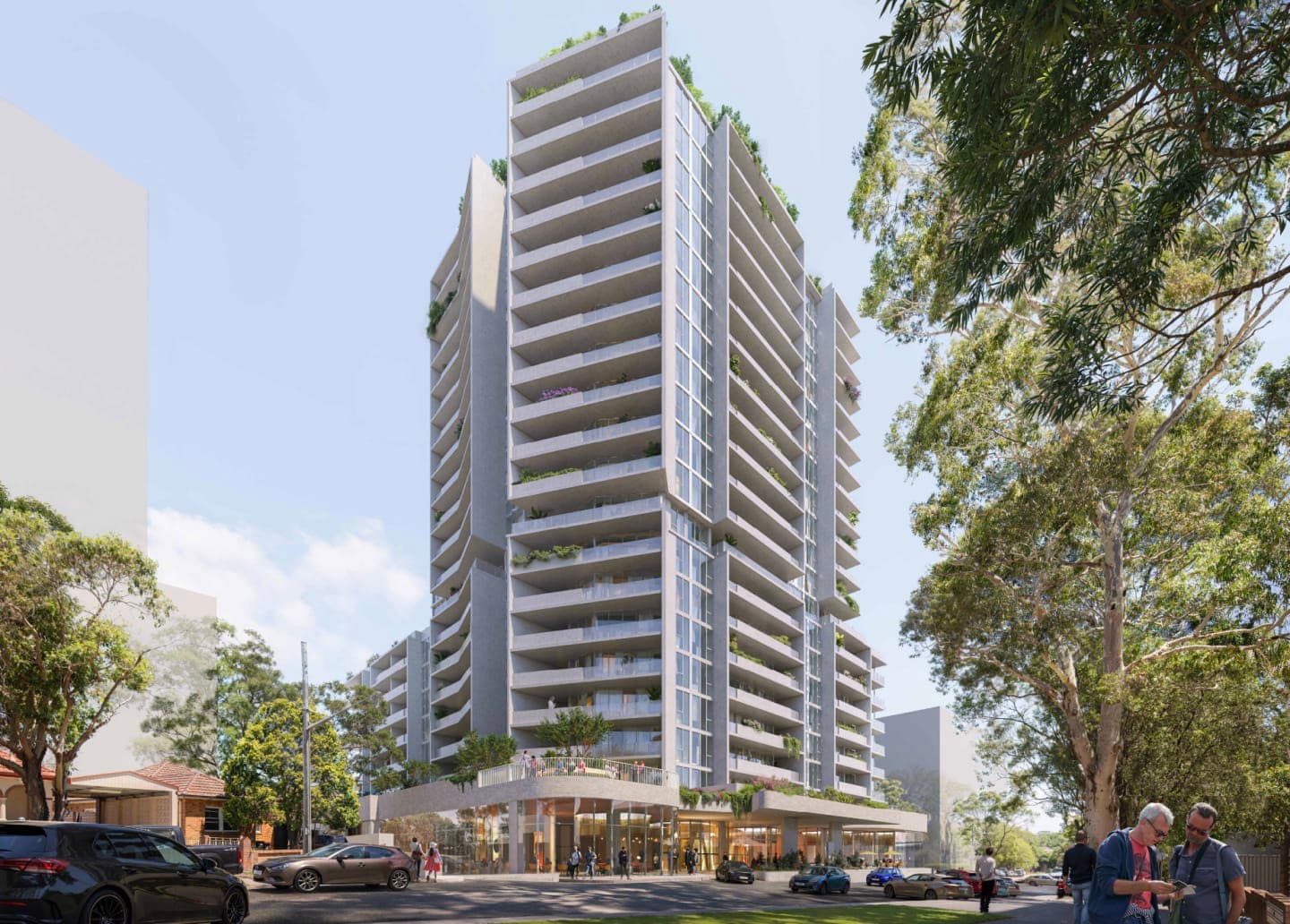
Drive a smarter Mortdale RSL redevelopment: SSDA tower lessons
Image credit: Apartments.com.au / Urban.com.au (as published in source article)
NSW clubs are increasingly using their best-performing assets, well-located land near train stations and town centres, to fund long-term viability through mixed-use redevelopment. Mortdale RSL Community Club is a clear example: its $140.15 million proposal, now progressing as a State Significant Development Application (SSDA) pathway, pairs a modern club facility with a residential tower to support both community purpose and balance-sheet resilience. In Georges River LGA alone, the National Housing Accord target sits at 6,300 new homes by 2029, and club-led housing supply is becoming part of that broader planning equation.
The proposal, branded Mortdale Gardens, would replace an ageing single-storey club and low-scale buildings across 19-25 Macquarie Place, 46-52 Pitt Street and 56 Pitt Street, Mortdale (around 26 km from the Sydney CBD). It includes a new 2,735 sq m club and non-residential offering (retail, supermarket, medical, cafes, offices), plus 233 apartments in stepped buildings ranging from 8-9 storeys up to a 20-storey tower, and 479 car spaces across five basement levels. The scheme is backed by Capital Corporation and designed by NOD Architects with Stanisic Architects.
What can club boards and GMs learn from Mortdale before committing to a mixed-use club tower?
1. Mortdale Gardens shows how a club can "reposition" itself
Mortdale RSL's proposition is not just a new building. It is a strategic shift in what the club offers the community and how it funds itself. The plan introduces a larger "day-to-night" ecosystem: 2,735 sq m of club and complementary uses including retail, medical and a supermarket, anchored by a new club facility of 2,735 sq m within the broader non-residential mix. For boards, this is what "diversifying away from gaming" looks like in practice: creating multiple income streams and a wider set of reasons for people to visit.
The scale also matters. A 233-apartment program (including 20 one-bed, 182 two-bed, 31 three-bed and 6 dual-key) is a different commercial engine than a small add-on residential component. With $140.15m capital cost and a timeline that flags pre-sales targeted in 2027 and construction from 2028, the redevelopment reads like a long-horizon business plan, not a cosmetic refurbishment.
"The proposal is not simply about replacing an older building; it is about repositioning the club as a more active, outward-facing and financially stable community asset."
-- Mortdale RSL, Scoping Report
Takeaway: If your club is considering a mixed-use club tower, be explicit: the project is a business model change. Document the "why" (community outcomes + financial stability) early so it carries through planning, member communications, and delivery.
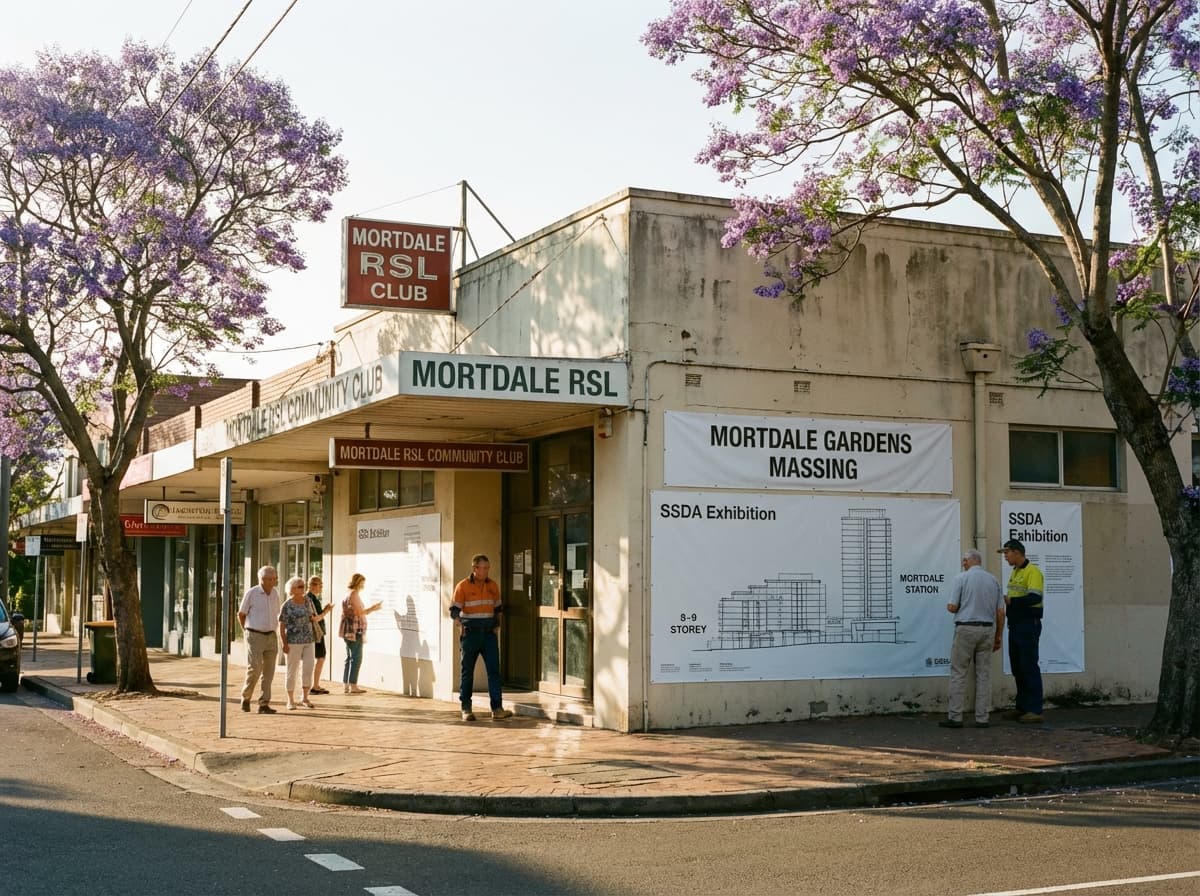
2. SSDA can accelerate approvals, but it raises the bar on strategy and evidence
Mortdale's current proposal sits within the NSW Government's Housing Delivery Authority framework and is progressing as an SSDA on exhibition, moving into EIS preparation after SEARs. That pathway can be a powerful enabler for clubs, especially where projects contribute meaningfully to housing supply: here, 233 homes toward Georges River's 6,300-home target by 2029.
But SSDA does not remove risk; it concentrates it. Mortdale already has a real-world lesson from its earlier planning history: a 2022 proposal (175 apartments / 13 storeys) was rejected by the Sydney South Planning Panel for lacking strategic merit. The new scheme is bigger, taller (up to 20 storeys) and requires rezoning adjustments for height/FSR, which means the justification must be stronger, the technical studies more robust, and the design response more defensible in public submissions.
"The proposal balances bulk and scale through carefully considered setbacks, building heights and articulation that respond to the established and future urban character... supports a lively and dynamic local centre."
-- NOD Architects & Stanisic Architects, Design Verification Statement
Takeaway: Treat SSDA as a "proof-standard" process. Commission independent peer reviews early (urban design, traffic, planning strategy) so your exhibition material can withstand scrutiny, especially if a prior scheme has been refused.
3. Affordable housing is not just a planning lever; it shapes project feasibility and goodwill
The Mortdale Gardens scheme includes 39 affordable homes (15%), a sizeable commitment that can materially influence both planning support and community perception. For clubs, this is where development strategy intersects with purpose: affordable housing can reinforce a narrative of community contribution, not just monetisation of land.
From a practical delivery standpoint, affordable housing also changes the commercial model: it changes revenue assumptions, influences funding conversations, and can affect staging and handover planning (operator requirements, tenancy management, and compliance). Boards need to understand that affordable housing is not a line item. It is an operational commitment with downstream governance and reporting expectations, depending on the delivery model.
Mortdale's mix also includes dual-key apartments, which can boost yield flexibility. For club boards assessing feasibility, this is a reminder to test multiple product mixes against market absorption, not just "how many units can we fit."
"Aims to secure the future of the Mortdale RSL Community Club and Sub-Branch, which has supported veterans and their families for more than a century."
-- Mortdale RSL Community Club
Takeaway: If affordable housing is part of your redevelopment, model it properly: governance, agreements, and operational impacts. Then use it transparently as part of your community value proposition during exhibition.
4. Capital Corporation's approach highlights the new club-developer partnership model
Mortdale Gardens is being advanced with Capital Corporation (led by Jim Hunter), with architecture by NOD Architects and Stanisic Architects. This type of partnership model is now common in NSW: clubs bring the site and the social licence; developers bring funding capability, delivery systems, and sales/market expertise. The stated timeline, 2026 studies and engagement, 2027 final plans and pre-sales, 2028 construction start, reflects a developer-led pipeline where pre-sales de-risk finance and smooth the path to mobilisation.
For club boards, the critical governance point is role clarity. The club's objectives (member experience, veteran legacy, service continuity, brand) can conflict with typical developer drivers (yield, programme, cost). A strong client-side PM and advisory team helps keep the club's outcomes contractually "real", not just described in presentations.
This is also where realistic benchmarking matters. A $140.15m build across apartments + club uses implies a high-quality, complex mixed-use build. Fitout benchmarks cited for hospitality/club environments sit around $4,500-$6,500/sq m, with mixed-use club fitout sometimes reaching $5,000-$7,000/sq m depending on scope and finishes. If boards under-spec the brief early, costs reappear later as variations and compromises.
"The proposal is not simply about replacing an older building; it is about repositioning the club as a more active, outward-facing and financially stable community asset."
-- Mortdale RSL, Scoping Report
Takeaway: In a club-developer partnership, define non-negotiables early (club scope, finishes, functionality, access, identity) and make sure they are reflected in the agreement structure, not left to goodwill.
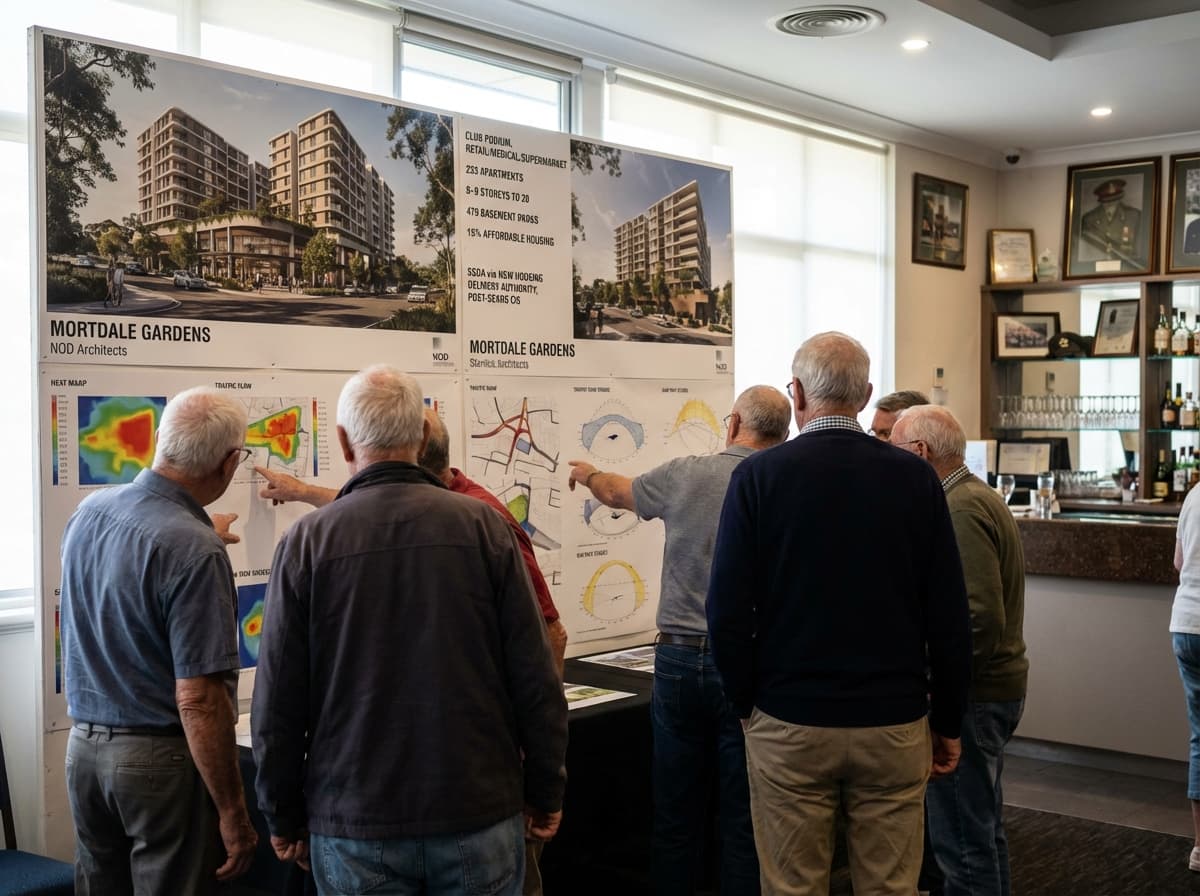
5. Delivery risk: full demolition rebuild is simple on paper, hard on club operations
Mortdale's staging approach is not publicly specified, but the core premise is full demolition and rebuild of the existing facilities and adjacent low-scale buildings. For many clubs, that is the moment the strategic plan meets the reality of cashflow and member expectations: what happens to trade during demolition, and how do you protect revenue before the new income streams arrive?
Even when a developer partner is carrying delivery risk, the club still carries reputational and operational risk. If members feel "displaced" for years, sentiment can turn quickly during exhibition and approvals, especially following a prior refusal history. Parking and traffic impacts will also be a focus given the scheme includes 479 car spaces and sits close to Mortdale station; transport integration, EV charging strategy, and local intersection performance can become make-or-break issues in submissions.
From UpScale PM's experience delivering heritage-sensitive club upgrades, including staged delivery and keeping venues operational during works (e.g., our current Granville Diggers Club redevelopment under AS4902 D&C with separable portions), the consistent lesson is that staging is a governance decision, not just a construction decision. Whether it is temporary facilities, partial trading solutions, or staged handovers, it must be planned early and costed honestly.
"The proposal balances bulk and scale through carefully considered setbacks, building heights and articulation..."
-- NOD Architects & Stanisic Architects, Design Verification Statement
Takeaway: Don't let "we'll work it out later" be the staging plan. Boards should require a clear operational continuity strategy (or a deliberate closure strategy with mitigation) before the project advances too far into planning and market commitments.
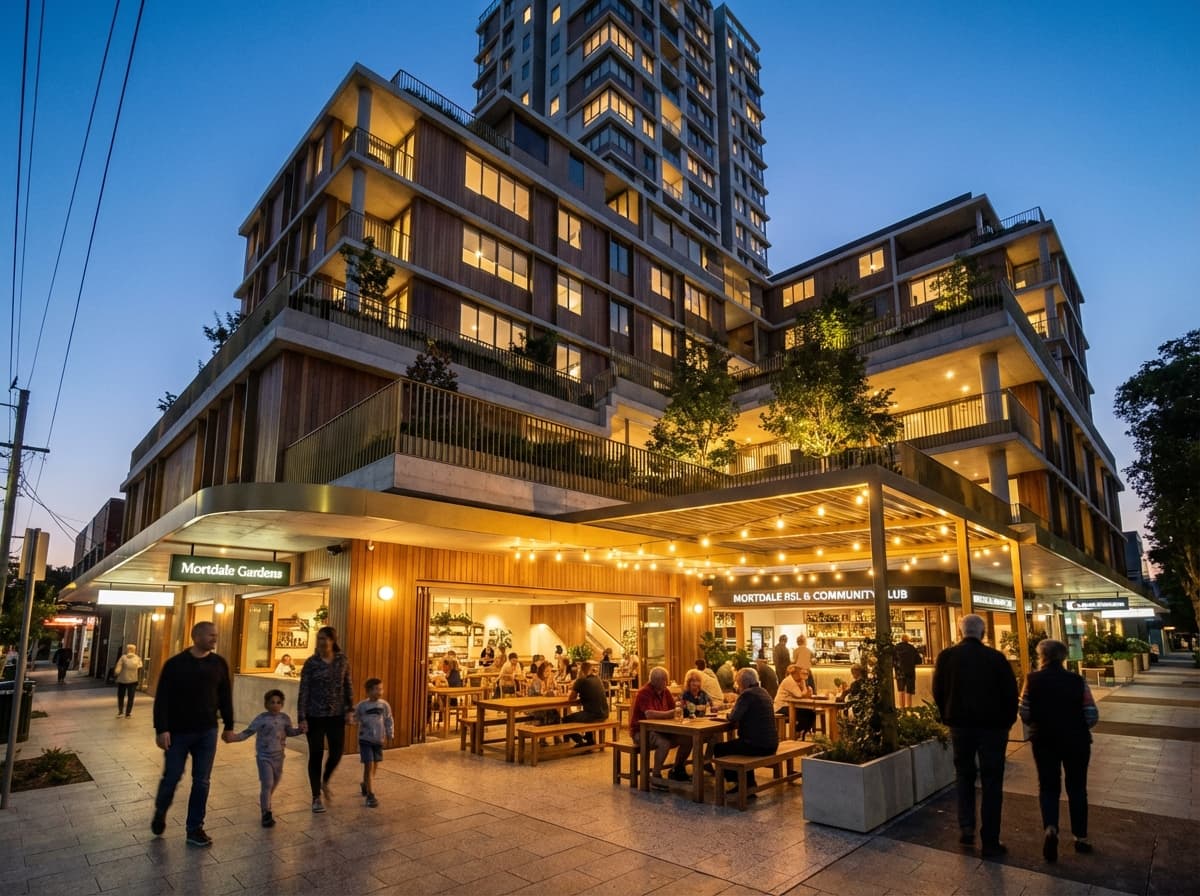
Conclusion
Mortdale RSL's SSDA mixed-use tower proposal answers a question many NSW club boards are now asking: can housing and mixed-use development underwrite long-term club viability without losing community trust? The early indicators suggest it can, but only when the project is framed as a community asset uplift, supported by robust planning strategy, and governed with delivery realism.
Mortdale Gardens is ambitious at $140.15m, with 233 apartments, 15% affordable housing (39 homes), and a built form stepping to 20 storeys. That ambition makes the SSDA process and the exhibition period high-stakes. Strong technical evidence, member engagement, and a credible operational plan for the period before construction (and during it) will determine whether the project is seen as "too much" or as the right evolution of a landmark club.
Key takeaways for club boards:
- Treat SSDA as a higher standard, not a shortcut: invest early in independent reviews and strategic planning justification.
- Lock the club outcomes into the deal: scope, functionality, identity and long-term operational needs must be contractually protected.
- Plan for continuity (or closure) from day one: revenue protection and member experience during demolition/construction are governance-critical.
UpScale PM specialises in club redevelopment, from initial feasibility through staged construction delivery. We are currently delivering the Granville Diggers Club redevelopment and bring hands-on experience in heritage-sensitive club renovation, AS4902 contract administration, and keeping clubs operational during construction. Lets talk about your clubs next chapter. Then: Call us on 02 9090 4480 or visit upscalepm.com.au

Director, UpScale Project Management
Registered architect (NSW) and client-side project manager with more than 15 years across architecture practices, client-side project management consultancies and government agencies. Noel founded UpScale PM to provide independent, client-side project management for NSW club boards navigating major redevelopments.
Related insights
AS4902 vs AS4000 for Club Redevelopments
AS4000 is construct-only, AS4902 is design and construct. What each form means for a club board: design risk, novation, time, variations, security and payment.
Separable Portions Explained for Club Boards
Separable portions let a club take back and trade in finished areas while building continues. How they work, and the drafting traps boards should avoid.
Club Redevelopment Lessons: North Cronulla SLSC Quarterly Update
North Cronulla SLSC's $25M rebuild stalled after builder abandonment. Five governance lessons from the March 2026 Council quarterly update for NSW club boards.
Club Redevelopment Lessons: Harrup Park's $47m DA Plan
Club redevelopment insights from Harrup Park's $47m arena DA: staged construction, approvals strategy and funding logic. Read before you lodge.