Lindfield development approval: post-DA delivery lessons
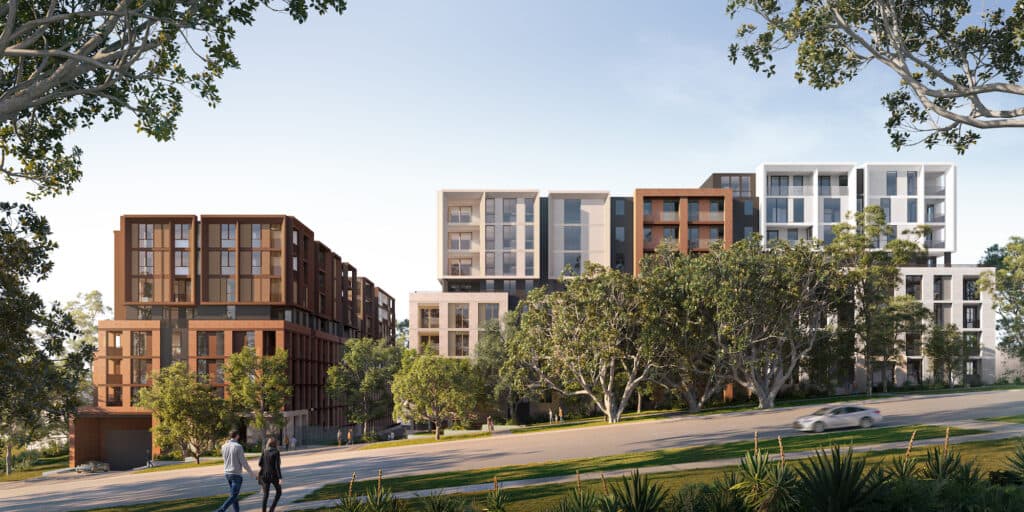
Fast-track post-DA delivery: lessons from Beaconsfield Parade, Lindfield
Image: PropertyMarkets.news / Deicorp
Sydney's housing supply push is increasingly being delivered through transit-oriented development (TOD), and the numbers explain why. In Ku-ring-gai, rental vacancy is hovering around ~1.5% (CoreLogic, Feb 2026), while the Upper North Shore's median apartment values sit above $1.2m (CoreLogic, Feb 2026). Add sustained population growth of ~1.8% p.a. (ABS 2025) and the NSW Government's policy settings under the Housing SEPP, and it becomes clear: approvals are only the first hurdle. Post-DA delivery is where projects are won or lost.
Deicorp Projects (Lindfield) Pty Ltd has now secured State Significant Development (SSD) approval for a $300m scheme at 9-21 Beaconsfield Parade, Lindfield, within the Ku-ring-gai LGA. The project, Beaconsfield Parade Residential Development (SSD 81623209), will deliver 399 apartments across three buildings up to 10 storeys on a 13,386sqm site, including 59 affordable homes managed by St George Community Housing for at least 15 years, plus 40 adaptable units.
What does this Lindfield development teach developers about turning a Deicorp approval into a buildable, bankable, on-time construction program in NSW?
1. Deicorp's Lindfield development is a "program-first" approval
The Beaconsfield Parade scheme is a strong example of a planning win that still demands disciplined delivery. While it is positioned as a TOD-led project only 260-350m from Lindfield Train Station, it sits in a sensitive North Shore context: heritage considerations, high amenity expectations, and a steep 9.25m cross-fall that drives structural, access and staging complexity.
The approval pathway matters here. By using the Housing SEPP (TOD Tier 2 and infill affordable housing provisions), Deicorp obtained SSD approval in February 2026, following SEARs issued in March 2025 and iterative design input from the State Design Review Panel. That sequence typically signals more conditions, not fewer, meaning the "real" program begins when the consent lands.
Stakeholder messaging also reveals the strategic intent: deliver density and social licence through design and integration rather than brute scale.
"This approval allows us to deliver well-designed homes in a location that is already supported by strong transport and community infrastructure. Our focus is on creating places that integrate into their surroundings and provide long-term value for residents, and the broader Lindfield community."
- Fouad Deiri OAM, Founder, Deicorp
Takeaway: Treat SSD approval as a mobilisation milestone, not the finish line. Start building the post-DA delivery plan (procurement, staging, authority sign-offs) during the SEARs and design review period.
 Image: UpScale Project Management
2. TOD + affordability shifts both feasibility and conditions management
This project is not just a TOD play. It is also an affordability and product-mix strategy aimed at North Shore demand. The scheme includes 59 affordable homes, delivered via an affordability structure cited as 11% GFA for 15 years plus 2% in perpetuity (as reported in the project coverage). It also leans into downsizer demand with 60% two-bedroom apartments, positioning the project to attract buyers who want to stay local but reduce maintenance and car dependence.
A key lesson for developers is that "policy-aligned" projects often carry more detailed compliance obligations. Affordable housing delivery, management arrangements, eligibility frameworks and timing can become critical-path items, particularly where a community housing provider (CHP) is involved and handover requirements are specific.
The NSW Department's framing is also telling: impacts are tolerated where the net public benefit is clear, but only if conditions are met and managed.
"The approved scheme... is in the public interest when balanced against identified impacts."
- Director, Affordable Housing Assessments, NSW Department of Planning (as reported)
With RBA cash rate at 4.35% (Feb 2026), feasibility and funding appetite are sensitive to delays. Every month lost to poorly planned condition clearance can materially affect holding costs, presales momentum and builder pricing validity.
Takeaway: Build a dedicated conditions management workstream for affordability, CHP interfaces and handover sequencing. Otherwise your post-DA program will drift before the first shovel hits the ground.
3. Post-DA delivery in NSW is a conditions-clearance project first
For most SSD residential towers, the highest risk period is between consent and construction commencement. The Lindfield approval reportedly includes conditions spanning construction management, noise and vibration, tree protection, sediment control, a Green Travel Plan, and affordable housing delivery. Those are not generic "tick-the-box" items. They are multi-disciplinary packages requiring sign-off, documentation and sometimes third-party certification.
In practice, TOD sites near rail corridors are where teams most often underestimate the modelling and management burden. Rail proximity can trigger deeper scrutiny around acoustic performance, vibration, construction impacts and neighbour amenity, issues that can cause program slippage approaching 20% when addressed late (industry experience reflected in the research brief).
At the same time, there is a real schedule target: construction is planned to commence Q2 2026 and complete in 2029, a roughly three-year delivery window for a complex, multi-building site. That is achievable, but only if pre-commencement conditions are treated as a structured delivery phase with owners, deadlines, and dependencies mapped.
"The development aims to encourage the downsizer market to sell existing family homes and move closer to public transport, aligning with the state government's strategic approach to TOD sites."
- Gyde Consulting, EIS (as reported)
Takeaway: Treat the first 12-20 weeks post-consent as a formal phase: build a conditions register, assign responsible parties, and integrate authority approvals into your baseline construction program NSW schedule, not a side spreadsheet.
4. Feasibility is not just build cost; it is buildability under North Shore constraints
The headline number, $300m, creates confidence, but feasibility is ultimately decided by buildability, staging and procurement discipline. For North Shore mid-rise residential, current benchmarks sit around $3,200-$3,800/sqm (Rawlinsons Q1 2026 / HIA, as referenced). On a stepped site with a 9.25m fall, those benchmarks can move quickly once you add:
- Retaining, basement complexity and vertical circulation rework
- Public domain/interface treatments and upgraded landscaping expectations
- Noise/vibration measures near rail and high-sensitivity neighbours
- Extended preliminaries if conditions clearance drags
This is where "post-DA delivery" becomes a commercial differentiator. If you can compress the preconstruction window by integrating your Construction Traffic Management Plan (CTMP), authority interfaces and consultant packages early, you can realistically save 3-6 months off the program (as noted in the research brief). That saving matters more at 4.35% rates than it did in the cheap-debt era.
"This approval allows us to deliver well-designed homes in a location that is already supported by strong transport and community infrastructure."
- Fouad Deiri OAM, Founder, Deicorp
Takeaway: Recast feasibility as time + risk, not just dollars: lock the buildability review, services strategy, staging plan and procurement pathway before you finalise the funding and presales cadence.
 Image: UpScale Project Management
5. The real differentiator: disciplined conditions management after Deicorp approval
The Lindfield development shows how quickly an approval narrative can shift from "policy-aligned housing supply" to "neighbour impacts" if delivery controls are not tight. Ku-ring-gai communities scrutinise traffic, trees, heritage and visual bulk, especially when buildings reach 10 storeys. SSD makes approval possible, but it does not remove the reputational and operational risk during construction.
For developers, the delivery playbook is straightforward but often underdone:
- Establish a single source of truth for conditions management (including owner, due date, evidence required, and dependencies).
- Align builder ECI or tender documentation with condition obligations so pricing includes the real compliance scope.
- Fund amenity outcomes up-front: the research brief recommends 5-10% contingency for North Shore-facing upgrades (landscape quality, interface improvements, acoustic enhancements) to reduce dispute risk and keep momentum.
This is also where scale helps. Deicorp reportedly has 4,703 apartments under construction across its portfolio, because repeatable systems and consultant networks reduce friction. Smaller developers can achieve similar outcomes by using an independent PM team to run approvals-to-delivery governance.
"The approved scheme... is in the public interest when balanced against identified impacts."
- Director, Affordable Housing Assessments, NSW Department of Planning (as reported)
Takeaway: Once you have the consent, shift focus to execution: a robust post-DA governance model is what protects your timeline, stakeholder relationships, and margin.
 Image: UpScale Project Management
Conclusion: Lindfield proves approvals are easier than delivery
Deicorp's Lindfield approval demonstrates what is now possible under the Housing SEPP: well-located, station-adjacent density, 399 apartments on a 13,386sqm site within 260-350m of rail, delivered with affordability outcomes and a product mix aligned to real North Shore demand. But the approval also exposes the central truth for developers: post-DA delivery is the real project.
In NSW, SSD consents often bring extensive pre-commencement requirements, multi-agency interfaces and heightened neighbour expectations. With interest rates still elevated (4.35% cash rate as at Feb 2026), delays are not just inconvenient. They directly erode feasibility through holding costs, pricing exposure and presales fatigue.
Key lessons to apply to your next Lindfield development-style project:
- Start the post-DA plan early: conditions clearance should be scheduled like construction.
- Protect feasibility with time discipline: program certainty is a financial strategy in high-rate markets.
- Operationalise stakeholder trust: amenity, noise, traffic and trees need systems, not promises.
If you're planning a TOD-led tower or mid-rise in a sensitive suburb, your delivery model needs to be as sharp as your planning strategy.
UpScale PM specialises in project feasibility, DA strategy, and premium project delivery. Lets build something iconic - together.
Call us on 02 9090 4480 to chat through your site opportunity.

Director, UpScale Project Management
Registered architect (NSW) and client-side project manager with more than 15 years across architecture practices, client-side project management consultancies and government agencies. Noel founded UpScale PM to provide independent, client-side project management for NSW club boards navigating major redevelopments.
Related insights
AS4902 vs AS4000 for Club Redevelopments
AS4000 is construct-only, AS4902 is design and construct. What each form means for a club board: design risk, novation, time, variations, security and payment.
Separable Portions Explained for Club Boards
Separable portions let a club take back and trade in finished areas while building continues. How they work, and the drafting traps boards should avoid.
Corrimal Coke Works: 850 Homes and the Remediation Reality
Corrimal Coke Works shows how TOD uplift, brownfield remediation and SSD staging shape feasibility risk. UpScale PM breaks down the delivery lessons.
Bay West Precinct & DAs: 8,500 Homes, NSW Planning Shift
Bays West Precinct brings 8,500 homes and state-led precinct planning to Sydney's Inner West. Here's what it means for development approvals, feasibility, and anyone with skin in the game.