Club Redevelopment Lessons: Harrup Park's $47m DA Plan
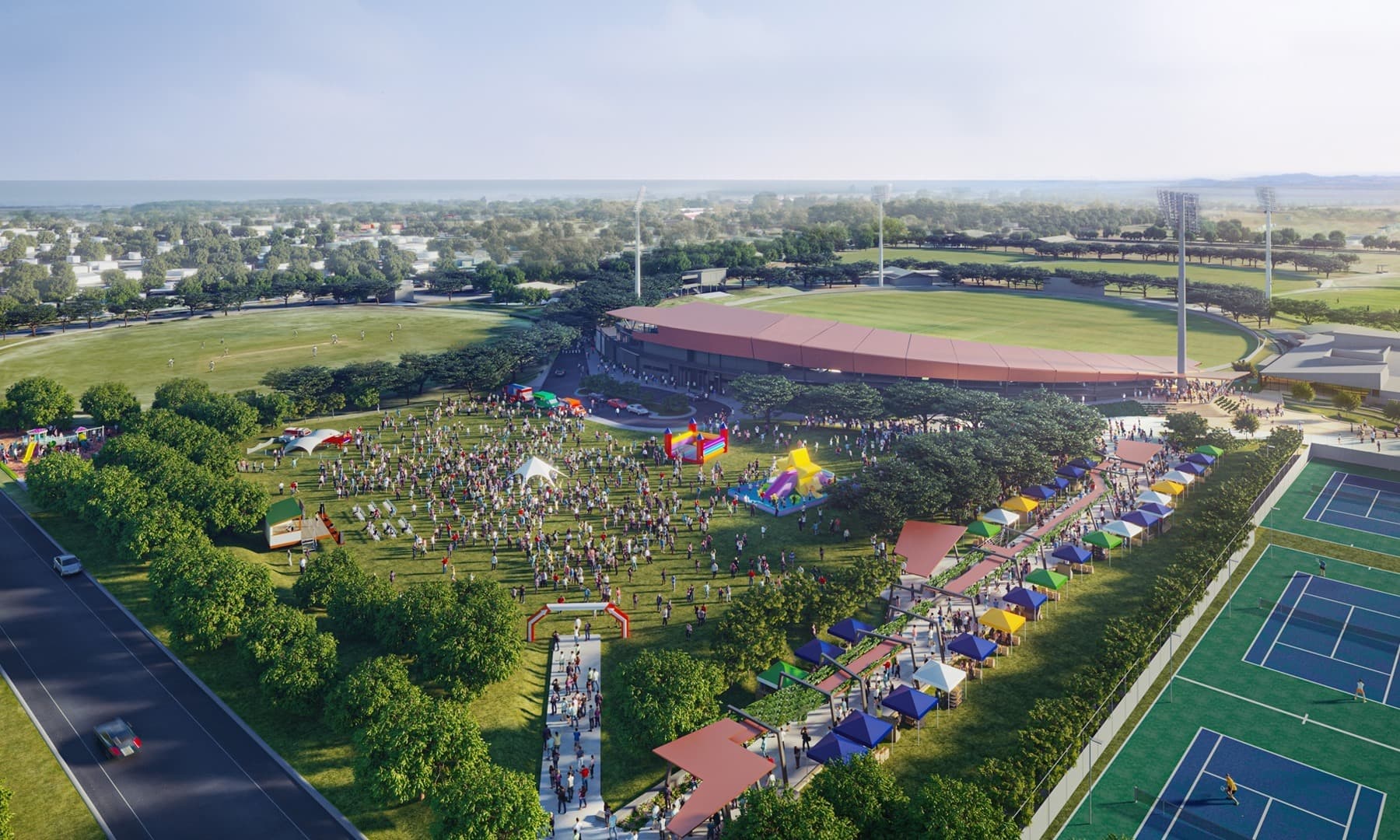
Drive a winning club redevelopment: lessons from Harrup Park Arena
Image: Club Management (source: https://clubmanagement.com.au/harrup-park-eyes-47m-great-barrier-reef-arena-expansion/)
Introduction
Across Australia, clubs are increasingly acting like precinct developers, using major sport and event infrastructure to diversify revenue, attract new members, and secure government backing. In Queensland, the Games On! program is accelerating that trend: 119 projects have been funded statewide, with the state positioning community venues as part of the pathway to a Brisbane 2032 legacy. The driver differs from NSW's typical club redevelopment pressures (planning constraints, gaming reform, and ageing hospitality facilities), but the delivery lessons translate directly, particularly around DA strategy and staged construction.
Harrup Park Country Club in South Mackay is now edging toward a Development Application for Stage 2 of the Great Barrier Reef Arena (GBRA), a $47-50 million expansion designed to lift the venue from a strong regional facility into an elite training and major-events platform. With $23.5 million already secured from the Queensland Government (November 2025), concept design workshops and stakeholder alignment are moving from ambition to approvals.
What can club boards learn from Harrup Park's approach before the DA even lands?
1. Harrup Park's $47m Great Barrier Reef Arena: Stage 2 edges toward DA
The strongest redevelopments start with a clear masterplan and a "DA-ready" narrative that connects community benefit, economic impact, and operational logic. Harrup Park's GBRA expansion is being framed as a regional sports and events precinct upgrade, not just a venue extension, with all-abilities facilities, community training spaces, and four indoor high ball courts (basketball, netball and multi-code use). That scope matters because it broadens the stakeholder base and strengthens the planning justification.
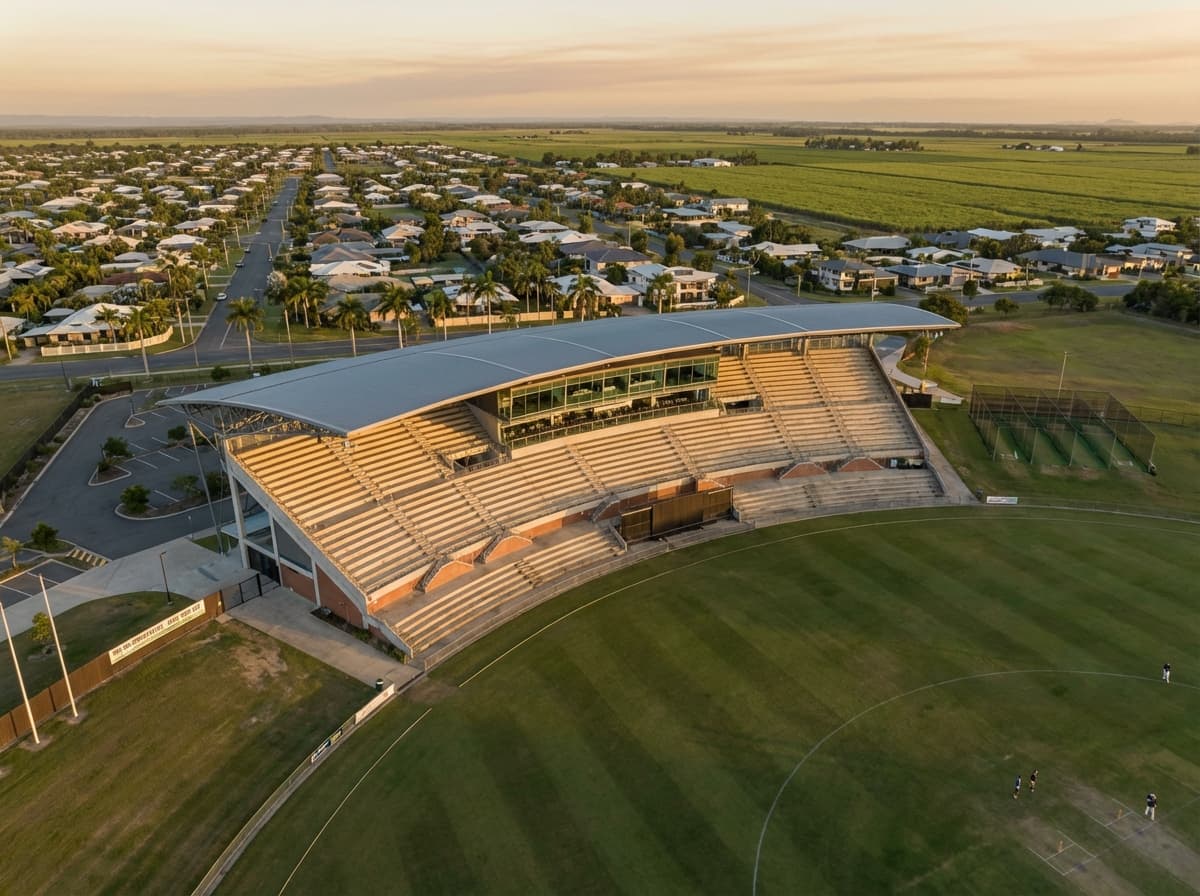
The numbers in Harrup Park's case are also doing heavy lifting. The project is forecast to generate 78 new annual jobs and attract 1,000+ weekly participants, a compelling demand story for assessors and funding partners. It also builds on credible delivery history: Stage 1, completed by Tango Projects, delivered a 2,500-seat grandstand, media centre, and commentary facilities, so the club can evidence capability rather than just promise it.
"We're proud to work alongside the Queensland Government to bring this next stage of the Great Barrier Reef Arena to life, building on strong foundations to deliver an iconic facility ready to shine on the world stage in 2032 and beyond."
- Adrian Young, General Manager, Harrup Park Country Club
Takeaway: Before you lodge a DA, make sure your concept is anchored to quantified demand (users/jobs) and a masterplan logic that reads as a precinct upgrade, not a single-asset wish list.
2. From Test cricket to Olympics: sports precinct upgrades drive club growth
A modern club redevelopment case is rarely just "better facilities." It is a membership, visitation, and brand strategy. Harrup Park's GBRA has already secured a profile boost with the announcement of its first international Test match scheduled for August 2026. That kind of milestone goes beyond the headline; it becomes a bankable input into feasibility, sponsorship, and event pipeline planning.
What makes this relevant to club boards is the compounding effect: major event capability justifies investment in media, broadcast, back-of-house operations, accessibility, and multi-code scheduling. Those same upgrades also improve everyday community use. That is why Harrup Park is positioning Stage 2 around both elite training and grassroots participation, with multi-code facilities and indoor courts.
At a policy level, this is exactly what the Queensland funding environment rewards. The venue has $23.5 million committed through Games On!, which addresses infrastructure gaps as part of a broader Olympic pathway. Clubs that can credibly connect local use to state or national objectives tend to unlock larger, earlier capital.
"Stage 2 upgrades will support multiple sporting codes, including training for elite athletes, grassroots clubs and major event broadcasting."
- Tim Mander, Queensland Minister for Sport
Takeaway: Treat major events as a feasibility lever. If your redevelopment can credibly host higher-profile sport or entertainment, quantify the uplift and embed it into your DA strategy and business case.
3. Staged construction: why GBRA's phased masterplan reduces risk
Harrup Park's clearest delivery advantage is that it is being executed as a multi-stage masterplan, with Stage 1 already completed and Stage 2 designed as an additive expansion. For boards, this is one of the most effective ways to reduce operational risk: you build capability in increments, protect core revenue streams, and avoid the "all-or-nothing" shutdown scenario that can destabilise trading.
The data suggests the club is planning for scale: 1,000+ weekly participants is not a marginal increase. It implies expanded amenity, parking and circulation, code compliance, and a reliable operational model for peaks (events) and baseload (community use). Staging helps clubs test and tune operations as demand grows, rather than betting everything on a single commissioning date.
In NSW, we see the same logic in complex refurbishments where clubs must remain open while works proceed. UpScale PM's current delivery at Granville Diggers Club (Sydney) uses separable portions under an AS4902 D&C structure to stage design approvals and construction, supporting ongoing operations and reducing programme risk. Harrup Park's Stage 1/Stage 2 structure is different in form, but similar in principle: stage what you can, and protect the business while you build.
"Harrup Park has been the heart of cricket in Mackay... The community is excited to see the next stage... to create a facility that will support the region's needs long into the future."
- Nigel Dalton, Member for Mackay
Takeaway: If your club cannot afford downtime, don't design a single "big bang" build. Use staged construction (or separable portions) to preserve revenue and de-risk delivery.
4. Funding-first delivery: DA strategy that matches the money
One reason Harrup Park is "edging toward DA" rather than rushing it is that stakeholder workshops and funding alignment are happening early. That is a smart DA strategy: the concept needs to be mature enough to satisfy assessors, but also calibrated to what funding will realistically support, especially when government money is a large portion of the total.
Harrup Park's funding position is material: $23.5 million of a $47-50 million project is close to a 50% contribution. For club boards, that level of co-funding can change risk appetite, timing, and procurement strategy. It can also justify higher-spec inclusions (like all-abilities facilities and broadcast capability) that might otherwise be trimmed.
A non-obvious risk is timeline drag: multi-stakeholder projects (club, state agencies, sport governing bodies, community users) can extend planning timeframes. In similar precinct programs, alignment issues can add 6-12 months before a DA is ready to lodge, simply due to concept iterations, user group needs, and infrastructure interfaces. The upside is that when the DA does land, it is more defensible, and the project is less likely to unravel during approvals.
"We're proud to work alongside the Queensland Government to bring this next stage... The benefits... will bring people together, strengthen community pride and create a lasting legacy."
- Adrian Young, General Manager, Harrup Park Country Club
Takeaway: Don't treat the DA as the starting gun. Treat it as a validation checkpoint. Align scope, stakeholders, and funding first, then lodge with a concept that can survive scrutiny.
5. Revenue protection: the missing line item in most club redevelopments
For many clubs, the biggest redevelopment risk is not construction cost but lost trade. Harrup Park's project narrative strongly implies ongoing community use and continuity, a practical advantage of a staged precinct build (Stage 2 is additive to Stage 1 rather than replacing the whole venue). That matters because the club is simultaneously building a future pipeline of events and participation.
There is also a cost-planning lesson here. Indoor sports facilities can be deceptively expensive once you factor in fitout, flooring systems, acoustic treatments, accessibility upgrades, lighting, and broadcast-ready services. In comparable multi-use arena projects, clubs often find indoor courts and media/event capability can represent a disproportionate share of cost, sometimes approaching 40% of the budget, even if it looks like "just a few courts" on a concept plan. When boards miss that early, they either value-engineer late (and hurt functionality) or pressure the operating business to bridge the gap.
Harrup Park's approach, government funding secured early, a staged plan, and an event-led growth narrative (including the August 2026 Test), is the right combination to protect the current business while building the next one.
"Stage 2 upgrades will support multiple sporting codes, including training for elite athletes, grassroots clubs and major event broadcasting."
- Tim Mander, Queensland Minister for Sport
Takeaway: Build a revenue protection plan alongside your design. If you can't clearly explain how the club stays strong during works, you're not ready to commit to scope.
Conclusion
Harrup Park's $47-50 million Great Barrier Reef Arena Stage 2 shows that the most effective club redevelopment projects are won early, through disciplined DA strategy, credible stakeholder alignment, and delivery planning that respects ongoing operations. With $23.5 million secured through Queensland's Games On! program (one of 119 funded projects), the club is using funding momentum to refine the concept and move toward approvals with a stronger hand.
The central lesson for club boards is simple: a successful sports precinct upgrade is not just a build. It is a staged, fundable, approvable plan that protects the business while expanding capability.
- Use staged construction to reduce operational risk and keep your venue active while new capacity comes online.
- Quantify demand and benefit (jobs, participants, events) so your DA and funding case is evidence-led.
- Align scope to funding reality early, especially for high-cost indoor courts and broadcast/event infrastructure.
If your club is considering a redevelopment, the earlier you structure the strategy (not just the design), the more controllable the outcome becomes.
UpScale PM specialises in club redevelopment, from initial feasibility through staged construction delivery. We are currently delivering the Granville Diggers Club redevelopment and bring hands-on experience in heritage-sensitive club renovation, AS4902 contract administration, and keeping clubs operational during construction. Lets talk about your clubs next chapter. Then: Call us on 02 9090 4480 or visit upscalepm.com.au

Director, UpScale Project Management
Registered architect (NSW) and client-side project manager with more than 15 years across architecture practices, client-side project management consultancies and government agencies. Noel founded UpScale PM to provide independent, client-side project management for NSW club boards navigating major redevelopments.
Related insights
AS4902 vs AS4000 for Club Redevelopments
AS4000 is construct-only, AS4902 is design and construct. What each form means for a club board: design risk, novation, time, variations, security and payment.
Separable Portions Explained for Club Boards
Separable portions let a club take back and trade in finished areas while building continues. How they work, and the drafting traps boards should avoid.
Mortdale RSL club redevelopment: SSDA tower lessons NSW
Mortdale RSL redevelopment SSDA: learn mixed-use tower lessons, affordable housing impacts and approval risks. Get board-ready guidance—talk to UpScale PM.
Club redevelopment: Hakoah White City wins $32m funding
Hakoah White City club redevelopment secured $32m. Learn funding, staging and procurement lessons—get guidance for your board's project.