Club redevelopment: Hakoah White City wins $32m funding
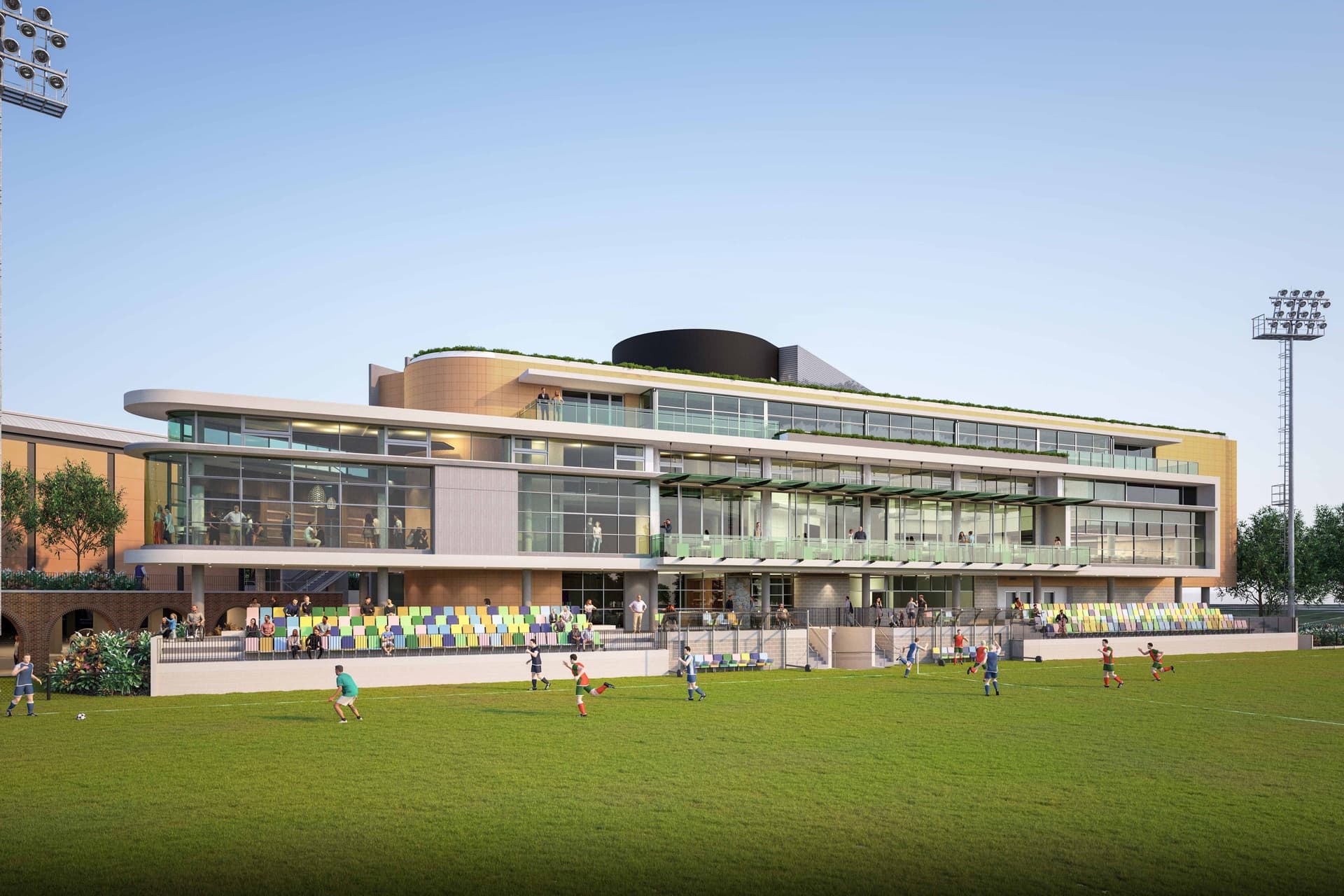
Win NSW club funding: lessons from Hakoah White City redevelopment
Image credit: J-Wire (source article)
NSW is in the middle of a club reinvestment cycle, driven by tighter expectations on community impact, the push toward non-gaming revenue, and the reality that many venues are carrying ageing building stock. There are 1,200+ registered clubs in NSW contributing $6.5 billion annually to the economy (ClubsNSW, 2023), and redevelopment activity has reportedly lifted by 15% since 2020. At the same time, clubs are chasing hybrid funding models, with $1.2 billion delivered via ClubGRANTS since 2020 (ClubsNSW, 2023), plus targeted federal and state infrastructure programs.
Against that backdrop, the Hakoah White City redevelopment in Bondi has secured a headline-making $32 million in combined Federal and NSW Government commitments to progress a long-planned precinct transformation. The broader project is valued at around $65 million across a 12-hectare sports and leisure site, modernising infrastructure, security, amenities and community spaces while preserving the precinct's heritage as a Jewish community hub established in 1939.
For club boards and GMs, the real lesson isn't just "how to win funding". It's how to structure the project so funding converts into an on-time, trade-protected delivery.
1. Funding is won in the brief, not the press release
The Hakoah White City redevelopment shows how a well-defined scope attracts capital. The announced $32 million commitment targets infrastructure and security enhancements across the 12-hectare precinct, exactly the types of outcomes governments like to support: safety, accessibility, community participation, and asset resilience. With the total project sitting around $65 million, it also signals a common contemporary model: public funding as a catalyst, supported by club equity and staged delivery planning.
"Security" should not be treated as a compliance cost. Precinct-level CCTV, access control, lighting and wayfinding can improve patron confidence and reduce incident risk, often strengthening trading hours and event programming. In similar NSW projects, boards are increasingly bundling security, accessibility and public-domain interface works into early packages because they're easier to justify to members and funders, and they de-risk later operational stages.
"The $32 million commitment... injects momentum into delivery planning for this long-anticipated project."
- NSW Government announcement (via J-Wire)
Takeaway: When pursuing NSW club funding, write a scope that reads like a public-benefit business case: safety, access, participation, and longevity. Then stage it so the "fundable" components can start early and show momentum.
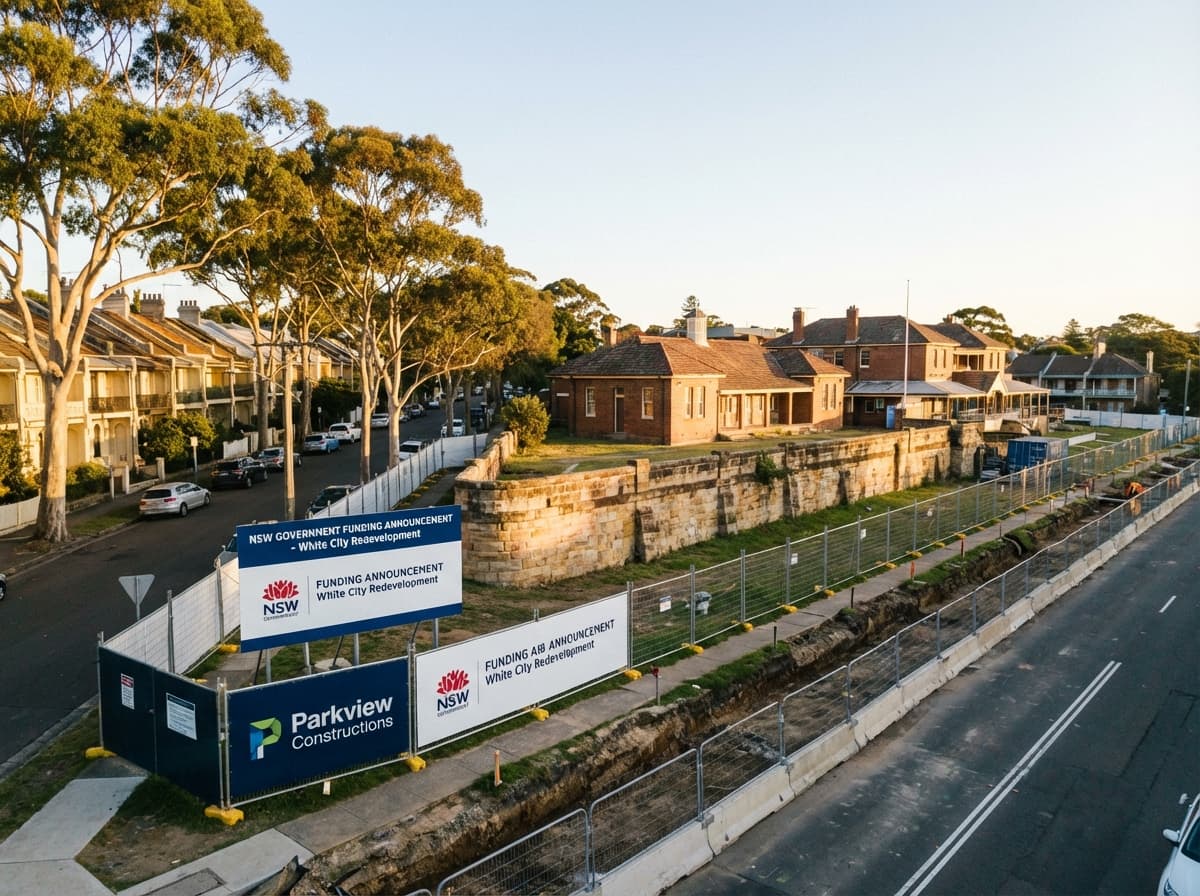
2. Treat precinct staging as a revenue strategy, not a construction tactic
Precinct projects live or die on continuity of trade and member trust. Clubs typically rely heavily on weekly trading (hospitality and gaming), and even short shutdowns can do real damage to cashflow and sentiment. Industry benchmarks commonly put club trading dependence at 60-70% of total income, and downtime can quickly become a compounding problem when the venue is also trying to self-fund parts of delivery.
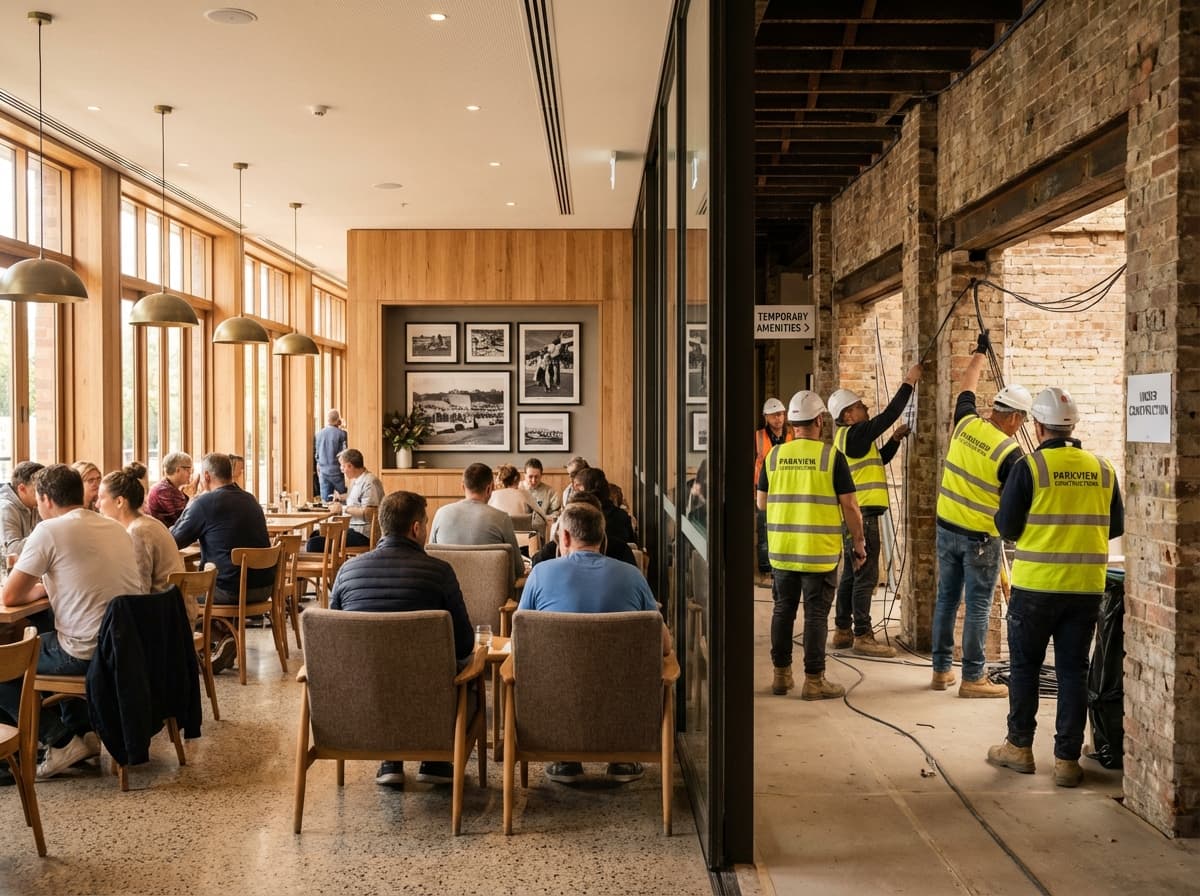
For a precinct like White City, with sports fields, leisure facilities, club amenities and community spaces, staging should be designed around member usage patterns. The practical sequencing question isn't "what's easiest to build first?" It's "what can we deliver first that protects or grows participation while keeping the core offer functioning?"
The brief suggests precinct-wide staging will be required and that operations are likely to continue during works (final staging details are subject to delivery planning). That's consistent with broader NSW experience: around 70% of club redevelopments adopt multi-stage delivery to trade through works (industry benchmark). It's also why contract and approvals pathways matter. Staging is much easier when separable portions, milestone-based funding releases, and clear access/egress plans are embedded early.
Takeaway: For any community club upgrade, mandate a staging plan that protects peak trading periods and member amenities, then build approvals, logistics and budgets around that sequencing (not the other way around).
3. Budget realism: precinct scale hides cost pressure until fitout hits
A $65 million program across 12 hectares can look comfortable on paper, about $5.4 million per hectare as a blended rate. But precinct averages can mask where budgets actually get squeezed: hospitality fitout, kitchens, wet areas, services upgrades, and compliance-driven works.
Rawlinsons benchmarks put hospitality/club fitouts at ~$4,500-$6,500/m2, while precinct infrastructure can sit around $2,000-$3,500/m2 (Rawlinsons, 2023). The implication for boards is straightforward: if scope shifts from "infrastructure uplift" into "premium internal upgrades" without disciplined change control, budgets can drift fast, especially when projects are also managing heritage sensitivity and operational constraints.
This is also where independent client-side project management matters. In our own delivery work at UpScale PM (including heritage-sensitive club redevelopment in Sydney under D&C), the projects that stay stable are the ones that lock three things early: the functional brief, the staging logic, and the cost plan tied to decision gates. Without those anchors, procurement becomes reactive and value management turns into value loss.
"Work set to commence... planned for completion late 2023 or early 2024."
- Ausleisure report on Parkview Constructions appointment
Takeaway: Use precinct-wide budgets as a starting point only. Build a fitout-led cost plan early, test it against Rawlinsons-type benchmarks, and set hard decision gates before moving from concept into delivery commitments.
4. Club procurement: appointing a builder is only half the job
Hakoah has Parkview Constructions identified as builder for the redevelopment program. Builder appointment can be a strong step, particularly when aligned to a delivery model that supports staging, early works, and operational continuity. But boards should remember: procurement isn't a single event. It's a system of decisions that determines risk, pricing and programme certainty.
For major precinct works, D&C-style contracting can bring speed and single-point responsibility, provided the principal's requirements are unambiguous and the project governance is strong. If scopes are still evolving (common when funding announcements precede final delivery planning), the club needs a disciplined approach to provisional sums, scope exclusions, latent conditions, and access constraints. These are precisely the issues that cause disputes and "silent" time impacts on live sites.
Publicly announced timelines can also become reputational risks if approvals, funding tranches or staging complexity aren't fully resolved. The brief notes original targets of late 2023/early 2024 completion, with status later appearing delayed pending full delivery planning. That's not unusual. It's a reminder that procurement must match real readiness, not headline urgency.
"Hakoah Club looks to commence $65 million redevelopment... widening membership."
- ClubsNSW sector update (reported via industry coverage)
Takeaway: In club procurement, don't just appoint capability. Procure certainty. Match contract structure to staging, lock the principal's requirements, and treat operational constraints as priced, documented scope (not assumptions).
5. Funding + feasibility: boards need "delay-proof" governance
The biggest delivery risk after a funding win is not construction. It's governance drift. Precinct projects involve multiple stakeholder groups (members, sporting users, neighbours, councils, funders), and when decisions slow down, costs rise and timelines slip. Across the NSW redevelopment wave (up 15% since 2020), the clubs that maintain momentum are the ones that set governance and communications as part of the project scope, not as an afterthought.
Two data points should sharpen board focus. First, 85% of redeveloping clubs report a 15-25% revenue uplift post-upgrade (Club Management Magazine benchmark, 2024). That uplift is real, but only if the club finishes the project and reopens with the promised offer. Second, ClubGRANTS has delivered $1.2 billion since 2020, but grants rarely cover everything; clubs must carry co-funding and cashflow risk. This makes "decision latency" expensive.
For member-based organisations, pre-commitment matters. If the club is widening membership and repositioning the precinct, it needs early alignment on what's changing, what stays, and why. Boards that combine feasibility modelling with a transparent member narrative reduce the risk of stop-start delivery and reputational damage.
"The $32 million commitment... injects momentum into delivery planning for this long-anticipated project."
- NSW Government announcement (via J-Wire)
Takeaway: Make your project "delay-proof": clear delegations, fast decision pathways, member communication rhythms, and feasibility models that compare trade-through staging versus shutdown scenarios.
Conclusion
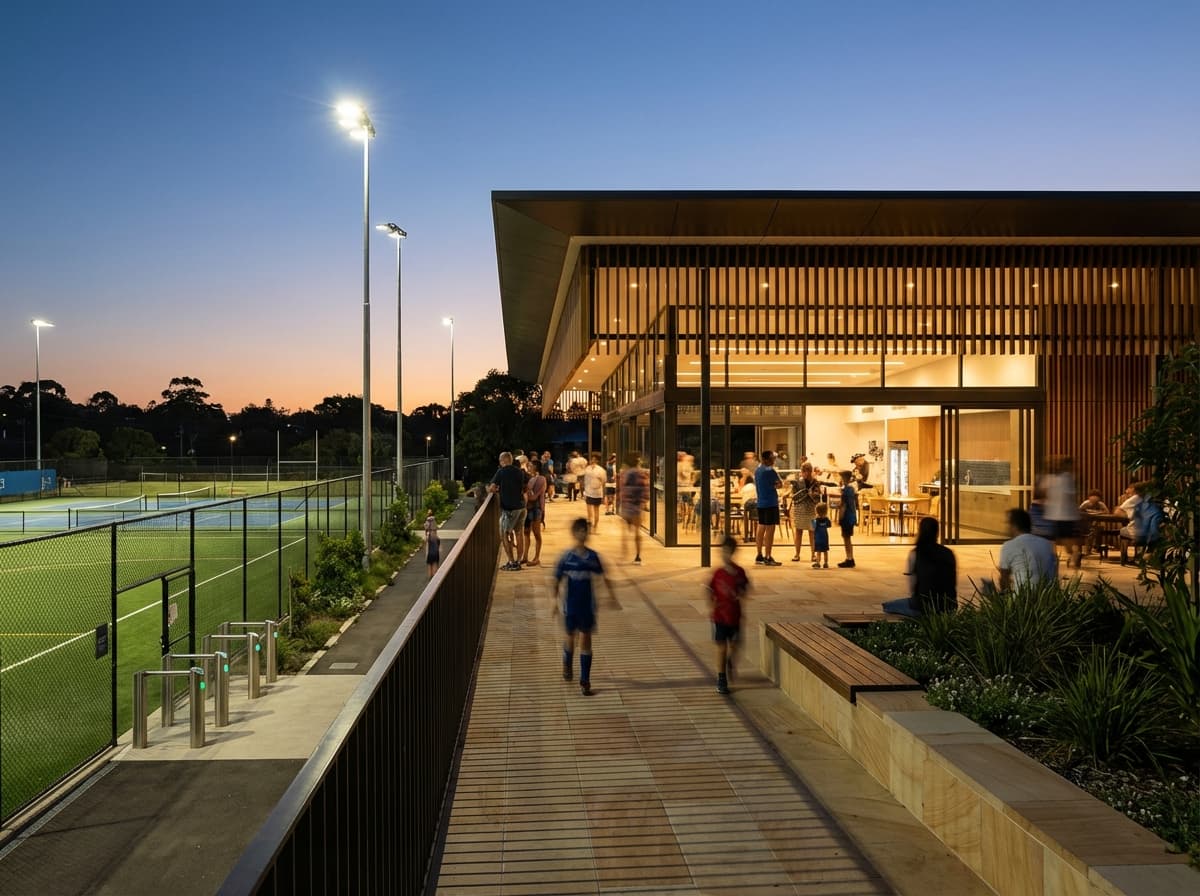
The lesson from the Hakoah White City redevelopment isn't simply that government money is available. It's that funding is only valuable when the club converts it into a staged, governable, buildable program that protects trade and community participation. A $32 million commitment can "inject momentum", but momentum is maintained through disciplined scope, realistic cost planning, procurement that matches readiness, and staging designed around member experience.
For NSW club boards weighing a major community club upgrade, Hakoah highlights a practical path: use public funding to underwrite enabling works (security, infrastructure, accessibility), then sequence the precinct so the club can keep operating and keep members onside.
- Build a fundable scope: tie works to measurable community outcomes and risk reduction (security, access, participation).
- Stage around trade: design the construction programme to protect peak revenue and core amenities.
- Procure certainty: align contract, approvals, and decision gates before committing to public timelines.
UpScale PM specialises in club redevelopment -- from initial feasibility through staged construction delivery. We are currently delivering the Granville Diggers Club redevelopment and bring hands-on experience in heritage-sensitive club renovation, AS4902 contract administration, and keeping clubs operational during construction. Lets talk about your clubs next chapter. Then: Call us on 02 9090 4480 or visit upscalepm.com.au

Director, UpScale Project Management
Registered architect (NSW) and client-side project manager with more than 15 years across architecture practices, client-side project management consultancies and government agencies. Noel founded UpScale PM to provide independent, client-side project management for NSW club boards navigating major redevelopments.
Related insights
AS4902 vs AS4000 for Club Redevelopments
AS4000 is construct-only, AS4902 is design and construct. What each form means for a club board: design risk, novation, time, variations, security and payment.
Separable Portions Explained for Club Boards
Separable portions let a club take back and trade in finished areas while building continues. How they work, and the drafting traps boards should avoid.
Club Redevelopment Lessons: Harrup Park's $47m DA Plan
Club redevelopment insights from Harrup Park's $47m arena DA: staged construction, approvals strategy and funding logic. Read before you lodge.
Protecting Member Funds on a Club Redevelopment
How NSW club boards protect member funds on multi-million redevelopments — feasibility before design, staging that keeps trading, contingency rules, and independent client-side oversight.