Dee Why RSL: How a $100M Redevelopment Reshaped the Northern Beaches
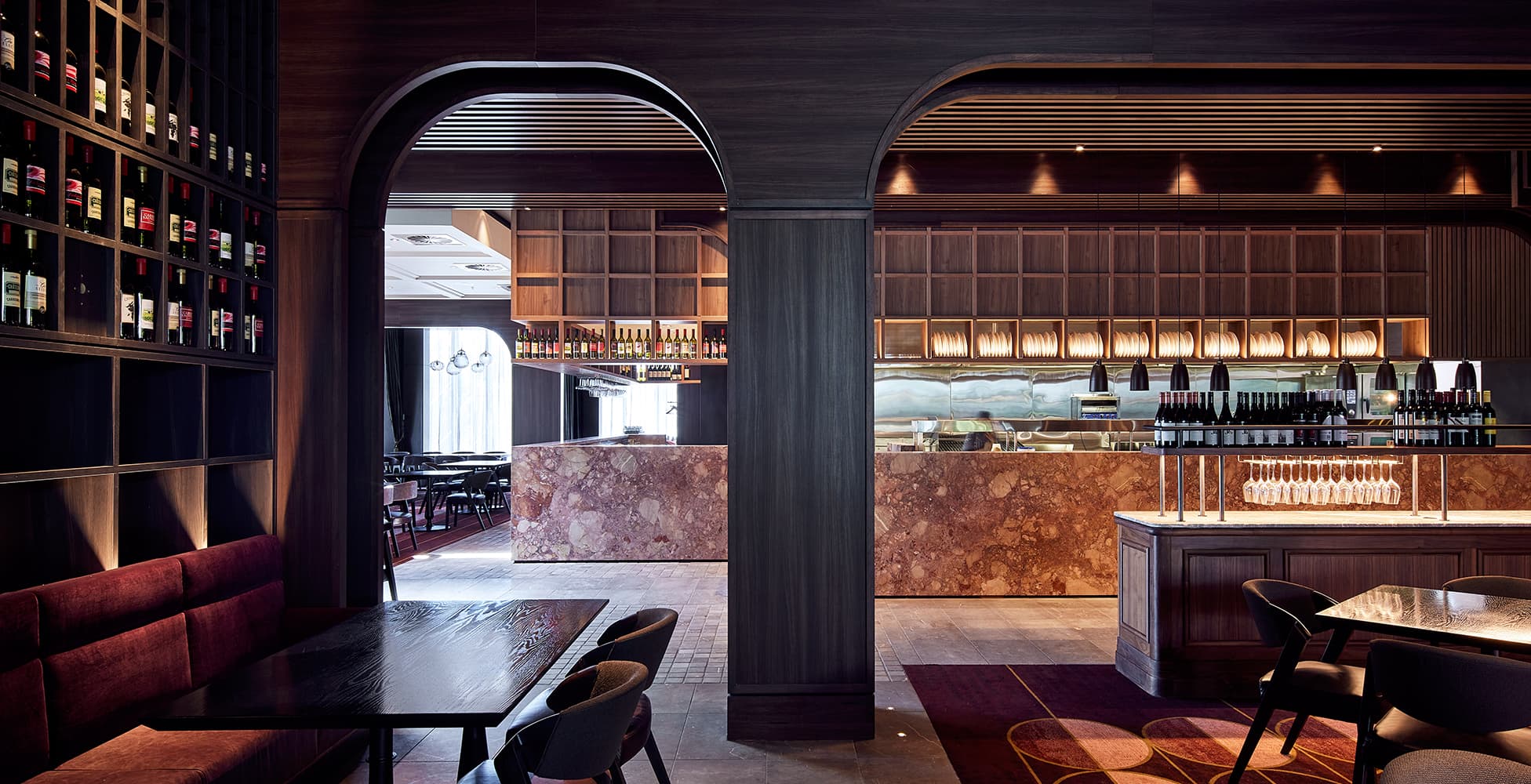
Most club redevelopments are one-off projects. A board identifies a need, engages a team, builds something, and moves on. Dee Why RSL took a different approach entirely. Starting in 1999, the club embarked on a staged masterplan that has now spanned more than two decades, multiple construction phases, and over $100 million in investment — transforming a modest Northern Beaches RSL into one of the most successful club communities in Sydney.
Not every club can replicate this, but the principles behind it apply to clubs of every size: long-term planning, disciplined staging, and a genuine focus on member experience.
The Starting Point
Back in the late 1990s, Dee Why RSL was a typical suburban club. Functional, familiar, and facing the same challenge most clubs eventually confront: ageing facilities that no longer reflected what members wanted from a social venue.
The Northern Beaches presented a unique competitive pressure. Unlike clubs in Western or South-Western Sydney, Dee Why RSL wasn't competing only with other clubs. It was up against a strip of beachside restaurants, cafes, and bars that set a high benchmark for design, food quality, and atmosphere. Members had options, and those options were getting better every year.
Rather than commissioning a single renovation, the board took a step that would define everything that followed. They engaged Altis Architecture to develop a long-term masterplan for the entire site — one that would guide organic, staged growth over many years.
The Masterplan and the People Behind It
Altis Architecture has been involved with Dee Why RSL since 1999 — an unusually long architect-client relationship in the club sector. Their brief was to create a masterplan that could evolve with demand rather than trying to predict it all upfront.
The design philosophy was straightforward: give members a quality experience unlike anything else nearby, grounded in the RSL's membership and community history.
Over the following two decades, Altis completed three major project stages and numerous smaller works, always referencing the masterplan. Each stage was commercially successful and fed membership growth. The club now has 77,000 members.
Grant Easterby, CEO of Dee Why RSL, has overseen much of this transformation. Under his leadership, the club has consistently reinvested in its facilities while maintaining a clear strategic direction.
| Role | Organisation |
|---|---|
| Architect | Altis Architecture |
| Head Contractor (Stage 5) | Hutchinson Builders |
| Project Manager | Census Advisory |
| Mechanical & Electrical Engineer | Evolved Engineering |
| CEO | Grant Easterby |
Stage 5: The Biggest Move Yet
The most ambitious phase was Stage 5, a $55 million project delivered by Hutchinson Builders over 106 weeks. It was the largest renovation in the club's 70-year history, carried out while the club remained fully operational. Keeping a busy club open during a major construction program is one of the hardest things to get right. It requires careful staging, detailed logistics planning, and constant communication with members and staff.
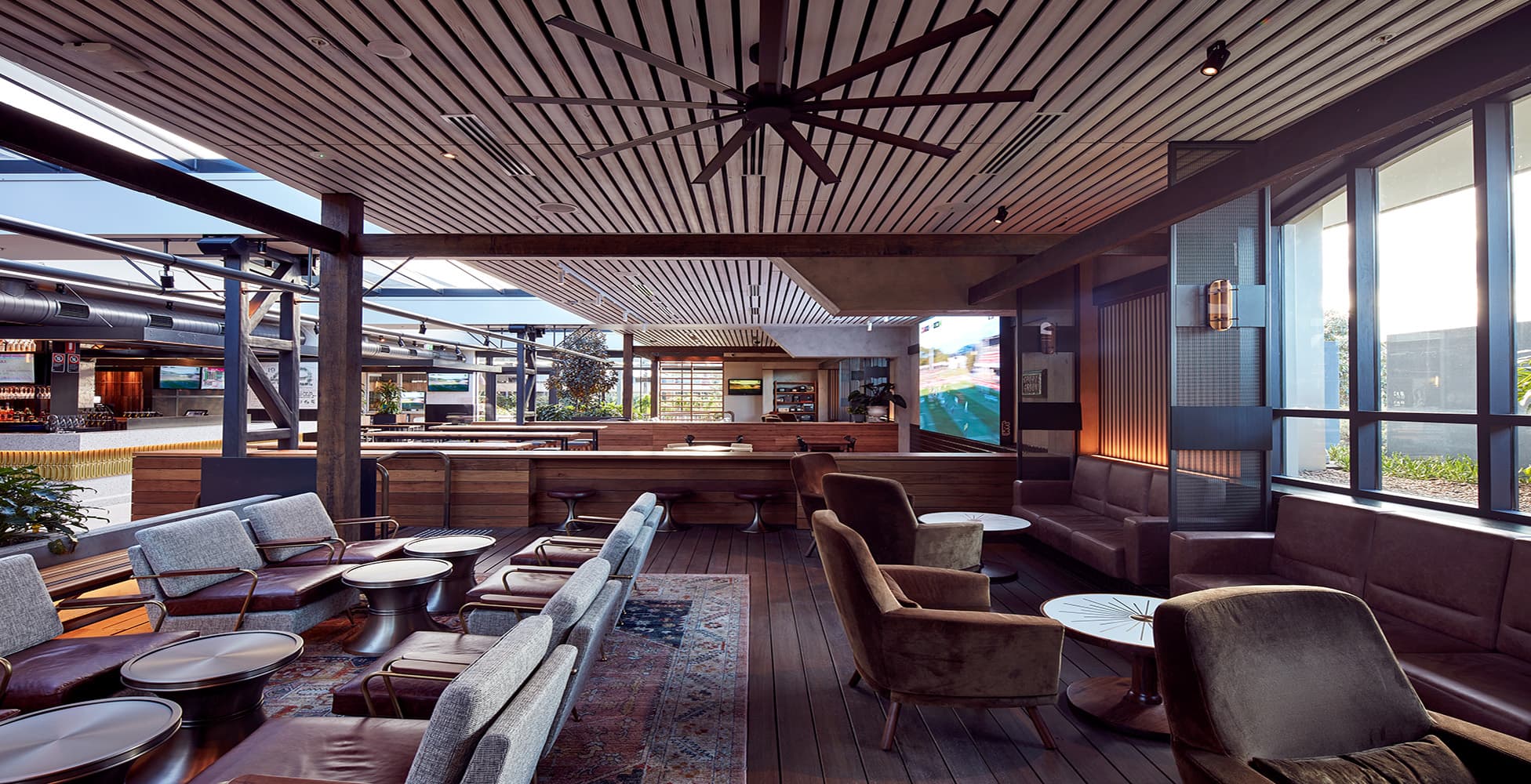
The scope of Stage 5 included:
- New six-level car park — four levels underground, replacing the existing two-level southern car park. This required significant demolition, excavation, and a substation upgrade with new high-voltage feeds to the site.
- New entertainment level — an additional floor of bars and dining, including multiple restaurants and a cocktail bar.
- The Battery House — a new state-of-the-art sports bar that opened in March 2020, timed to coincide with the NRL season. It became an official venue of the Manly Warringah Sea Eagles.
- Flame restaurant — a high-end dining venue that further elevated the club's food and beverage credentials.
- New porte cochere, reception lobby, and feature stairs — rethinking the arrival experience from the ground up.
- Upgraded bistro and new commercial kitchen — expanding the club's capacity to serve more members at higher quality.
- Retractable glass roofing — over the new sports bar, supplied by Skyview Constructions.
The external facade was clad using ALPOLIC aluminium composite panels, chosen for their fire safety classification and durability in the coastal environment. Louvreclad delivered prefabricated screens, perforated cassette cladding, and performance louvres specified by Altis — proposing an aluminium alternative to the originally specified steel battens, which eliminated a heavy support structure that would have been prone to corrosion given the club's proximity to the ocean.
Design That Competes With the Private Sector
What separates Dee Why RSL from many club refurbishments is the ambition of the design brief. This wasn't about upgrading carpet and lighting. Altis was tasked with creating venues that could hold their own against standalone restaurants and bars on the Northern Beaches.
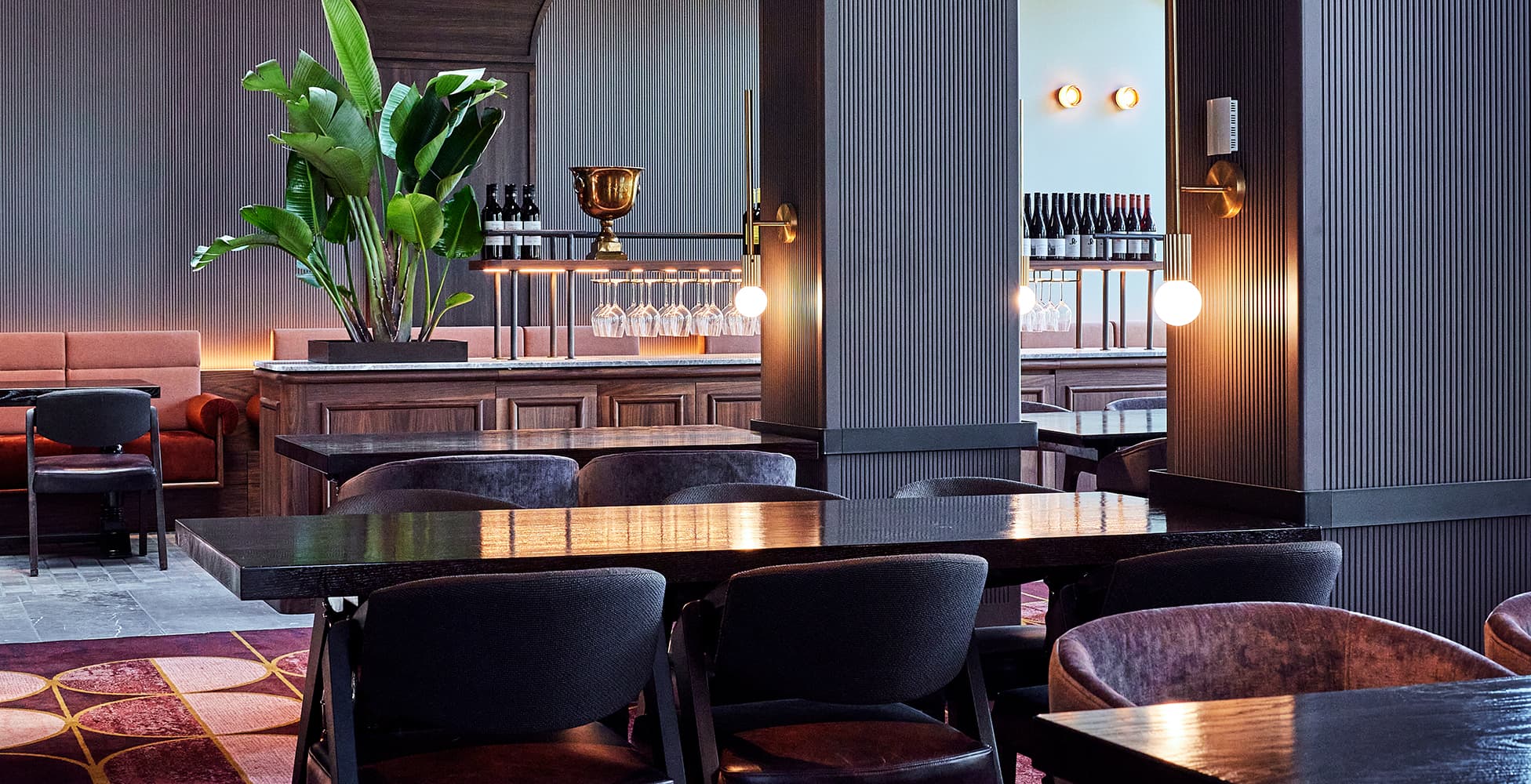
The Battery House is a good example. CEO Grant Easterby noted that the contemporary design filled a gap in Northern Beaches hospitality — and the response from members backed that up. From opening day, people were lining up to get in. It brought an entirely new demographic to the club and exceeded revenue targets.
Flame, the club's upscale restaurant, took a similar approach — offering a dining experience that members would seek out rather than settle for.
This matters for any club board considering a major refurbishment. The days when members would accept a middling dining experience because it was cheap and convenient are ending. Clubs that invest in genuine hospitality design, the kind that would hold its own on any high street, are the ones growing their membership base.
Staging: why the program worked
Dee Why RSL's approach to staging is the single biggest reason the program succeeded over such a long timeframe.
The 1999 masterplan originally envisioned five stages. An amendment added a Stage 2.5 along the way. Each stage was scoped and funded based on the club's financial position at the time, and each was designed to be commercially viable on its own — not dependent on future stages to justify the investment.
This is the opposite of the "big bang" approach where a club tries to do everything at once, takes on enormous debt, and hopes the revenue follows. Dee Why RSL showed that patient, staged investment, guided by a coherent masterplan, compounds over time. Each successful stage built the financial case and member appetite for the next one.
The masterplan also covered more than just the club. It originally made provision for a hotel and aged care services on the broader landholdings. A club's site strategy should consider all potential uses, not just the trading floor.
And they're not done
Even after $100 million in completed works, Dee Why RSL is already planning its next move. In 2025, the club lodged a $10.7 million development application for further upgrades, including:
- A new 140-seat Asian-style restaurant
- Expanded bistro and relocated cafe
- Consolidated gaming area with wider machine spacing (responding to post-COVID member preferences)
- Relocated main entrance on Pittwater Road, closer to a public bus stop
- New facade treatment with curved aluminium panels and stone detailing
- New communications room, stairs, ramps, roof structure, and landscaping
The club's floor area will grow from 15,208 to 15,827 square metres. A previously considered childcare centre was dropped in favour of doubling down on the club's core hospitality offering.
That planning approval was granted in mid-2025, and the project will proceed to construction.
What other clubs can learn
Dee Why RSL's story offers clear lessons for boards and general managers considering their own redevelopment:
-
Start with a masterplan, not a project. A long-term vision prevents ad hoc decisions that create inefficiencies and design conflicts down the track.
-
Stage your investment. Each phase should stand on its own commercially. This de-risks the program and lets you adjust scope based on real performance, not projections.
-
Design to compete. Members benchmark your club against every restaurant, bar, and venue they visit. Your design brief should reflect that reality.
-
Keep the doors open. Hutchinson Builders delivered a $55 million project over two years without closing the club. It's hard, but it's achievable with the right contractor and staging plan.
-
Maintain your team. Altis Architecture has worked with Dee Why RSL for over 25 years. That continuity of design vision is rare and valuable. It means every new stage builds on what came before rather than starting from scratch.
-
Think beyond the trading floor. Consider your full site potential — car parking, arrival experience, facade, landscaping, and even non-club uses like hotels or aged care.
How UpScale approaches club redevelopment
At UpScale, we work with club boards and management teams as independent project managers, helping navigate the complexity of staged redevelopments from feasibility through to completion. We're currently working with Granville Diggers on their own redevelopment, applying many of the same principles that made Dee Why RSL's program work.
If your club is considering a redevelopment and you want independent advice on masterplanning, staging, or project delivery, get in touch. We'd welcome the conversation.
Note: UpScale was not involved in the Dee Why RSL redevelopment. This article is a case study based on publicly available information.

Director, UpScale Project Management
Architect-turned-project manager with experience across government infrastructure, commercial, and hospitality sectors. Noel founded UpScale PM to provide independent, client-side advisory for club boards navigating major redevelopment projects across NSW.