Corrimal Coke Works: 850 Homes and the Remediation Reality
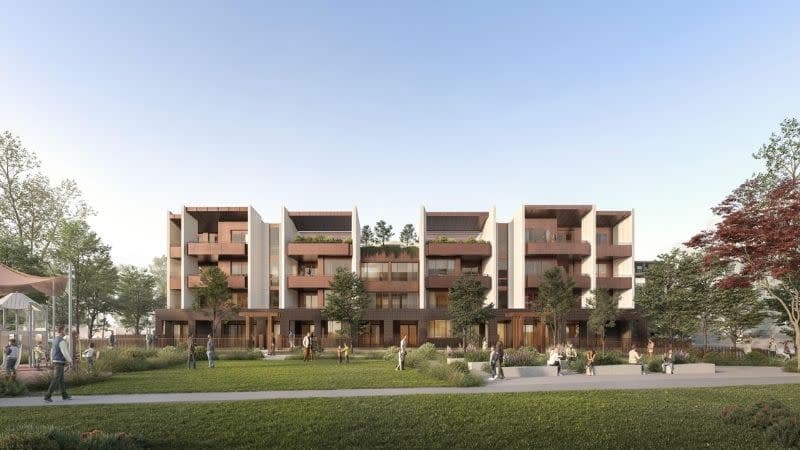
De-risking brownfield: what The Works Corrimal teaches developers about remediation and delivery
The Illawarra is short on housing and everyone knows it. Vacancy is sitting around 1.2% (Dec 2025), Wollongong is approving roughly 2,500 dwellings a year against ~4,000 needed, and the structural gap is only widening. That's exactly the kind of pressure that pushes governments to back higher-density, transport-oriented infill on sites that would have sat in the too-hard basket a decade ago.
Which is what makes the Corrimal Coke Works redevelopment such a useful case study. At 27 Railway Street, Corrimal, the former 18.2-hectare industrial site is being transformed into The Works Corrimal, a masterplanned community now targeting ~850 homes, well above the original ~550 concept. The jump in yield was largely enabled by Transport Oriented Development (TOD) uplifts under the Housing SEPP and an accelerated SSD planning pathway.
But more homes on contaminated land doesn't just mean more revenue. It means more remediation, more staging complexity, and more things that can go wrong if the delivery plan isn't locked in early.
Here's what this project teaches developers about feasibility risk, sequencing, and getting brownfield sites built.
1. The TOD uplift that changed the entire feasibility
The headline at Corrimal is yield. Going from ~550 to ~850 homes is a step-change, and it's a clear example of how Housing SEPP TOD settings can reshape a site's value and staging logic. On complex industrial land, that extra yield isn't just upside. It's often what makes the remediation, heritage integration, and civil works bankable in the first place.
The planning pathway tells the story. The precinct was rezoned via a Wollongong LEP amendment (gazetted April 2022), supported by a site-specific DCP and Planning Agreement (December 2022), then progressed into SSD territory through the NSW housing acceleration environment, including the Housing Delivery Authority established in December 2024.
The feasibility doesn't just live in the numbers. It lives in the pathway.
Bottom line: On brownfield land, treat TOD uplift as a feasibility lever, but only if your planning pathway and staging plan are aligned early enough to convert that yield into fundable, consentable packages.
 Retained industrial heritage elements and adaptive reuse anchor the precinct's identity and community support.
2. Stage 2A shows remediation is a delivery program, not a line item
Stage 2A (SSD-83789711) gives you a practical snapshot of how brownfield remediation interacts with built form, affordability, and approvals on the ground.
Declared State Significant Development in June 2025, it's valued at $96.6 million: 207 apartments across four buildings at 4-6 storeys, sitting on 19,948sqm GFA over a 12,905sqm parcel. The scheme includes 252 basement car spaces, deep soil zones, and communal open space. Every one of those elements has downstream implications for contamination validation, groundwater management, and construction methodology.
The affordable housing component is worth noting too. Stage 2A includes 57 affordable dwellings, that's 27%, exceeding the 35-unit minimum in the Planning Agreement. Bridge Housing will manage the affordable apartments as a registered community housing provider. That proportion can unlock SEPP bonuses, but it also adds delivery interfaces: CHP design standards, handover requirements, and operational specs that need to be managed like any other client within the project.
Bottom line: For brownfield SSDs, remediation and affordability aren't separate workstreams. Treat them as core delivery packages with clear scope boundaries, acceptance criteria, and program float baked in from feasibility stage.
 Stage 2A delivers 207 apartments across four buildings, with 27% allocated to affordable housing.
3. The Illawarra market: demand is real, but cashflow is tighter than you think
Corrimal sits in a market with genuine pressure and genuine constraint. The fundamentals are supportive: Wollongong median unit prices hit ~$685k (Dec 2025, +6.5% YoY), vacancy is around 1.2%, and rental conditions are tight. But approvals lag demand, and financing conditions aren't making life easy: the RBA cash rate at 4.35% (Feb 2026) increases cost of carry and puts serious scrutiny on pre-sales and delivery certainty.
What's encouraging at Corrimal is the signal from Stage 1: 70% pre-sales (predominantly one- and two-bed apartments) achieved while Stage 1 is still under construction. That doesn't eliminate feasibility risk, but it shows that well-located TOD product can still clear in a higher-rate environment, particularly if design, amenity, and pricing align to commuter and downsizer demand profiles.
"The applicant argues the uplift is justified because the site sits adjacent to Corrimal Train Station and delivers substantial affordable housing." -- Urbis planning assessment, SSD-83789711
Bottom line: In the current rate environment, the feasibility edge goes to projects that can prove buyer depth early. Location near rail is powerful, but only when paired with an executable staging plan and a credible delivery team.
 Open space and community amenity are central to the masterplan and to securing social licence during a multi-year build.
4. Managing the "unknown unknowns" before they blow your budget
The Corrimal site is heritage-listed (State Heritage Register, May 2022) and historically industrial, conditions that almost always amplify feasibility risk. The project has already required remediation, bulk earthworks, demolition, and contamination validation ahead of later-stage built form. That sequencing isn't optional. It's the difference between a controlled program and a reactive one.
From a PM perspective, there are three recurring traps on sites like this:
- Validation isn't just paperwork. It's a construction constraint. It dictates dig depth, stockpile handling, dewatering requirements, and when basements can actually start.
- Groundwater rebound after excavation can change conditions fast, even on sites that "passed" earlier investigations. If you haven't modelled it, you could be looking at major rework and extended monitoring, easily $500k+ in unforeseen validation and treatment costs on later stages.
- Rail adjacency brings acoustic and vibration requirements that influence facade design, glazing specs, services penetrations, and even construction hours, especially when the site is chasing density through a TOD lens.
Construction cost pressure compounds all of this. Mid-rise apartment benchmarks in the region are running at $3,200-$3,600/sqm (Q4 2025), so any remediation surprise flows straight into contingency, margin, or scope reductions.
Bottom line: Treat remediation and validation as a staged delivery program with measurable hold points. And budget for groundwater, not just soil, before you lock basement design and procurement.
5. Planning strategy is delivery strategy (especially under SSD + Housing SEPP)
Corrimal's pathway shows how planning settings can accelerate or derail delivery in equal measure. Stage 2A sits within an SSD framework and uses TOD logic under the Housing SEPP to justify scale near Corrimal Train Station. But planning uplift creates its own delivery complexity: more GFA, more basement area, more interfaces, and higher expectations around public benefit.
Heritage is a prime example. The precinct includes retained industrial elements, including the distinctive chimneys, and a proposed Heritage Plaza. That can build identity and community support, but it also introduces constraints around curtilage, setbacks, and approvals coordination. Developers regularly underestimate how fast a heritage interface issue can become a program killer, particularly where building envelopes push up against sensitive zones and trigger additional heritage justification or redesign.
Meanwhile, affordable housing delivery needs to be designed in, not value-engineered in at the end. Stage 2A's 27% affordable is a material component, and the handover partner (Bridge Housing) expects compliance, durability, and maintainability from day one. Get that resolved early and it supports your uplift arguments and speeds the process. Leave it late and you're triggering redesign and procurement churn when you can least afford it.
Bottom line: Under SSD and Housing SEPP settings, your approvals strategy needs to double as a delivery strategy. Lock heritage interfaces and CHP requirements early to protect program and procurement.
 New built form sits alongside retained heritage elements. Managing that interface early is critical to keeping the program on track.
Wrapping up
The Corrimal Coke Works story, 850 homes on contaminated land, is proof that TOD policy can unlock serious yield on constrained sites. But only developers who treat brownfield remediation as a first-class delivery program, with proper sequencing, governance, and validation discipline, will convert that planning uplift into completed dwellings.
For developers and landowners looking at similar opportunities, the question isn't "can we get the uplift?" It's "can we stage, de-risk, and fund the uplift through to completion?" In the Illawarra, where vacancy is 1.2% and approvals trail demand, the projects that execute well will be the ones that actually deliver housing supply, not just add to the pipeline.
- Plan remediation like construction: hold points, acceptance criteria, and groundwater contingency from day one
- Use Housing SEPP uplift strategically: but model the delivery complexity it creates (basements, services, heritage interfaces)
- Secure CHP and heritage pathways early: so affordability and character become feasibility positives, not redesign triggers
UpScale PM specialises in project feasibility, DA strategy, and premium project delivery. Let's build something iconic -- together. Call us on 02 9090 4480 to chat through your site opportunity.

Director, UpScale Project Management
Registered architect (NSW) and client-side project manager with more than 15 years across architecture practices, client-side project management consultancies and government agencies. Noel founded UpScale PM to provide independent, client-side project management for NSW club boards navigating major redevelopments.
Related insights
Sydney Hotel Development Feasibility: Brand Deal Shifts
Sydney hotel development feasibility is changing with brand standards, operator agreements and FF&E capex. Stress-test your deal model — talk to UpScale PM.
Boutique Residential Development: Lessons from The Rushcutters, Sydney
Explore how boutique residential developments like The Rushcutters succeed, navigating Sydney's unit retention rules with design-first strategy and market insight.
Waverley Redevelopment Approvals: Uniting Estate Lessons
Waverley redevelopment approvals: SSDA strategy, staging a live hospital, heritage + neighbours. Key lessons for developers — contact UpScale PM.
Lindfield development approval: post-DA delivery lessons
Learn from Deicorp's $300m Lindfield development approval—post-DA delivery, conditions management and NSW construction program tips. Talk to UpScale PM.