Central Coast Leagues Club: A $20M Redevelopment That Kept the Doors Open
Central Coast Leagues Club has been a fixture of Gosford since 1954. For decades, it served its members well enough. But by the early 2020s, the board recognised something that many club boards eventually face: the existing facilities no longer matched what members expected. The building needed more than a fresh coat of paint. It needed a rethink.
What followed was a $20 million staged refurbishment — designed by Altis Architecture, built by Belmadar, and project-managed by Colliers International — that reshaped the club's entire ground floor and Level 2 precinct without closing the doors for a single day.
The brief: more than a renovation
The board's vision wasn't to bolt new finishes onto old bones. They wanted to reposition Central Coast Leagues Club as a genuine social destination — a place people would choose over the restaurants and bars in town, not just default to because of habit or cheap drinks.
That meant rethinking the entry experience, the food and beverage offer, the bar, the gaming floor, and the overall atmosphere. The brief to Altis Architecture was to draw on the club's waterfront position overlooking Brisbane Water and the surrounding bushland to create a design language that felt distinctly Central Coast — not a generic club fitout transplanted from Western Sydney.
What was delivered
The refurbishment touched virtually every public-facing space on the ground floor:
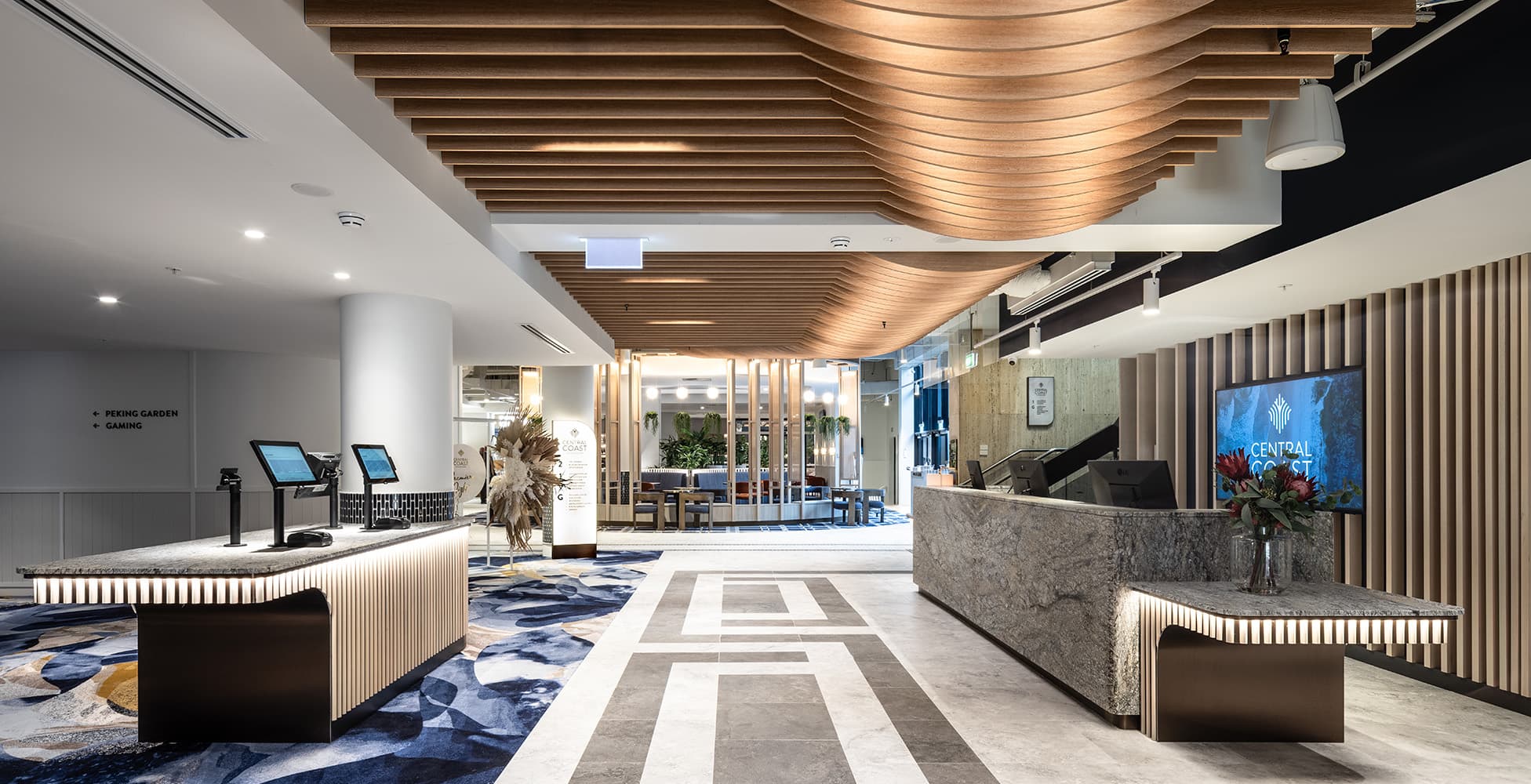
Seed & Vine — a cafe by day that transitions to a wine bar at night, positioned in the new lobby and foyer area. It gives the club a welcoming first impression that's a long way from the tired sign-in counters most members are used to.
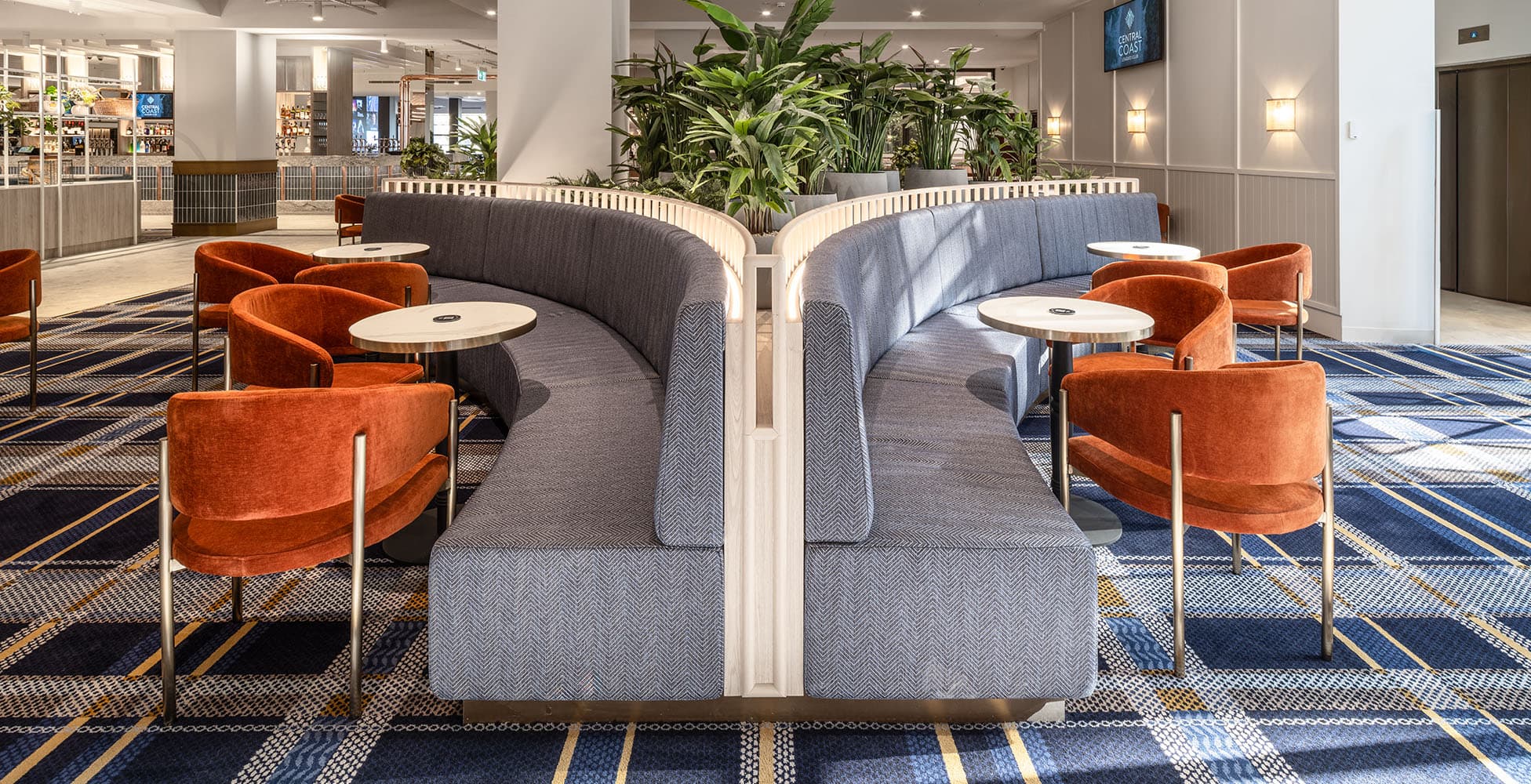
Wildwood Dining — a family restaurant with booth seating, bespoke canopies, and a dedicated kids' play area themed around the Central Coast mountain landscape. The design leans into bold carpet and wallpaper choices that give the room personality without tipping into kitsch.
Arena Sports Lounge — an American-style sports bar with indoor and alfresco seating. It features what's reportedly the largest LED screen on the Central Coast, backed by a serious audio system. This is the room designed to pull in the younger demographic the club was losing.
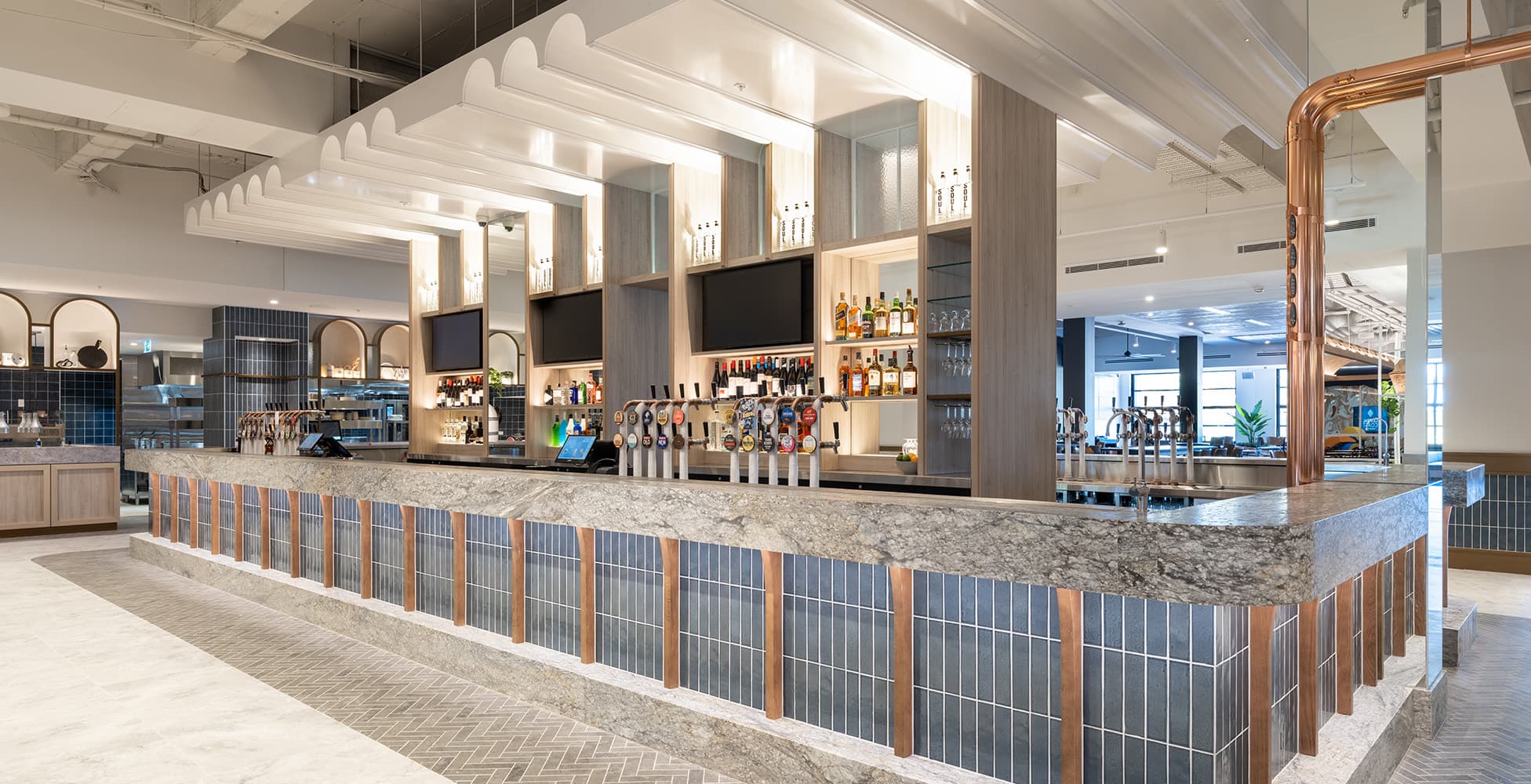
The Central Bar — an expansive focal bar with more than 80 beers on tap, including local craft options. The bar sits at the heart of the floor plan, connecting the dining and entertainment zones.
Show Kitchen — an open kitchen with a wood-fired pizza oven and produce display, anchoring the food offer around transparency and theatre.
The existing Peking Garden Chinese restaurant was renovated rather than replaced — a sensible nod to the fact that some things members love don't need reinventing.
The design: coastal, not generic
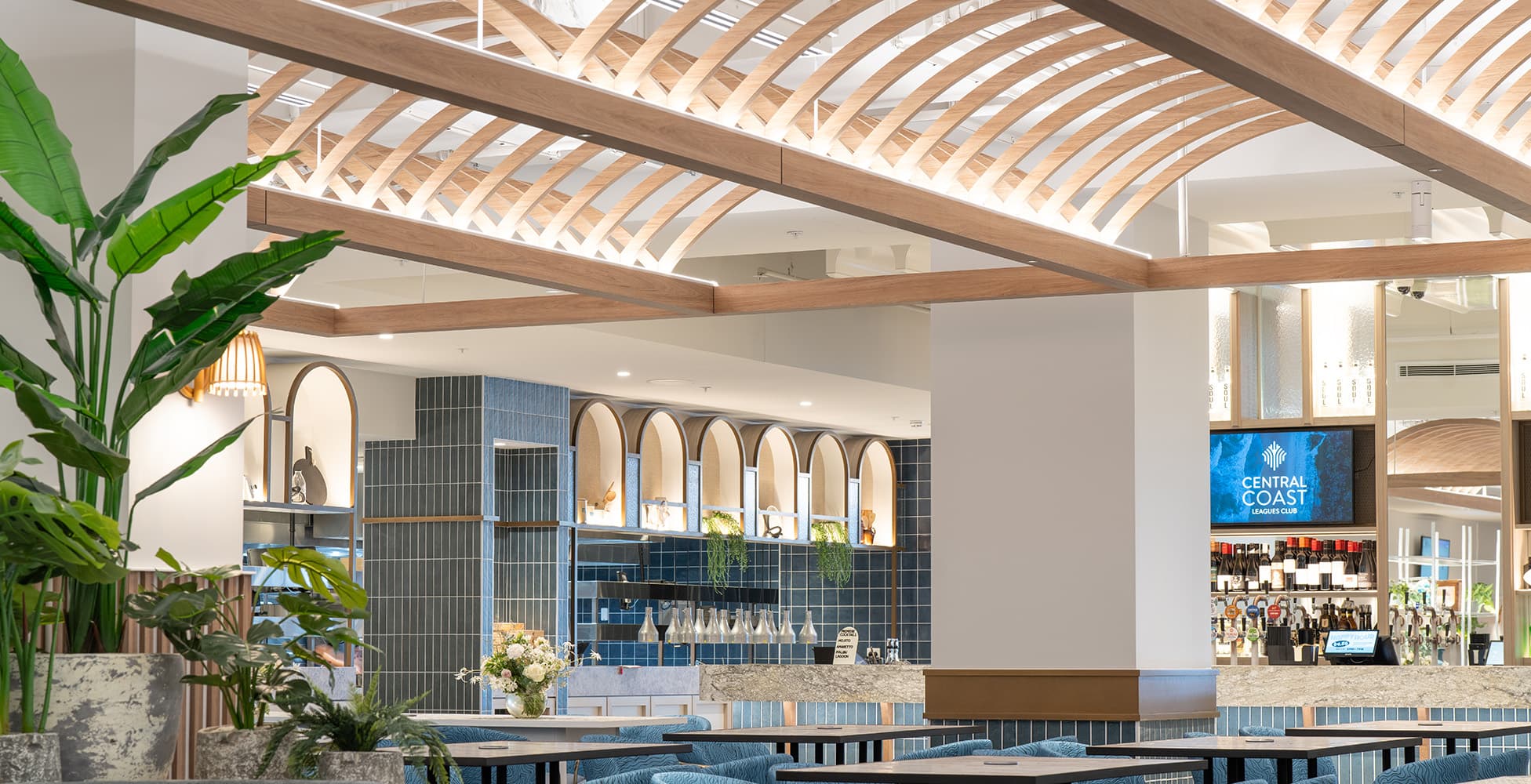
Altis Architecture used a material palette of deep blues, natural stone, warm timbers, and herringbone floor tiles. The arched detailing throughout the main bar and dining areas gives the space rhythm and structure, while copper accents on the central bar add warmth without competing with the coastal tones.
The ceiling treatments are worth a closer look. The lobby features an undulating timber batten ceiling that evokes the movement of water, and it immediately tells you this is not a standard club refurbishment. Through the dining precinct, timber lattice canopies define zones within the open floor plan and create intimacy without hard walls.
That is the kind of design thinking that separates a refurbishment that "looks nice" from one that actually changes how people use the space.
Staging: how they kept the club running
This is the part that matters most to any board considering a major refurbishment.
Central Coast Leagues Club remained fully operational throughout the entire construction programme. The project was delivered in two distinct stages:
Stage 1 covered the ground floor western precinct — the new lobby, Seed & Vine, Wildwood Dining, Arena Sports Lounge, the Central Bar, and the show kitchen. Construction commenced in April 2023 and completed approximately ten months later in early 2024.
Stage 2 tackled the eastern precinct gaming facilities and completed through 2024.
This staging approach meant the club could maintain its core revenue streams — gaming, food, and beverage — while construction progressed in contained zones. It's not simple to execute. It requires careful coordination between the architect, builder, and club operations team to manage noise, dust, access, temporary services, and the inevitable disruption to member experience.
The financial impact was real but managed. The club recorded a consolidated loss of $262,620 in the 2022/23 financial year, which the board openly attributed to construction disruption. By 2024/25 — the first full year of trading post-renovation — the club returned to positive EBITDA across all four quarters and refinanced its renovation-related debt from short-term to long-term liabilities with Commonwealth Bank.
The people behind the project
Chairman Michael Dowling led the board through the decision-making process, supported by Deputy Chairman Edward Johnson, a life member with over 46 years of membership.
Edward Camilleri served as CEO during the planning and construction phases, bringing nearly three decades of experience from his previous role at Revesby Workers Club. Camilleri, a Terrigal resident, drove the club's strategic repositioning before handing over to current CEO Bevan Paul, who has overseen the post-construction trading period and financial recovery.
Director Andrew Dickson, an architect by profession, chaired the Development Committee. Having a board member with direct construction industry experience makes a real difference when it comes to design decisions, contractor negotiations, and the surprises that always come up during a build.
The project team
| Role | Firm |
|---|---|
| Architect | Altis Architecture |
| Builder | Belmadar |
| Project Manager | Colliers International |
| Lighting Design | Haron Robson & Lightmatters |
| Client | Central Coast Leagues Club |
The bigger picture: a $564M masterplan
The club refurbishment is actually the first tangible step in a much larger vision. Central Coast Leagues Club has been developing a masterplan for the entire 1 Dane Drive site — a mixed-use precinct designed by AJC Architects (Allan Jack + Cottier) that proposes five towers (four residential, one hotel), 583 residential units, a 120-key hotel, retail and commercial space, and over 1,320 car parking spaces.
The masterplan was originally designed by Fender Katsalidis as a two-tower hotel scheme before being revised to the current five-tower mixed-use concept. It's classified as a State Significant Development given its scale, meaning it goes through the NSW Department of Planning rather than Central Coast Council.
As of early 2026, the masterplan remains in the planning phase with an estimated completion date of 2033. But the completed club refurbishment demonstrates something critical: the board's ability to deliver a complex capital project on time and within budget. That track record matters when seeking approval — and financing — for a project of this scale.
What boards can take away
Central Coast Leagues Club's redevelopment reinforces several things we see consistently across successful club projects:
-
Stage the work to protect revenue. The two-stage approach meant the club absorbed a manageable loss rather than closing entirely. That's a governance decision, not just a construction one.
-
Get the right people around the table. An experienced architect (Altis), a capable builder (Belmadar), and an independent project manager (Colliers) formed a team that could coordinate a live-site refurbishment. Having a board member with construction expertise (Andrew Dickson) added another layer of informed oversight.
-
Be honest about the financial impact. The board disclosed the construction-related loss in their annual report and explained their recovery strategy. That kind of transparency builds member confidence.
-
Design for the future, not just the fix. The refurbishment wasn't a standalone project — it was phase one of a long-term masterplan. Every design decision was made with the bigger picture in mind.
At UpScale, we're currently managing the delivery of the Granville Diggers Club redevelopment — a project that shares many of these same challenges: maintaining operations during construction, managing staged delivery, and keeping the board informed with independent oversight throughout.
If your club is considering a refurbishment or redevelopment, get in touch. We help boards navigate the process from concept through to completion.

Director, UpScale Project Management
Architect-turned-project manager with experience across government infrastructure, commercial, and hospitality sectors. Noel founded UpScale PM to provide independent, client-side advisory for club boards navigating major redevelopment projects across NSW.