Burwood North rezoning: de-risk 18,300 homes fast
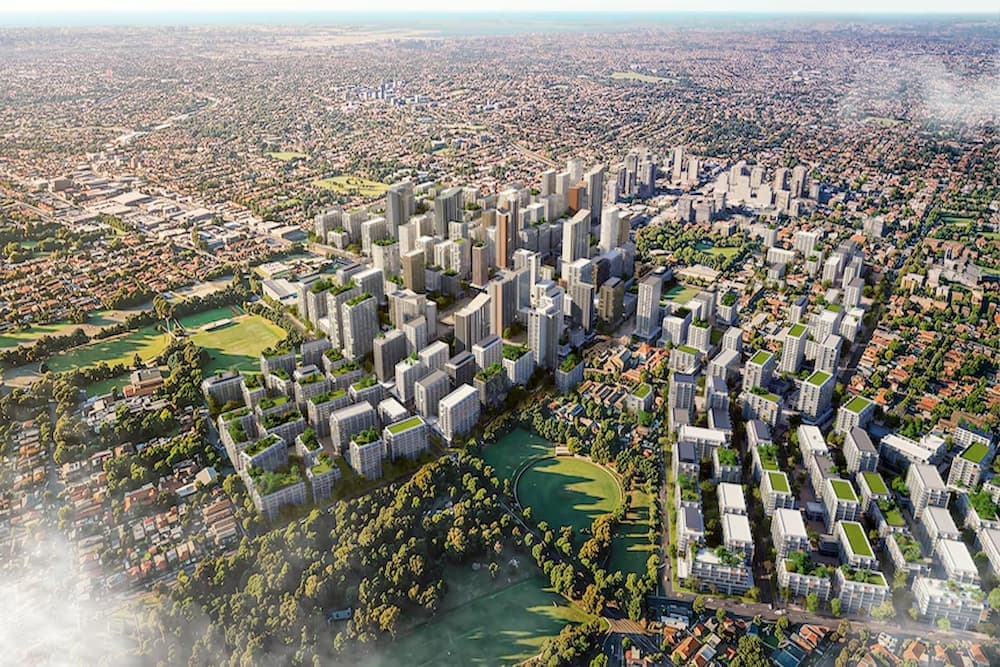
De-risk Burwood North rezoning: lessons from Burwood North, NSW
Image: Build Australia (source: https://www.buildaustralia.com.au/projects/nsw-unveils-proposal-for-ambitious-burwood-north-urban-project/)
Sydney's housing shortage is colliding with a once-in-a-generation transport build-out, and NSW is responding with state-led planning at scale. The Burwood North rezoning sits inside that push: one of 68 state-led rezonings intended to unlock 236,000+ homes and 167,000 jobs statewide. In the Inner West, the fundamentals are equally tight, with vacancy hovering around ~1.2% (CoreLogic Q1 2026) and population growth tracking about 1.5% p.a. (ABS 2025), conditions that reward well-located, delivery-ready transit-oriented development.
The Burwood North Metro Precinct Rezoning is a draft, state-led framework covering 113 hectares within 800 metres of the future Burwood North Metro Station (Burwood and City of Canada Bay LGAs). Announced 10 March 2026 and exhibited until 6 April 2026 via the NSW Planning Portal, it proposes up to 18,300 new homes (up from 15,000 flagged in 2025) and 3,900 jobs, with building heights ranging from 8 to 42 storeys and 5-10% affordable housing in perpetuity.
For developers, investors, and landowners, the question isn't whether the Burwood North rezoning is ambitious. It's how to de-risk it.
1. Burwood North rezoning: know what's locked in (and what isn't)
The Burwood North rezoning is being advanced under the State Significant Rezoning Policy, which matters because it signals a more coordinated pathway than the typical patchwork of local planning controls. The draft proposes 8-42 storeys across the precinct, 5-10% affordable housing in perpetuity, and a package of upgrades to roads, walking and cycling links, and open space, all inside the 800m walkable catchment of the future Metro station.
The opportunity is scale: 18,300 dwellings across 113 hectares, plus 3,900 jobs. The risk is misreading the framework as "approval". At this stage, there is no named private developer, architect, or builder because the rezoning sets the rules of the game, then the market delivers individual DAs. That means your early work should focus on how your site (or aggregation strategy) best fits the exhibited controls and likely design expectations.
Policy momentum is real. This rezoning contributes to the state's broader pipeline of 236,000+ homes across 68 rezonings, which increases competition for capital and construction capacity. Speed and clarity become commercial advantages.
"The Burwood North rezoning proposal allows for more than 18,000 new homes and nearly 4000 jobs in a thriving neighbourhood close to world class public transport."
- Paul Scully, Minister for Planning and Public Spaces
Takeaway: Treat the exhibition package as a feasibility input, not a finish line. Map your yield, affordable housing position, and access strategy now so your DA pathway is "SSD-ready" once controls are settled.
 Image: UpScale Project Management
2. Sydney Metro precinct economics: TOD demand is real, but timing is everything
The Burwood North rezoning is a classic Sydney Metro precinct play: concentrate density near fast, high-frequency transport, then let market demand do the heavy lifting. The draft assumes the new station (opening 2032) will enable ~10-minute trips to both Sydney CBD and Parramatta, pushing the precinct into the premium bracket for connected living.
But TOD doesn't eliminate risk. It shifts it. In a market with an Inner West median around ~$2.1m for houses and ~$850k for units (CoreLogic Feb 2026), demand is strong, yet delivery economics are still exposed to interest rates (RBA cash rate 4.35% in March 2026) and funding conditions. Typical pre-sales hurdles (often 20-30%) can become harder to clear if product is generic, staged poorly, or released too early relative to transport and amenity delivery.
The de-risking lens here is sequencing: align early-stage product with what the market will buy before the Metro opens (often downsizers, investors, and owner-occupiers valuing proximity to Burwood's established centres), while reserving higher-density vertical outcomes for later phases once certainty on station operations, place outcomes, and delivered amenity is higher.
"This rezoning proposal will unlock thousands of new homes and jobs in our local community all within walking distance of the Burwood North Metro Station."
- Jason Yat-Sen Li, Member for Strathfield
Takeaway: In a transit-oriented development, "when" is as important as "what". Stage releases to match Metro milestones and local amenity uplift, not just the planning headline yield.
3. Feasibility and cost reality: Burwood North rezoning needs a disciplined DA strategy
A rezoning headline (18,300 homes) doesn't guarantee individual project feasibility. In Burwood North, the numbers are compelling, but the margin can disappear quickly without a sharp DA strategy and cost discipline.
Current benchmarks for Sydney mid/high-rise are material: ~$3,500/sqm for mid-rise residential (HIA Sydney Q1 2026 benchmark) and ~$4,200/sqm for high-rise (Master Builders NSW 2025). Land assumptions can also spike quickly after exhibition momentum, with rezoned Inner West sites often discussed around ~$3,000-$5,000/sqm (JLL Inner West 2026). Combine those pressures with higher debt costs and tighter valuation settings, and your feasibility needs to be robust on:
- GFA efficiency (net-to-gross, servicing, core sizes)
- Buildability (podium transfer structures, basement extent, site access)
- Affordable housing delivery method (on-site vs alternatives where policy allows)
- Contributions/infrastructure assumptions and staging
We recommend modelling multiple control outcomes (base case vs upside yield), then designing your DA pathway around pre-lodgement alignment, particularly because community feedback during exhibition can influence final controls and design expectations. On comparable TOD programs, early alignment can cut DA time by ~20-30%, primarily by reducing redesign loops and late-stage objections.
"Rezoning Burwood North unlocks a once-in-generation opportunity to deliver a more connected and people-focused centre."
- John Faker, Mayor of Burwood
Takeaway: Build your feasibility around real Sydney cost inputs and a staged DA pipeline. Optimise efficiency and buildability first, then chase height and yield.
 Image: UpScale Project Management
4. Community and politics: Burwood North rezoning rises or falls on place outcomes
With building heights up to 42 storeys, the Burwood North rezoning will draw scrutiny. The exhibition window (10 March to 6 April 2026) is not a formality. It's where density, overshadowing, traffic, school capacity, and open space become tangible for residents. For developers, the risk is assuming a state-led rezoning neutralises local sentiment; in practice, poorly framed outcomes can still translate into delays, conditions, or design constraints later.
This is where "place" stops being a marketing term and becomes a project control. The draft already signals expectations: enhanced open spaces, better walking and cycling links, and infrastructure upgrades alongside housing. The commercial play is to treat these as value drivers, not yield taxes, because well-resolved public realm and permeability protect absorption and reduce objections that slow approvals.
A non-obvious lever in precinct-scale projects is "dual-use" open space and podium programming: designing areas that work for daily life and event peaks (markets, community sport, shaded play, pop-up retail). Done well, it supports the transit-oriented development promise of a 15-minute lifestyle around a Metro node, not just towers near a station.
"Burwood already ranks as one of world's best neighbourhoods and with both the Sydney CBD and Parramatta set to be a quick 10-minute trip... it's a no brainer to support its continued growth."
- Paul Scully, Minister for Planning and Public Spaces
Takeaway: Treat exhibition feedback as early risk intelligence. Invest in place-led design and a clear infrastructure narrative to protect your DA timeframe and market appeal.
 Image: UpScale Project Management
5. The de-risking playbook: staging, land banking, and SSD-ready approvals
The Burwood North rezoning is a framework designed to attract private delivery, which means the best-positioned players will be those who move early but not blindly. The key is to structure your entry and sequencing so you capture upside without overcommitting ahead of certainty.
Three practical moves matter in this precinct:
First, plan around staging clauses and infrastructure dependencies. With the Metro opening in 2032, oversupplying too early can dilute pricing and strain pre-sales. A staged pipeline that aligns density and product type to transport and amenity delivery is the simplest de-risking lever.
Second, treat the exhibition period as a window for strategic land positioning. If controls firm up post-exhibition, land values can shift quickly; TOD uplift is often cited at 10-20% and can push higher in high-confidence precincts. Early aggregation, options, or joint ventures can secure exposure while limiting balance-sheet risk.
Third, prepare for a fast transition from rezoning to DA. A common mistake is rushing concept design without disciplined pre-lodgement alignment, leading to 6-12 months of redesign and resubmissions. Instead, build an "SSD-ready" package: clear compliance narrative, measurable public benefit, buildable massing, and an affordable housing solution that doesn't torpedo yield.
"The Burwood North rezoning proposal allows for more than 18,000 new homes and nearly 4000 jobs in a thriving neighbourhood close to world class public transport."
- Paul Scully, Minister for Planning and Public Spaces
Takeaway: The winners in Burwood North will be the teams who stage intelligently, secure sites early with controlled risk, and convert rezoning certainty into DA certainty, fast.
Conclusion: can Burwood North rezoning deliver 18,300 homes without blowing up risk?
Yes, but only if the market treats the Burwood North rezoning as a delivery program, not a planning headline. The state-led pathway and clear transit-oriented development intent create a strong platform: 18,300 homes, 3,900 jobs, heights up to 42 storeys, and a station opening in 2032 that compresses the city with ~10-minute connections to CBD and Parramatta. But feasibility will still be won or lost on staging, costs, community response, and the quality of each DA strategy.
In our view, the de-risking formula is straightforward: model feasibility using real Sydney benchmarks (~$3,500-$4,200/sqm build costs), design for place and buildability, and use the exhibition period (to 6 April 2026) to align stakeholders early, before you lock in concepts and capital.
Key takeaways:
- Stage to the Metro: sequence product and density so absorption matches amenity and transport delivery.
- Make affordable housing bankable: solve it early so it supports approvals without breaking yield.
- Go SSD-ready: pre-lodgement alignment and a tight compliance story are your fastest path to DA certainty.
If you're assessing a site or aggregation opportunity in the Sydney Metro precinct pipeline, now is the time to convert planning momentum into a bankable delivery plan.
UpScale PM specialises in project feasibility, DA strategy, and premium project delivery. Lets build something iconic - together.
Call us on 02 9090 4480 to chat through your site opportunity.

Director, UpScale Project Management
Architect-turned-project manager with experience across government infrastructure, commercial, and hospitality sectors. Noel founded UpScale PM to provide independent, client-side advisory for club boards navigating major redevelopment projects across NSW.