Belmont 16s: A $20M Centenary Redevelopment on the Lake
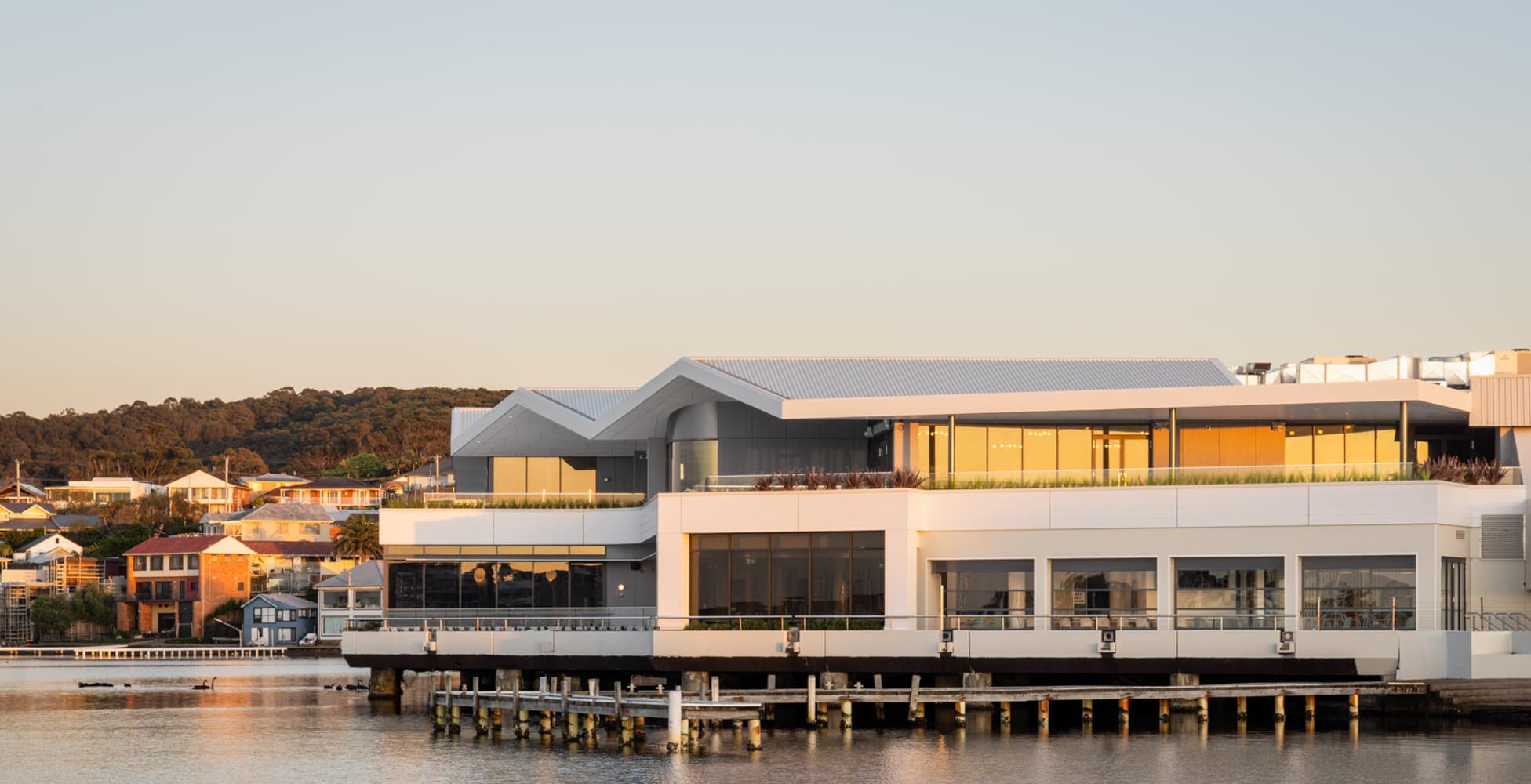
Belmont 16s Sailing Club sits over the water on Lake Macquarie, about 20 minutes south of Newcastle. It has been there since 1922, originally called the Belmont Sailing Club, and over the past century it grew from a modest sailing shed into one of the Hunter region's most recognised club venues.
But recognition and relevance are not the same thing. By the early 2020s, the club's leadership knew the building was not delivering the experience that members and visitors expected. The food and beverage offer needed improvement. The function spaces were dated. The sailing facilities, the very reason the club exists, needed modernising. And the building itself was not making the most of what is, frankly, one of the best waterfront positions of any club in New South Wales.
What followed was the Centenary Project: a $20 million redevelopment that touched virtually every part of the club, delivered across 18 months, and completed in December 2023, just in time for the club's 101st year.
The brief
This was not a cosmetic refresh. The brief to Altis Architecture was to reimagine the club from arrival to rooftop, creating a destination that could compete with standalone restaurants, bars, and event venues, not just other clubs.
CEO Scott Williams, who has led the club since 2005, described the project as a tribute to the club's sailing heritage and an investment in its future. The intent was clear: honour what Belmont 16s has always been, while building something that draws people in for what it is becoming.
Altis took a masterplanning-first approach. Rather than designing room by room, they mapped the entire site, optimising floor space, maximising lake views from every trading area, and planning for future opportunities including potential seniors living and hotel development on the broader site. Every decision in the Centenary Project was made with that longer-term plan in mind.
What was delivered
The redevelopment overhauled every public-facing area of the club across two levels, plus a new rooftop precinct.
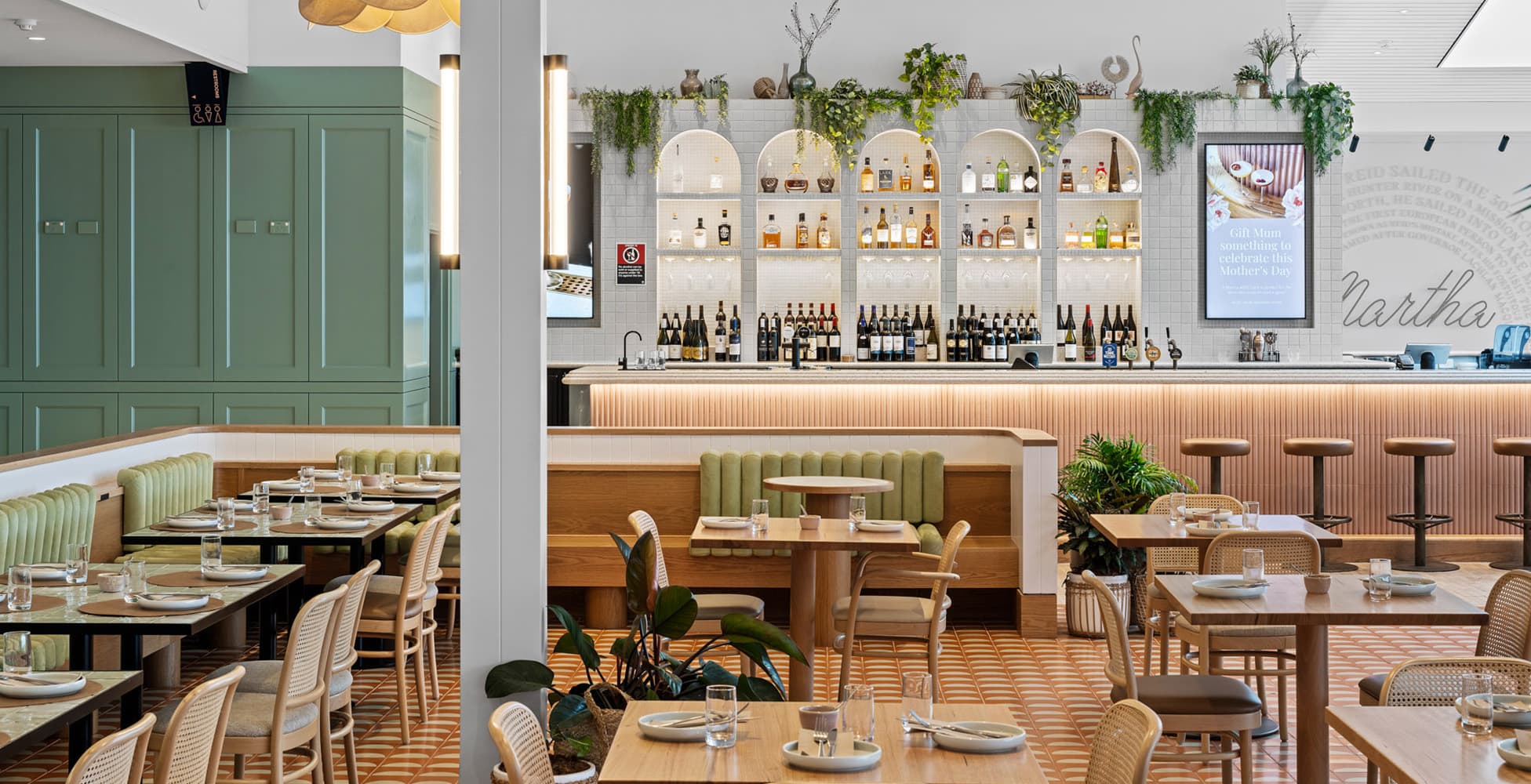
Martha Drink and Dine is the centrepiece of the project. A 120-seat restaurant and bar on Level 1, named after the Martha, the first British vessel to enter Lake Macquarie in 1800. The design is Mediterranean-inspired, with sage green panelling, arched bottle displays, cane furniture, and a fluted timber bar. Chef Tyler Rolfe runs a menu built around European Mibrasa charcoal ovens. Martha has quickly established itself as a dining destination in its own right, not just a "club restaurant."
Salt Kitchen is the club's main bistro on the ground floor, refreshed with a new fit-out and expanded seating that opens to the water.
Bay Bar and Star Lounge are the primary social and lounge spaces, redesigned with warm timbers, herringbone flooring, leather banquettes, and full-height glazing that frames the lake views. The lounge areas feel more like a boutique hotel lobby than a traditional club bar.
The Boat Shed Bar is a more casual, waterfront bar that caters to the after-sailing crowd and walk-in visitors.
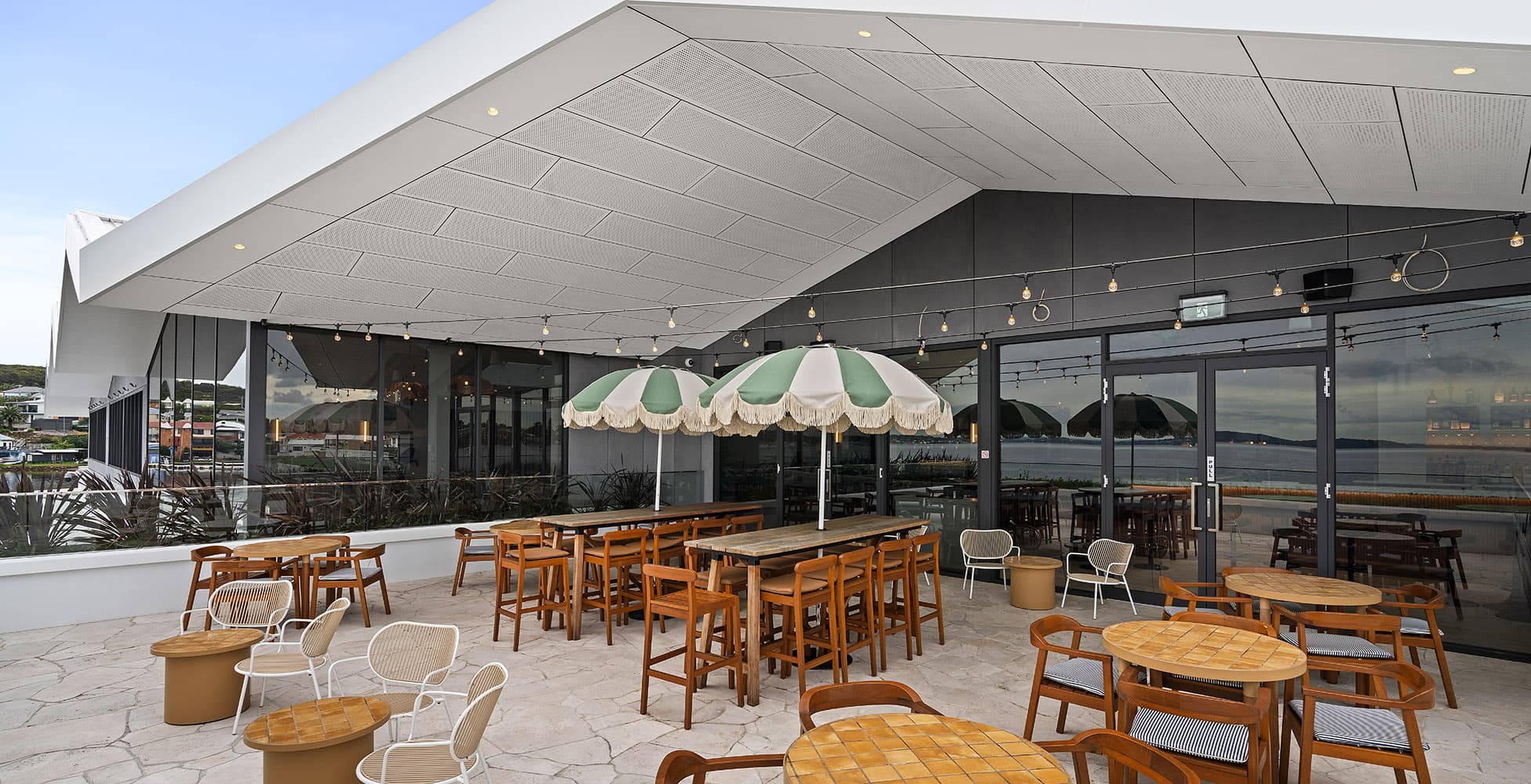
Rooftop Terrace is a new outdoor dining and cocktail precinct with panoramic views across the lake, green-and-white striped umbrellas, and a relaxed coastal atmosphere. This space simply did not exist in the old building.
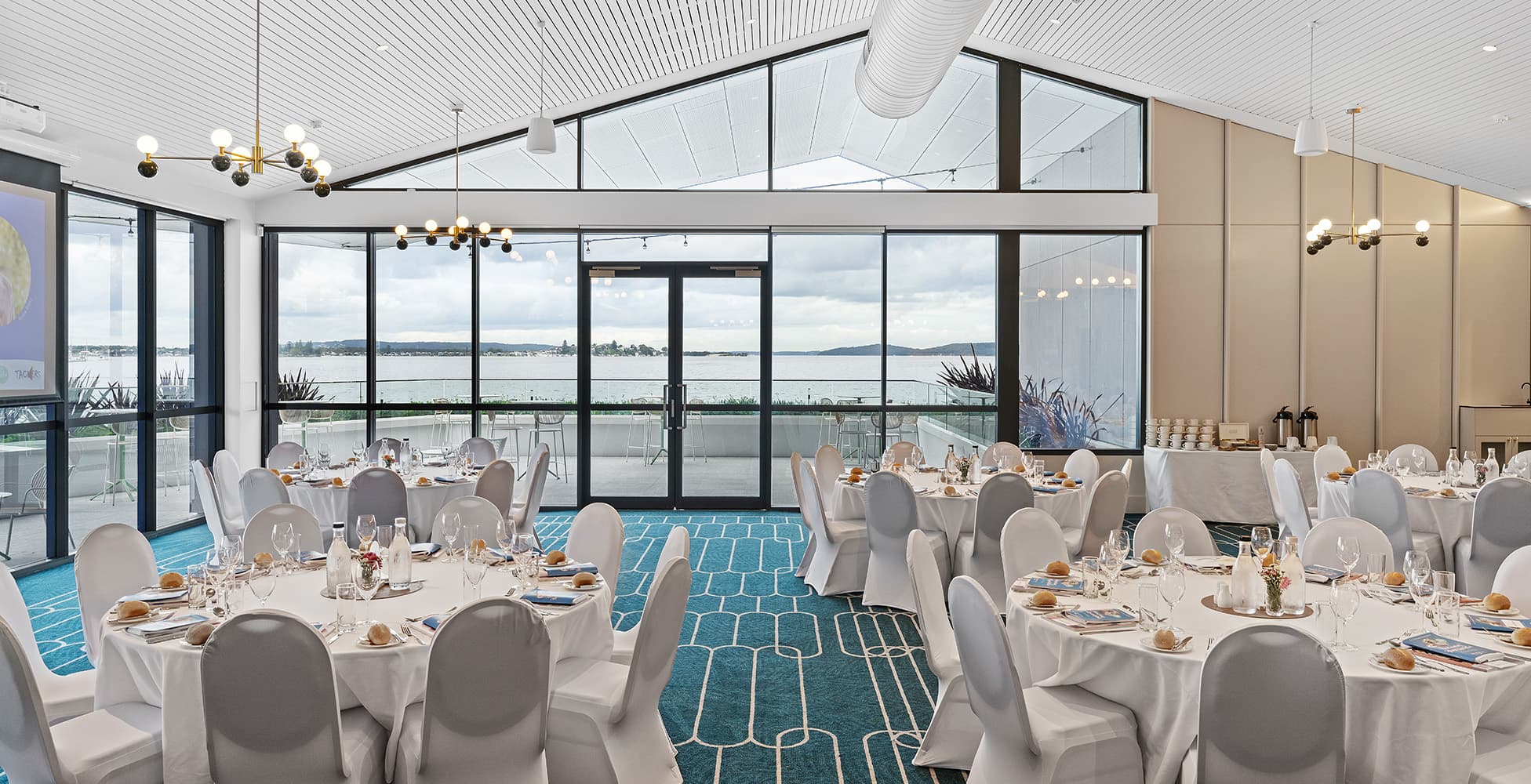
Function and Event Space is a completely new wedding and event venue on Level 1 with 240-degree panoramic lake views through floor-to-ceiling glazed walls and a dramatic pitched ceiling. It is already attracting bookings from across the Hunter and Sydney.
Sailing Facilities include new race control, training rooms, and a dedicated regatta office. For a club that hosts national-level sailing events, these upgrades matter as much as the hospitality spaces.
Entry and Arrival features a new ground-floor arrival sequence with a contemporary foyer, terrazzo staircase with brass handrails, and timber-clad feature walls.
Gaming was expanded and reconfigured with improved natural light and greenery, moving away from the windowless bunker aesthetic that plagues most club gaming rooms.
Brand Identity was also part of the Centenary Project, which included a full rebrand, returning to the name Belmont 16s Sailing Club and introducing a redesigned logo based on the club's original burgee flag.
The design: coastal without the cliches
Altis Architecture drew on the club's waterfront position without falling into generic nautical theming. You will not find anchor motifs or rope-wrapped columns here.
Instead, the material palette references the lake and landscape more subtly: terrazzo and natural stone in the entry and circulation areas, warm timbers throughout the bars and lounges, blue-toned carpet and tile work that evokes water without overdoing it, and extensive glazing to let the actual lake do the talking.
The Martha restaurant takes a different direction. Its sage greens, white tiles, arched niches, and cane furniture draw more from Mediterranean coastal dining than from the Australian surf club playbook. It gives the first floor a distinct identity that feels properly elevated.
A double-height atrium space connects the levels visually and creates a sense of openness that the old building lacked entirely. Throughout, the interiors are detailed with custom furniture, supplied by Identity Furniture, that reinforces the sense that every element was considered, not just specified from a catalogue.
Staging: 18 months, doors open
Delivering a $20 million transformation to a live, trading venue is one of the hardest things a club can do. Close the doors and you lose members, revenue, and momentum. Keep them open and you are building a new venue while running the old one, with all the noise, dust, temporary walls, and disrupted circulation that entails.
Belmont 16s chose to stay open. The project was staged across 18 months, with construction zones carefully sequenced to allow the club to maintain operations throughout. Graph Building, the local construction firm that delivered the project, managed the staging in close coordination with the Altis design team and the club's operations staff.
The staging required constant communication between all parties: relocating services, managing temporary access routes, and shielding members from construction activity as much as practically possible. It is the kind of delivery that looks seamless in the finished photos but demands enormous coordination behind the scenes.
The people behind the project
The Centenary Project was driven by CEO Scott Williams, who has been at the helm since 2005. Williams brought the board alignment and the operational knowledge needed to keep the club running while the building was being rebuilt around it.
Altis Architecture, founded by Andrew O'Connell and Rolfe Latimer in 1991, is one of Australia's most experienced club and hospitality design practices. Their portfolio includes dozens of major club refurbishments across NSW and Queensland, and their understanding of how club spaces need to function operationally, not just look good in photographs, is evident throughout the Belmont project.
Graph Building, based in Newcastle, brought local knowledge and a track record of complex hospitality projects in the Hunter region. Their ability to manage a staged, live-site construction programme was critical to getting this done.
The project team
| Role | Firm |
|---|---|
| Architect | Altis Architecture |
| Builder | Graph Building |
| Custom Furniture | Identity Furniture |
| Client | Belmont 16s Sailing Club |
| CEO | Scott Williams |
What boards can take away
Belmont 16s used a milestone, its centenary, as the catalyst for a transformation that was overdue. The project did not just renovate tired spaces. It repositioned the entire club as a waterfront dining and events destination while simultaneously upgrading the sailing facilities that define its identity.
A few things stand out:
-
Masterplan first, design second. Altis didn't just redesign the rooms the club had. They rethought the entire site — how floor space was allocated, where views were captured, and how the building could evolve beyond this project. That strategic layer is what separates a refurbishment from a repositioning.
-
Create distinct venues, not just "areas." Martha is not just the upstairs restaurant. It is a standalone dining brand with its own name, identity, and chef. Salt Kitchen, Bay Bar, the Boat Shed, the rooftop: each has its own character. This gives the club multiple reasons for people to visit, and multiple revenue streams that are not all competing for the same customer.
-
Don't forget your core purpose. It would have been easy to pour the entire $20 million into hospitality spaces and leave the sailing facilities for later. Instead, the club invested in race control, training rooms, and a regatta office. For a sailing club, that is the reason members joined.
-
Stage the work, protect the revenue. Eighteen months of live-site construction is disruptive, but it's far less damaging than closing the doors. The staging approach kept members engaged and revenue flowing throughout.
-
Brand the transformation. The rebrand, new name, new logo, new identity, signals to members and the broader community that this is not just a new fit-out. It is a new chapter. That clarity helps members get behind the disruption.
At UpScale, we are currently managing the delivery of the Granville Diggers Club redevelopment, another club project navigating staged delivery, live-site construction, and the challenge of transforming a venue while keeping it running. The challenges differ in the details, but the principles are remarkably consistent.
If your club board is considering a redevelopment, or you're partway through one and need independent project oversight, get in touch. We help boards navigate the process from feasibility through to completion.

Director, UpScale Project Management
Architect-turned-project manager with experience across government infrastructure, commercial, and hospitality sectors. Noel founded UpScale PM to provide independent, client-side advisory for club boards navigating major redevelopment projects across NSW.