Bay West Precinct & DAs: 8,500 Homes, NSW Planning Shift
Bays West Precinct: What 8,500 homes on Sydney's harbour means for development approvals
Image: Supplied | NSW Government via Time Out Sydney
Sydney's planning environment just shifted again. On 3 March 2026, the Minns Government announced a complete rethink of the Bays West Precinct, government-owned port land at Glebe Island and White Bay, right in the heart of Rozelle, Balmain and Glebe.
The old plan? Scrapped. The new vision: up to 8,500 homes, at least 10% affordable housing for essential workers, a new delivery authority, and the whole thing anchored by the Bays West Metro Station that's already under construction.
For developers, landowners and investors, this is more than another announcement. It signals that the rules of the game are changing, and fast.
The bigger picture: why Bays West matters now
This isn't happening in a vacuum. The NSW Government has flagged 620,000+ homes through state-led rezonings and Transport Oriented Developments (TODs). The target is 377,000 dwellings by 2036. Rental vacancy sits around 1.5%. Inner West median house prices hover near $1.6M.
Against those numbers, Bays West is hard to ignore. It's publicly owned harbourside land, minutes from the CBD, sitting directly above a brand-new metro station. That combination justifies higher density, stronger design standards, and a firm affordable housing position, because the accessibility dividend is real.
"Right above a new metro station and minutes from the CBD, we're delivering thousands of homes where people actually need them — close to work, close to services and close to transport." — Chris Minns, Premier of NSW
The takeaway: Approvals success in today's Sydney increasingly depends on alignment with state objectives: transport adjacency, housing yield, and genuine public benefit.
A new approvals pathway, not a standard DA
Bays West is a clear signal that precinct planning, not fragmented site-by-site applications, is how the state wants to deliver city-shaping renewal on strategic land.
The 2026 announcement replaces the 2022 masterplan with a state-led process overseen by a new delivery authority, reporting to the Minister for Homes and Housing. For proponents, that changes everything. You're no longer negotiating a DA with council. You're operating within state-coordinated sequencing, design governance, and infrastructure alignment.
The scale (8,500 homes) and mandated affordability (10%) point to a masterplanned outcome with fixed yields. That kind of framework can streamline approvals once controls are locked in, but it also limits flexibility if you engage too late.
And there's embedded complexity: bulk port operations on Glebe Island don't cease until 2030. That staging dependency flows directly into approval conditions, contamination strategies, and delivery packaging.
"This is city-shaping renewal — delivering thousands of new homes alongside open space, jobs, culture and waterfront access." — Paul Scully, Minister for Planning and Public Spaces
The takeaway: Treat Bays West-style precincts as state-led programs, not standard DAs. Your strategy needs to start with masterplan influence and staging logic, not just architectural documentation.
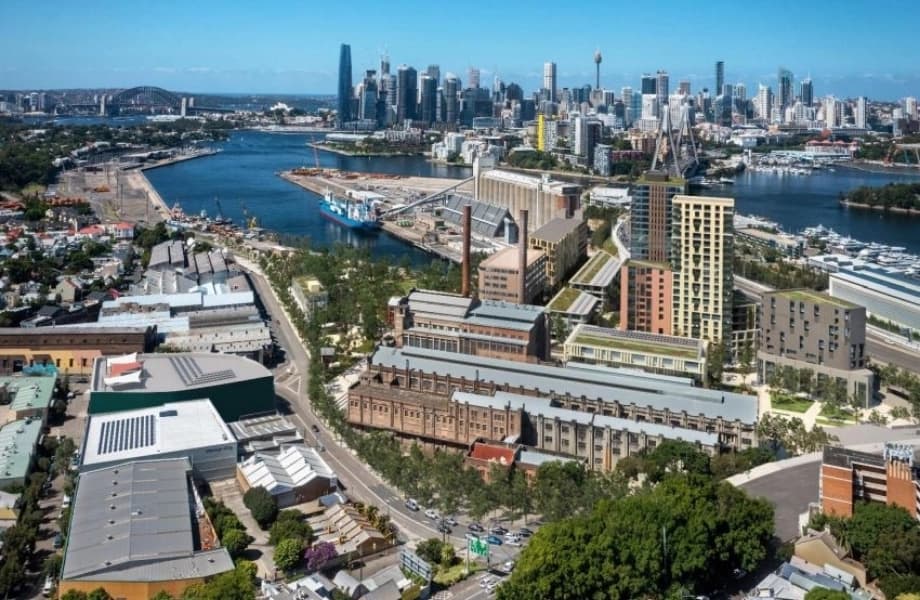
 The current Glebe Island site — industrial silos and metro station construction already underway.
The sequencing risk no one's talking about
The non-obvious challenge: the "site" isn't really a site. It's a live operational harbour.
The plan retains deep-water berths and the cruise terminal. Working harbour operations consolidate at White Bay. Bulk storage (cement, gypsum, sugar) gets relocated to Port Kembla, backed by $270M in government funding. But that transition is a program risk that cascades into every development package.
From a project management perspective, precinct planning both helps and hurts. A delivery authority can coordinate enabling works, contamination remediation, utilities, transport interfaces, and public domain. That's a genuine advantage.
But when sequencing is underestimated, when port relocation drifts, remediation timelines blow out, or metro interface works stall, downstream residential staging gets delayed. That means holding cost blowouts, finance condition breaches, and pre-sales timing disruption.
"This plan strikes the right balance of building thousands of well-located homes with world-class transport, whilst maintaining a functioning working harbour." — John Graham, Minister for Transport, Arts, Music and Night Time Economy
The takeaway: Build your DA and delivery strategy around critical path dependencies: port exit, remediation, metro interface. Insist on a staging plan that protects certainty for funding and market release.
 Early works underway — the precinct is already transitioning from industrial harbour to urban development.
Feasibility: the numbers behind the vision
Bays West is a textbook TOD-led value unlock. Metro station under construction, near-CBD location, strong submarket fundamentals. That combination typically supports solid absorption and pricing resilience.
But feasibility will still be won or lost on delivery details.
Sydney harbourside mixed-use construction typically benchmarks around $3,500-$4,500/sqm. Precinct-scale scope adds further complexity: public domain, utilities, place activation, interface works. And there's the embedded 10% affordable housing requirement to factor in.
On the upside, publicly owned land and state-led coordination can reduce planning friction and compress approval timelines, if your program aligns with the authority's sequencing and design governance.
"Bays West is about putting publicly owned land to work for the people of New South Wales — delivering thousands of new homes while keeping this strategic harbour site in public hands for generations to come." — Daniel Mookhey, NSW Treasurer
The takeaway: In precinct planning, feasibility is less about "can I get consent?" and more about "can I deliver profitably within a staged, infrastructure-led program that includes affordability and high public-domain expectations?"
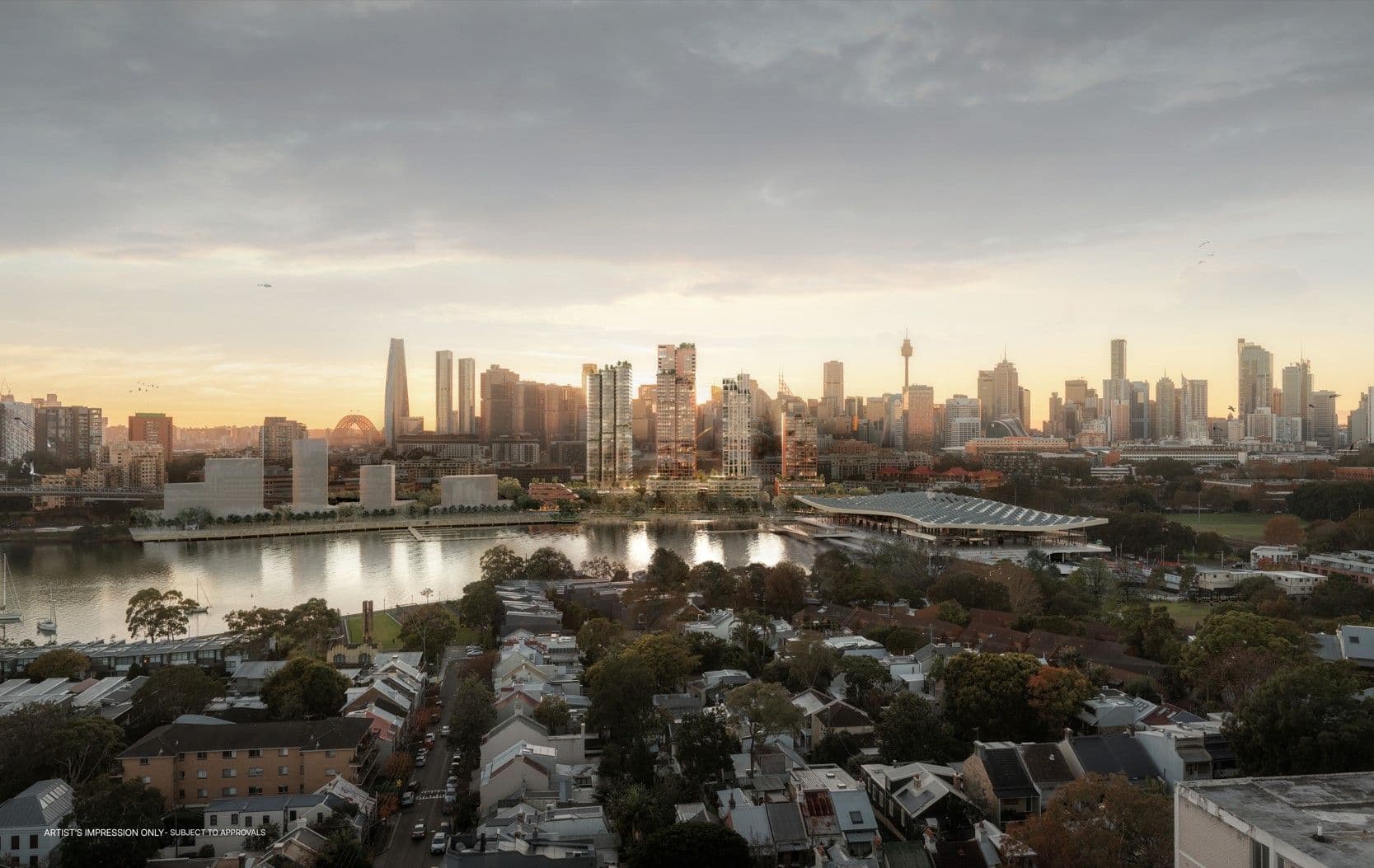
 Artist's impression of the completed Bays West precinct — subject to approvals.
How to win in precinct-style approvals
The biggest DA mistake we see in emerging precincts is treating them like conventional sites. Waiting for controls to be finalised, then trying to "DA your way" through constraints that were actually set upstream in masterplanning.
Bays West will be shaped via an international design competition. Design quality, public realm, and place outcomes won't be nice-to-haves. They'll be core approval drivers.
The precinct's ambition includes homes, parks, waterfront access, cultural uses (including the White Bay Power Station as a creative industries hub), and major event capability for NYE and Vivid. That means complex interfaces: pedestrian networks, noise management around the working harbour, crowd dispersal strategies, and operational curfews. None of that fits neatly in a standard DA checklist.
You need an integrated approvals narrative and a program that anticipates the authority's gating decisions.
The takeaway: Your competitive edge is front-end strategy: influence the masterplan, lock in staging certainty, and build an approvals pathway that integrates transport, public domain, and operations. Not just built form.
 The vision: harbourside living with ground-floor retail, a waterfront promenade, and adaptive reuse of the White Bay Power Station.
What this means for you
Bays West answers a pressing question: how does Sydney add meaningful housing supply in the right places without getting stuck in fragmented approvals?
The state's answer is precinct planning: dedicated delivery authority, metro integration, clear housing yield targets (8,500 homes, 10% affordable). It points to a future where development approvals are shaped earlier, at the masterplan and infrastructure-sequencing level.
For developers and landowners, that creates both opportunity and warning:
- Engage early in precinct governance. Masterplan inputs shape what's "approvable" later.
- De-risk sequencing. Treat infrastructure, remediation, and operational transitions as critical path.
- Package approvals strategically. Align design quality, public benefit, and delivery certainty to state priorities.
If you're assessing a site influenced by NSW precinct planning or TOD policy, now is the time to recalibrate your DA strategy.
UpScale PM specialises in project feasibility, DA strategy, and premium project delivery. Let's build something iconic -- together. Call us on 02 9090 4480 to chat through your site opportunity.

Director, UpScale Project Management
Registered architect (NSW) and client-side project manager with more than 15 years across architecture practices, client-side project management consultancies and government agencies. Noel founded UpScale PM to provide independent, client-side project management for NSW club boards navigating major redevelopments.
Related insights
AS4902 vs AS4000 for Club Redevelopments
AS4000 is construct-only, AS4902 is design and construct. What each form means for a club board: design risk, novation, time, variations, security and payment.
Separable Portions Explained for Club Boards
Separable portions let a club take back and trade in finished areas while building continues. How they work, and the drafting traps boards should avoid.
Lindfield development approval: post-DA delivery lessons
Learn from Deicorp's $300m Lindfield development approval—post-DA delivery, conditions management and NSW construction program tips. Talk to UpScale PM.
Roseville Development Approval: Aqualand's DA Strategy Shift
Aqualand's Roseville approval shows how SSD can override council refusal in the NSW planning system. Here's what the DA strategy signals for developers on the Upper North Shore.