Bankstown RSL: A $60M Masterplan That Rebuilt the Club From Scratch
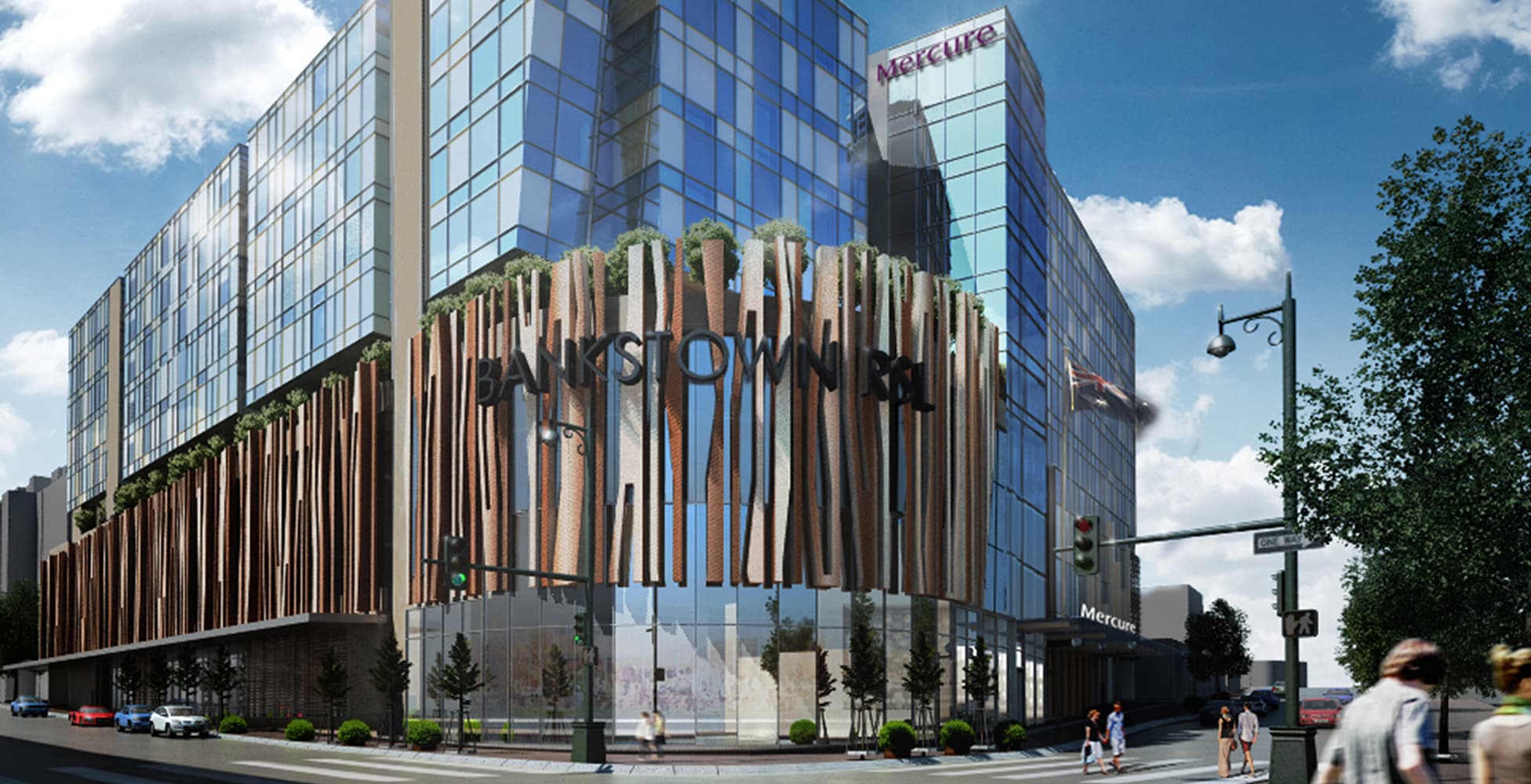
Most club redevelopments involve renovating what you already have. Bankstown RSL did something far bolder. They built an entirely new club on an adjacent site, sold the old one for $53.6 million, and used the proceeds to fund a $60 million, 35,000m2 venue that has become one of southwest Sydney's top hospitality destinations.
This was not a renovation. It was a complete rethink of how a heritage RSL club could reposition itself for the next generation of members.
The starting point
Bankstown RSL has been part of the local community since 1928, operating from its original site on Kitchener Parade. By the early 2010s, the club was in financial difficulty. CEO Scott Dickson, who came into the club industry working with administrators on clubs in financial distress, recognised that the existing building could not deliver the experience members increasingly expected. The site's high land value, though, presented an opportunity most clubs never get.
Rather than pour money into patching up an ageing building, the board and Dickson developed a masterplan that would see the club relocate to a new purpose-built facility on an adjacent 6,000m2 site at the corner of Marion and Meredith Streets. The old site would then be sold, with developer Poly Australia eventually acquiring the 13,265m2 parcel for $53.6 million to develop a large-scale mixed-use residential and retail hub known as Spring Square.
It was a high-stakes strategy. But it worked.
The brief
The brief was not to build a bigger version of the old club. It was to create what Infinity Constructions Director Theo Orfanos described as "a new Five Star social centre of entertainment, food and nightlife for Bankstown and the surrounding areas."
Altis Architecture had been working with the club on the initial masterplanning since early 2012. Director Rolfe Latimer led the design from concept through to site delivery, with the aim of opening the venue up to a wider demographic, not just the traditional RSL membership base.
The result is a 10-level building comprising two club levels, a basement car park, two levels of above-ground parking for 300 cars, and structural provision for a Stage 2 hotel of up to eight storeys above.
What was delivered
The Stage 1 club, which opened in January 2019, spans approximately 18,000m2 and includes:
- Five distinct dining outlets, each individually designed, including a pavement-front cafe on Marion Street and a popular buffet restaurant
- Two bar areas, anchored by a central bar with a smoke-mirrored front, sandblasted detailing, velvet armchairs, and leather seating
- A 300-machine gaming room with both indoor and alfresco gaming areas accommodating 225 machines on the main floor
- Conference and function facilities, two large function spaces for weddings, corporate events, and meetings
- TAB facilities and a sports bar
- A live entertainment venue
- Retail spaces at ground level
- Four levels of car parking for 300 vehicles
The entrance was designed to feel like a hotel foyer, with padded backdrop panels, timber panelling, and a contemporary oversized chandelier. A deliberate departure from the typical sign-in counter that greets you at most clubs.
The project team
| Role | Firm / Individual |
|---|---|
| Client | Bankstown RSL Club |
| CEO | Scott Dickson |
| Chairman | Bruce Pawley |
| Architect | Altis Architecture (Director: Rolfe Latimer) |
| Builder | Infinity Constructions Group (Director: Theo Orfanos) |
| Project Manager | Construction Consultants |
| Structural Engineer | Xavier Knight (Director: Feris Chehade) |
| Landscape / Facade | Arcadia (custom stick facade elements) |
Design
Altis Architecture brought over 26 years of hospitality design experience to the project. The design was built around attracting a broader demographic, families, corporate groups, younger patrons, not just the traditional RSL crowd.
The exterior features a 15-metre high curved glass wall and feature void, with an external facade of architectural fins. Arcadia worked with Altis and Infinity to develop customised stick facade elements where every fin has a unique profile and differing colours, attached via a custom fixing system. That level of detail gives the building a distinctive presence on the Bankstown streetscape.
Inside, the five dining outlets were each given their own identity, a deliberate move to make the club feel less like one big room and more like a precinct of distinct experiences. The central bar connects the various zones and draws people through the space.
Construction: 15 months from brownfield to operating club
Infinity Constructions won the Design and Construct contract in 2016 and faced significant time pressure. The sale of the existing club property on Kitchener Parade meant there was a hard deadline to vacate and open the new venue.
The team compressed the programme to just 15 months from brownfield site to a fully operational club through a series of value engineering initiatives:
- Precast concrete was used for walls, lift shafts, basement walls, retaining walls, upper floor back-of-house walls, and separation walls, which dramatically accelerated the structure
- Flat plate post-tensioned slabs were used throughout for speed and efficiency
- Facade screens and feature blades were redesigned with lighter materials to reduce both load and cost without losing the architectural intent
- Joinery and interior features were simplified, and services re-engineered without affecting function or compliance
One of the bigger site challenges was a Telstra easement running through the property with major services infrastructure. Rather than attempt to build over and under it, which was the original plan, Infinity redesigned the basement arrangement to accommodate the easement. That eliminated risk and reduced both time and cost.
The crane solution was also notable. The site's CASA height restrictions, combined with the required jib length and capacity, meant a standard tower crane wouldn't work. Infinity resolved this with a large hammerhead crane fitted with a custom jib extension. They also assisted the client in negotiating airspace rights over 16 neighbouring properties, including the Police station and Telstra.
Xavier Knight, the structural engineer, designed a full post-tensioned concrete structure with no transfer structures. This delivered multi-million-dollar savings while ensuring the podium could receive the future hotel's construction loads without interrupting club operations below.
Stage 2: the hotel
The masterplan always included a second stage, a 250-room Mercure Hotel to be built above the club podium. The structural design was worked out to accommodate multiple hotel configurations without requiring work that would disrupt the operating club.
AccorHotels (now Accor) announced the Mercure Bankstown as part of their expansion pipeline, with the hotel to feature a restaurant and bar, two meeting spaces, a gymnasium, and a dedicated street entrance leading to its own reception and public areas.
This is a strategy more clubs should consider. By designing the initial structure to accommodate future vertical development, Bankstown RSL created an income-generating asset that sits above the club without consuming additional land.
What the board got right
A few things stand out about how this project was approached:
They monetised the old site. Selling the Kitchener Parade property for $53.6 million gave the club a funding base that most redevelopments simply don't have. It required the board to take a long-term view and accept the disruption of relocating, but the financial logic was sound.
They planned for the future from day one. The structural provision for the hotel wasn't an afterthought. It was baked into the design from the masterplanning stage in 2012, giving the club optionality without locking them into a fixed timeline for Stage 2.
They assembled the right team. Altis Architecture brought deep hospitality design experience. Infinity Constructions brought the commercial building capability and value engineering rigour. Construction Consultants managed the complex approvals process, including design augmentation without JRPP contravention. Xavier Knight engineered a transfer-free structure that saved millions.
They compressed the programme. Fifteen months from empty site to open doors is aggressive for a building of this scale and complexity. The value engineering, precast strategy, and post-tensioned slabs were critical to making that timeline work.
The project won the 2019 MBA Awards for Excellence in the Hospitality Buildings, New category ($50M-$100M), which says something about the build quality and delivery.
Lessons for other clubs
Not every club has the luxury of an adjacent development site and a $53 million asset to sell. But the principles behind Bankstown RSL's approach are transferable:
-
Start with a masterplan, not a renovation brief. The best outcomes come from stepping back and asking what the club needs to be in 10-20 years, not just what needs fixing today.
-
Understand your site's value. Many clubs are sitting on land worth far more than the building on it. That doesn't always mean selling, but it does mean understanding the options.
-
Design for future stages. Even if you can only fund Stage 1, designing the structure to accommodate future development avoids costly retrofitting later.
-
Engage specialists early. Altis was involved from 2012 — seven years before the club opened. That long runway allowed for proper masterplanning, approvals, and design development.
-
Don't underestimate the programme. Time is money in construction, and a compressed programme requires deliberate structural and procurement decisions, not just optimism.
At UpScale Project Management, we work with club boards on exactly these kinds of decisions, from early-stage masterplanning through to construction delivery. We are currently advising on the Granville Diggers redevelopment, another club project reshaping its future through careful planning and the right project team.
If your board is considering a refurbishment, redevelopment, or masterplan, we'd welcome the conversation. Get in touch to talk through where you're at and where you want to go.

Director, UpScale Project Management
Architect-turned-project manager with experience across government infrastructure, commercial, and hospitality sectors. Noel founded UpScale PM to provide independent, client-side advisory for club boards navigating major redevelopment projects across NSW.